Friday, July 3, 2009

Q&A: Harold Ramis Goes from Ghostbusting To Getting Primitive Directing Year One

Feature Story by Brad Balfour

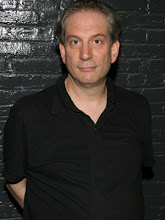
Before a small group of comedy-infused journos, veteran funnyman, director/writer Harold Ramis spent over an hour not just talking about his latest comedy, Year One but outlining his career and the history of modern funnymen as well. And with Ice Age: Dawn of the Dinosaur hitting theaters this summer, it seems there's lots of funny in the Pleistocene and beyond.

Year One follows a famous tradition of taking our mythology to task, peering way back to our caveman past and discovering that even then, geeks and nerds--ably played by Jack Black and Michael Cera--came under fire from the tribe, prompting derision and humor. Of course, Ramis, with comedic ambitions extending along the lines of Mel Brooks' History of The World, plumbs such sacred texts as the Bible for inspiration and source material. With the help of exec producer Judd Apatow, Ramis made a semi-gross out comedy that inveigles to explore a few serious ideas as well. It asks such questions like "who the hell came up with circumcision ANYHOW?"

This former Chicagoan started as a journalist, became joke editor at Playboy and then joined his hometown's legendary improv comedy troupe, Second City. He then went on to writing and perform in the first National Lampoon shows with original Saturday Night Live team members such as Dan Ackroyd, Bill Murray, John Belushi and Chevy Chase. The veteran writer/director then established himself in comedy first as one of the writers of National Lampoon's Animal House, then, as an actor as well as a writer of such hits as Stripes, Ghost Busters, and then debuted as a director with Caddyshack in 1980.

Q: How different is Year One from other films that you've done?

HR: What’s that saying? “Love the one you’re with?” [laughs] I live in hope, so my new work is always my favorite because I always hope it will teach me something I didn’t know before or I’ll have some experience I’ve never had before. If this were television and you had worked seven years doing the same show over and over, you pretty much know what to expect.

But every feature film is like a grand adventure and you go on it with new people every time; Jack Black and Michael Cera are amazing allies to have. I had Judd Apatow… not with me, but with me in spirit and certainly as an ally back in LA making sure…just covering everything for me. And just a wonderful cast, a great staff and people I’ve worked with behind the camera. It’s the nicest job I could imagine having and this film in particular, the journey itself.

I’ve made one other journey film, National Lampoon’s Vacation. It’s a lot of fun traveling with the whole crew; it’s like being in the circus. And the ideas in this film, as silly and broad as the movie is it’s the intellectual and philosophical underpinnings are so meaningful to me it gave me a chance to explore these ideas, at least in my own head. Whether they translated to the audience or not, I don’t know.

Q: What were those ideas?

HR: Very few young people are interested in religion. But as you get older, people return to the religion of their family or they start to think philosophically. There are very few 16-year-old Buddhists around; it takes a lot of living to even start asking the questions. You know when I was younger, like everyone else I was driven by my hunger, my greed, and my lust for money, power, sex, and fame. All the things that we’re conditioned to want and that we quite naturally want. Evolutionary biologists might say it’s all just a mask for needing to procreate; just to get girls.

I used to do an improv thing at Second City as a swami--a yoga master. One of the things was “why did you become a swami?” “I thought it was a good way to get girls.” So, those are the ambitions of young people I think and people who either achieve some of those goals or fail to achieve start to come to some realizations, starting around 40. It might be “I’m never gonna have that, so what does my life all mean?” or “Alright I’ve got that, now what? There’s gotta be something else.”

My rabbi, Irwin Kula, was at the screening last night. He once said to me in response to my film The Ice Harvest, “You can never get enough of what you don’t really need.” That applies to alcohol, drugs, sex, fame, money; it doesn’t get you what you thought it was gonna get you and then you get religion.

Q: So Modern man is not much more advanced than Cro-Magnon man?

HR: I don’t think so; I mean part of the premise of the movie was no matter how far back you went we would find that people were driven by the same needs and in a way had the same potential awareness. I’m convinced that there had to be a hunter-gatherer telling jokes; there had to be a hunter-gatherer thinking “there’s got to be more to life than this” or “I hate my life” or “Is this all there is? That’s all I’m gonna do the rest of my life is hunt and gather?”

Q: The nerds and geeks go far back.

HR: Oh yeah, no question [laughs].

Q: A lot of the humor revolves around anachronism. Was there ever a point where you had to decide how these characters where going to talk?

HR: From the very beginning I imagined, and I didn’t invent this, but the conceit of having main characters speak in a contemporary way, and the characters who are more of the time speak in a more classical way; I settled on that pretty early. The aristocracy of Sodom would speak in an inflated, Shakespearean tone; that the patriarchs Adam and Abraham would speak in a biblical tone; and that our guys would speak the way we speak, because they are not of that mindset or that social class. The examples are great and many: Mel Brooks' 2000-Year-Old Man classics.

Q: Or his The History of the World.

HR: I was much more a fan of The 2000-Year-Old Man. I memorized every word of it. My friends and I could quote all of it; And Monty Python, they did a great job on both Monty Python and The Holy Grail and Life of Brian. Woody Allen’s film Love and Death, where he plays a completely contemporary neurotic Jewish New Yorker in the middle of Napoleonic Russia.

Q: Where’d you get that wacky soundtrack instead of the expected Biblical music?

HR: Well we tried different things. We tried to go "epic" on the music like it was a [Cecil B.] DeMille film, one of those big Hollywood type scores and then we tried to create an ethnic world music score with ancient instruments. But we realized it wasn’t contemporary enough for our audience and needed a backbeat so we could overlay those ethnic elements. For the opening of the movie--the boar hunt--I steered our music composer Teddy Shapiro toward the Balinese monkey chant, so that’s under there. So, [we did] whatever worked just with a bit of an eastern flavor.

Q: You incorporate humor into the objects on set like some of the costumes.

HR: For me, really successful comedies work on three levels: the story works--which includes the characters and the behavior--the dialog works--people are saying funny things--and there’s physical business going on that’s fun to watch.

Part of the fun of this, moments like the discovery of the wheel is seeing the wheel for the first time. That’s an object very specific to this movie that I thought there was going to be a joke on that. It might be on the DVD but we cut it from the film, when Jack sees…”what’s the big round thing?” “That’s the wheel numbskull. It makes the cart go.” And Jack used to say “Wow! That’s the greatest invention since the vagina!”

We probably should have left it in but the NPAA was already a little like, “What?” I think it might be on the DVD. I don’t know why I thought oxen would be funny but taking a classic chase situation and having it on ox carts, I thought “Well they’re gonna get a laugh from this.” That’s very specific to the world of the film.

Q: Because you could jump from era to era and biblical story to biblical story, how did you figure out when to stop?

HR: That was sort of a big question raised by the studio and by every one of a thousand people who gave us script notes. Should we include the Exodus? It sounds crazy, but I said no, The Exodus is way too late. That’s around 1200 BC, whereas Abraham was around 2000 BC. Of course in the film, we leap from the Garden of Eden--if you were an Orthodox Jew theoretically you would say the Garden of Eden was 5769 years ago--coming up on 5770 or something like that. That’s what a fundamentalist might think. If you were an evolutionary biologist you might say hunter-gatherers were 10,000 years ago. Quibbling about time might seem silly given the leaps we make in the film.

We had a focus group after one of our screenings and someone in the test group said, “How could they meet Cain and Abel and then meet Abraham, who was a thousand years after them?” and I said, “Oh, you mean the real Cain and Abel. This is a totally different Cain and Abel.”

We’re in fantasyland anyway. Genesis starts off as mythology, not unlike other mythologies like Greek and Mesopotamian, probably heavily borrowed from Mesopotamian. Then it turns into legend--things that may have happened. As much is known about Abraham as Robin Hood, but it represents a history you can track.

Then it turns into literal history; you can start dating things in the real world. So I thought as long as we’re in the myth and legend period, I’m free to… I could have had the Tower of Babel. If we could have afforded to make the ziggurat higher in Sodom it would have been the Tower of Babel.

Q: Maybe to continue on to Year Two?

HR: Our joke was that the sequel would be called Year One 2 [laughs]. When I’m making a film I’ve never seriously thought about a sequel. It’s not like I need to explore…I wasn’t exploring bible stories because I think they’re funny, I was trying to explore Genesis in the context of some political and social ideas that I had and psychological ideas. In my mind, having dealt with those, I don’t need to do that again. If the public wanted to see more funny bible stuff, I suppose Sony would get someone else to do the Moses stuff.

Q: Did you research sections of Genesis?

HR: Oh yeah, absolutely. A lot of times I find my research is unintentional and unconscious. It’s more like the work I do is a synthesis of what I’ve already been reading as opposed to having an idea and needing to go back to find out what’s in literature. The big global ideas in the movie I’ve been thinking about for almost 10 years.

Q: A friend just had his son circumcised. The jokes about it are great, but when you think about it, where did that concept come from?

HR: That’s what I was thinking [laughs]. How did people react when Abraham, out of the blue, said, “I’m gonna cut off my foreskin and every other guys' in the village.”

If I had been standing there I would have done the same thing as Jack and Michael. I had the same dilemma, I have two sons and my wife was afraid to let the rabbi do it; she wanted the doctor to do it. But, she didn’t realize that moils, the official circumciser, that’s all they do. Chances are your pediatrician has done far fewer.

Q: Couples will look for a moyel to do it.

HR: While we were doing that scene I was telling the classic moyel joke. Here’s the moyel joke.

A guy’s walking down the street. He notices his watch is stopped. He sees a store on Madison Avenue and he notices it has clocks and watches in the window. He goes in and says, “I need a battery for this watch.” He says, “We don’t fix watches.”

The guy says, “You don’t fix watches? You got clocks and watches in the window--what do you do?” He says, “I’m a moyel.” The guy says, “Well, why do you have all the clocks and watches in the window?” He says, “What should I put in the window? [laughs]"

Q: What were your sources when you researched circumcision?

HR: Two things occurred to me when I was working on that. When we got to the eunuch, played by Kyle Gass, the second half of Tenacious D--or maybe the first half of Tenacious D--we’d already dealt with circumcision and I thought eunuchs have been around for a long time also and it struck me, "Where did that idea come from?"

As it's actually set up, people don’t laugh--Michael’s delivery is not intentionally a joke delivery--but I thought, for the first time in a movie someone’s going to say, “What’s up with all the genital mutilation?” Which is a real issue. In developing countries, female circumcision is still a huge issue. But, what is it? Is it some deep Freudian, psychological revulsion towards our own genitalia, some need to mutilate it or is it a pride thing? Or did Abraham just think it was going to look better.

Q: Not to deflect from the genitals or anything…

HR: Yeah right, it’s also partly a Judd Apatow movie, so... [laughs].

Q: When you have two actors like Jack Black and Michael Cera, who are such improv kind of guys, how much of what went on in front of the camera surprised you?

HR: I’m always surprised, sometimes not happily surprised. Improv is now part of the job. Virtually everyone who’s doing comedy today has been trained at one of the improv schools whether it’s Second City or Upright Citizens Brigade. Everyone has "played"--they all call it "playing." Even guys like David Pasquesi, who played the Prime Minister of Sodom in the huge turban. Pasquesi is a brilliant improviser and David Cross played with him at Upright Citizens. Paul Scheer--who’s actually June Raphel's boyfriend--was the happy volunteer slave [bricklayer], he’s a very well known Upright Citizens actor, so is Matt Besser, who played the irate Sodomite. Everyone’s done this and you know Jack has that training.

Michael’s actually--I wouldn’t say classically trained--been raised in television. I looked up his imdb thing, he was like nine years old when he did his first commercial and 11 when he did his first TV shows. But he fell in with all these improvisers and he’s so smart he can roll with anything. With Superbad I’m sure did a lot of improv. Jonah Hill improvises very easily and you know I worked with Seth Rogen and he improvises a lot.

It’s not so rigid anymore that you have stand-up and you have improv; most people are crossing over these days. When you write a script you do your best. At some point, the studio says, "Okay, let’s make the movie," though you’re not really finished with the script. It doesn’t mean your last idea is your best idea and there may even be places in the script where you go, “I’m not even sure this is going to work but we’ll find it, we’ll either fix it in writing or we’ll improvise around it.”

So, each day part of our job is to do the script as well as we can do it, write every idea we can think of. I have an executive producer, Rodney Rothman, sitting there. He’s also a guild writer, handing me slips of paper like, "What do you think of this?” and I’d show it to Jack and Michael--"Do you like any of this stuff." And then turn the actors loose and let them just do it.

Q: What makes a good comedy pairing?

HR: There are so many good kinds of teams. I think it’s like every good relationship we have with women: Two people who complete each other. You usually bond with someone who’s not just like you, they have what you don’t have and you have what they don’t have. Two great looking guys don’t usually bond. The great looking guy has a wingman who’s less cool but picks up the leavings from the cool guy. The sidekick has other skills. You know, Abbott and Costello--a straight man and a comic--if they were both comics then they’d be different style comics: one’s dry and one’s broad.

Obviously, with Jack and Michael, they’re a great physical pairing. When we showed people still photos of them in their wardrobe, they laughed; they just looked funny because they’re just cartoons. Jack’s a human cartoon. He’s very big; Jack will just mug, he’ll drop his pants, you don’t even have to ask. And Michael is so introverted and subtle and real and…awkward, and yet he’s not really an awkward person.

Q: Were the interactions on set a result of they're being so different?

HR: Jack is actually a much calmer and serene person than he appears on screen and Michael is a much looser and has more fun than he appears on screen. And they both are amazing musicians. I play the guitar and sing and our cameraman Alar Kivilo, is a brilliant guitarist. So we always had two guitars behind the monitors where we all sit so there were always people playing in different combinations. Jack and Michael both played and would sing in close harmony; they would even invent music and go freeform and invent music in close harmony.

Q: There are a couple of situations where Michael’s character gets into it with the animals--the snake and then with the cougar. You chose not to show how the hell he survived those things.

HR: Almost not a choice. They warn you when you’re going to be a film director, avoid the A, B and C--animals, boats and children--because you can’t control them. So of course we wrote a show with animals in every scene and things for the animals to do. I should have known.

When I did the film National Lampoon’s Vacation, there’s a scene where Chevy’s staggering around on a desert. I wanted him to fall down into the ground and have a guy come by on a camel. Chevy wondered if it was a hallucination or not. So we get a camel to come out from California, and I cue the camel and we’re rolling the camera and I shout, "Where’s the camel? Cut, cut cut. Where’s the camel?"

"The camel's is not comfortable walking on sand." [Laughs.]

"It’s a camel, what do you mean he’s not comfortable walking on sand???"

[Answers the trainer, ]"He’s from Burbanks."

So in this movie, I wanted Michael to be attacked by a cougar, we even had a scene where he was attacked by an eagle, which I had to cut out. When they’re up climbing up the mountain they said, "Look, an eagle, so majestic." Then it swoops down, clawing Michael in the face. We cut that out.

All right, so the cougar. I said, "Can you get me a cougar?" Yeah, a cougar. We got the cougar from Talledega Nights. This cougar worked with Will Ferrell. Even I haven’t worked with Will Ferrell, so it's gotta be a good cougar. I need the cougar to walk out on the tree limb, leap from the tree onto a stunt man, wrestle on the ground with the stunt man. Fine. Done.

So it’s the middle of the night; "How’s the cougar?"

"The cougar is fine."

Okay, could you bring out the cougar.

"He won’t go out on the tree limb."

"Why not?"

"Well it’s different from the way we rehearsed it."

"We rehearsed it with a backing so he would feel safer. He’s afraid he’s going to fall off the tree limb."

"He’s got claws, doesn’t he?"

"Well, yeah. He’s a little constipated."

"All right, just get him out there."

"Can he leap on the stunt man?"

"Well, he really can't leap to the ground from that height."

"Well what can he do?"

"He can leap onto a platform maybe six to seven feet."

"And then jump on the stuntman?"

"Well he won’t jump on the stunt man, he would jump near the stunt man."

This was a disaster, it was literally three in the morning and we were all standing there waiting for the cougar to come down. So we ended up with a CG cougar.

It was intended that there was some wrestling on the ground with a live animal, but it didn’t happen. Not everything in a movie is a choice. You know a lot of things in a film are a result of people doing the best they can under the circumstances.

There’s a scene in Cecil B. DeMille's Samson and Delilah which is as funny as anything filmed in a comedy. Samson is wrestling with a lion. It’s a story from the actual Bible. In the movie, the double for Victor Mature is maybe a foot shorter than Mature, wearing a completely different wig, and he’s clearly the animal trainer because he was dancing with the lion. Then it cuts back to Victor Mature with a stuffed lion, and it cuts back to the guy dancing; nothing matches. It goes on for maybe a solid minute.

In our movie, the CG lion jumps on it and we just got of it right away. The snake was another story. We tried so many different endings. In the out-takes we see Jack slamming the rubber version of the snake, a very expensive replica of the actual live snake. Michael was comfortable with that snake climbing it out, it’s an albino python. But once a snake has been fed--they eat once a month--something that size, so it was not a problem. But Jack was nervous, very nervous about the snake. So the final shot of the snake coiled around him is CG. They put the rubber snake around Michael, then the effects guys made it undulate a little.

Q: On a film like Year One, how do you decide how much time you’re going to spend on, say, Oliver Platt, or whoever it happens to be.

HR: It kind of relates to Ghost Busters in a way. Ernie Hudson was new to the comedy world, being the fourth ghost buster. He’s a serious actor, and a really good actor. He would have ideas and try to talk to Ivan Reitman and Ivan goes, "Yeah, yeah, yeah" and kind of put him off. And I could see how disappointed Ernie was. He says "I think Ivan doesn’t like me."

I said no, no, no. Ivan really likes you, but here’s how it works: Bill gets this much money, and is the headliner, Danny gets a little less than Bill, but he’s a second headline, and I get a lot less, but I’m like 3rd, because I actually wrote the script, and you’re 4th guy. So when there’s a really wide shot, we’re all in it and Ivan cares what we’re all doing. If the shot’s a little less wide, you’re out. If it’s a two shot, it’s not going to be me and Bill. It’s going to be Danny and Bill.

There are pecking orders; you can only spend a certain amount of time. I had day players, people who are in the movie to do a small scene or a couple of scenes for only a day or two--to them that’s their chance. It’s like they’re playing Hamlet all of a sudden. And they want to talk to you about their character. You can only go so far. There’s only so much time.

Oliver loves to talk about his character. He’s very serious about it and really thinks these things through. And it’s fun to talk to him, but it is a comedy. The Sex and the City producer Bernie Solence once said, "In comedy, you wear your character lightly, like a hat. You kind of put it on your head and do it."

So you don’t want to spend too much time over thinking these things. But you want to give each actor what he needs. Most of these comedy people you just put them up there and they go. In general most funny films are funny because they have great comic performances at the heart of them. So you recruit for that reason; someone who's going to make you laugh. Most of them, they know their place in the film. They know that the whole thing is not going to stop and revolve around their moments.

Q: With this cast, you have so many comedians in the background with parts; do you, as director, prefer to make films with lots of comedians around?

HR: In comedy, we audition all kinds of people. Sometimes you don’t know who is going to be funny and we trust our casting directors to bring in everyone who they think has a reasonable shot at making it work, so we audition tons of people.

I saw Andy Samberg last night and forgot he auditioned for the movie. Almost everyone on SNL came in auditioned for very small parts. They just wanted to join the party. But in the end, I didn’t hire them, not because they weren’t funny but because I thought, "What am I going to do with Andy Samberg on a set. There’s really not enough for him." If you had him, you would really want to turn it into something.

Q: You had Bill Hader and Paul Rudd for small but memorable parts.

HR: Yeah, Paul had a significant role to play. Embodying one of the central figures of Judaic-Christian mythology is a big job. And having cast David Cross as the first psychopath, sociopath, embodying that kind of insanity, I thought who embodies goodness for the audience? What comic actor is a paragon of virtue with ability, so Paul Rudd--yeah, he was happy to do it. We just had to pad his shoulders a little bit to make him a little more heroic.

Q: And when you kill somebody in a comedy...

HR: And brutally too. It always shocked me. In the Bible, there’s the six-day creation which goes by pretty quickly and then there’s a little dwell in the garden until they make the big mistake. Next story in the Bible is the murder. It’s like whoever wrote the Bible was thinking like a primetime programmer at NBC--murder at 8 o’clock, CSI, and then, "let’s kill somebody." It’s a great hook into the Old Testament.

Q: It sets you up for the rest of the book.

HR: That’s it, sure.

Q: You've got an arc?

HR: Well, every Shakespeare play begins with a murder. There’s a reason it’s on all our minds and has been a central story in literature forever. As a parent, I’m always concerned our kids grow up on action films and millions of rounds are fired. For some reason, bad guys are the worst shots in the world. They never hit anybody. But good guys are remarkably accurate.

I was watching the movie The Untouchables--the latter version of it--and there was a brilliant, big climactic moment, one of the henchman--one of Capone’s guys on the stairs in the train station--he gets shot in the head and the audience cheers.

You know, I’m such a liberal, I thought "Why are we..." and maybe it was the Buddha, but I’m sure the Dalai Lama was not cheering. We’re cheering the death of this person we don’t even know. Maybe he had a family, maybe they’re orphaned children now. Maybe he was doing this job but it was first day on the job, and he didn’t even know what he was doing. He thought his job was a bodyguard; maybe it’s the only thing he could do to feed his family.

I once thought of doing a James Bond parody movie, that’s starts with Bond, you know he always starts in mid-caper and he’s at a Russian nuclear facility--one of the Bond movie actually started that way. We don’t know why, but he steals the thing he’s supposed to, and breaks the machine he’s supposed to break. He has to escape and kills maybe about 25 people before he escapes onto the helicopter.

In my version instead of the movie going off with James Bond, the camera would pan back to the dead, the dying, the tears and the crying and their wives showing up to identify the bodies, amputations in the hospital and these guys living the rest of their lives with limbs missing or brain damage. We’re so conditioned to action in films, and my kids watch people shooting at each other, beating the crap out of each other, and no one gets hurt.

The hero gets up and in the next frame, if you hit a guard once really hard he will stay unconscious for as long as you need him to be unconscious. To actually beat someone to unconsciousness you have to club them repeatedly. Of course, there’s a situation where one blow can cause serious damage, but for the most part it’s hard to kill someone. So we thought, all right, we’re gong to make the killing of Abel painful, so people would know murder is not funny, it's painful.

Q: You have said that working on Year One was the best time you ever had...

HR: [That's true for] every film that I’ve actually written, you know it’s all in your head. You sit down and start writing something; I’ve started a film set on a fictional Caribbean island. It’s a fantasy that you’ll ever get to make it. I don’t know how it is for people who don’t work in comedy; in comedy, you look forward to the possibility of one) realizing the fantasy you put down on paper and, two) fleshing it out with the funniest, nicest people you can find.

Most, if not 99% of the screenplays that are written, don’t get produced. Those are unfulfilled fantasies, but when you write a fantasy, especially an epic fantasy, and responsible adults put up the money for it, it’s like, “Wow! I’m already ahead of the game here.”


Q: Maybe you don’t want to be tortured looking at your career, but when you do, are there things you would a) differently, b) think ‘my God I pulled it off or c) yeah, okay, I’ll go with that one. It’s something to get people excited about?

HR: Yeah, every movie. Someone once said that "Movies are not finished, they’re abandoned." You keep working on it until the studio just rips it from your hand and has to release it. Same with the script, same with every shooting day. You could keep going endlessly, looking for perfection. But as Rodney Dangerfield once said to me, "Harold, there’s no perfection in life."

And he was right, especially in art. In any art form, you’re trying to hit a moving target in space that has no shape or form till you give it form or shape. So literally, you do the best you can, it’s a completely in-the-moment experience. And then you see what you’ve done.

Someone once said, "Every movie is three movies, the movie you set out to make, the movie you think you’re making, and then the movie you find you’ve made." I’m so full of aphorisms.

Once you find out what movie you’ve made, then it’s immutable, it’s never going to change. Every time I see any of my film, I think, "Ah man, coulda’ shoulda’ done that better." I could re-cut the beginning of Club Paradise right now, it would be really cool. Unfortunately I made the movie in ’84. No one’s asking me to go back and fix it. But every movie, I call it "the cringe factor"--how many times when I watch my movie do I go, "Ugghh. I wish I had done that better. I wish I had a better idea." That’s across the board, all of them.

Then there are moments with every film I’ve worked on I go "Wow that’s so cool." And it’s not self-aggrandizing, it’s how good the actors were, or how nicely a moment worked out or nice piece of writing, maybe by someone else.

Q: If you had to remake of one of your movies, which one would you do?

HR: Would I remake? I would remake Club Paradise. I thought the story was cool, the setting was great, everything lined up, except I wrote it for Bill Murray and John Cleese and they were on board when I wrote it, and when it came time to do the movie, Murray said, "Man, it feels like I would be this guy in Meatballs, it would be this camp counselor for grownups."

And John Cleese didn’t want to leave. He had gotten agoraphobic--well, not really. But he didn’t want to leave home. He didn’t want to be in West Indies for three-four months, which is what the film required. Very painful.

So Robin Williams was happy to do it. Peter O’ Toole agreed and within 24 hours said, "Yeah, I’d love to do this." And that kind of flipped the polarity of the film. I wrote it for Bill, who is kind of low-key, and got Robin, who is completely explosive and off the wall. John Cleese is manic and out of control and Peter O’ Toole is all grace and control. So once the polarities shift, the script should have been re-written for them, but we didn’t. I kind of, shoe-horned Robin into a Bill Murray part, which was not comfortable for him. We get along great and we’re friends, but he felt kind of handcuffed by the part.

And O’Toole was elegant, but I was thinking of Fawlty Towers. My original conceit was to take John Cleese as the Basil Fawlty and make him the governor of an island and then they ran the island like they ran the hotel in Fawlty Towers.

I was imagining Murray as a White Rasta, you know the coolest white guy you’ve ever seen, living in, ex-patriot in Jamaica, living with the White Rastas and smoke a lot of ganja and living the good life. That was the idea and the story was about globalization. These people who had suffered under colonialism for 200 years, 00 years, now were being colonized by Levi Strauss, be put to work in Jean factories and their primary beaches were being turned into luxuries condos and hotels. That was what the movie was about. And some tourists got in the middle of the political struggle. Seemed like a great setting for a movie.

[Stylistically,] I was thinking of the English comedies of the '50s and '60s--like those from the Ealing Studios and Boulting Brothers and Man in a Cocked Hat--that kind of thing. And I thought, "Wow, putting the most American guy Bill Murray, against the most British guy we could all think of, John Cleese, I thought that would be really cool."

Q: You worked with Second City and the SNL people, now you’re now working with the Apatow crew. Are there different approaches by these groups of comedians?

HR: When I started in comedy there was a great schism. The old school and new school. The Old School was stand-ups who had been conditioned in Las Vegas and Hollywood, that sort of slick Vegas style and it was generational--the kind of people our parents laughed at. It could be very funny, old Jewish comedians like Myron Cohen. Rodney Dangerfield came out of that tradition, and modified it.

Lenny Bruce was the great rebel of the stand-up tradition. Lenny stood on a street corner as a teenager with Rodney Dangerfield and Joey Ross, who later turned up in television, Car 54 Where are You? That sort of thing.

Lenny invented what they called the sprits, which was kind of a angry hipster rap, fueled by lots of marijuana and a lot of cynicism and a lot of angry political feelings. So, that was the beginning of something new.

When I was 16 years old I went to a nightclub in Chicago and saw Lenny Bruce live. He was arrested his very next engagement in Chicago. Arrested and taken off the stage, it began the series of arrests and first amendment trials that ended his career and his life. He got so depressed and so serious about it that he finally overdosed.

Lenny was the beginning of something new and Mort Saul was taking a more acrid political approach to things, but the NEW new comedy had not yet emerged…

Second City was the birth of the new comedy that took satire, allowed for Lenny Bruce's liberal use of language and social attitude, put it on the stage and made it popular. That’s what [Saturday Night Live creator/[producer] Lorne Michaels brought to television; for Michaels, National Lampoon had a big part to play. Lampoon was much broader and cruel than Second City; it went national and Lorne Michaels just kind of cherry-picked from Second City and the various improv companies. That became the new comedy.

Saturday Night Live announced its arrival on television; Animal House was its first entry into films, Caddyshack was the second.

Our press junket for Caddyshack was such a disaster. Someone wrote, “If this is the new Hollywood, let’s have the old Hollywood back.” More than being the new Hollywood, we were the new comedy. I grew up on the Marx brothers and those old stand-ups and Judd grew up on the new comedy.

I’m totally neglecting the British tradition, which has always been great, there’s a stream there that has always been significant. So, I’ve lost touch with the Apatow generation. I knew they were out there, I knew they were talking about our stuff that they had grown up on it.

Judd and I finally meet, he said he and Seth Rogan stalked me at the Deauville Film Festival in France, but we were in the same hotel, they called me and asked for a drink. So, they came to my film, The Ice Harvest, and I went to there film, The 40-year-old Virgin, and had dinner and came out of it friends. Judd asked me to appear in Knocked Up as Seth’s father and that kind of cemented something for both of us.

I had already appeared with Jack in Orange County. Jake Kasdan, even though he was [director] Larry Kasdan's son, was form the Apatow school because he had directed Freaks and Geeks. That was the beginning, really Orange County was the beginning and then it was kind of cemented in their world in Knocked Up. Then I asked Judd to produce this movie with me as a desperate attempt to really connect with that whole generation. I knew it would be an important collaboration.

Q: One difference between the one generation and the other is the role that TV plays; what do you think would be a distinction?

HR: The big thing I’ve noticed about television is that I’m just old enough to have been raised by television. But TV when I was a kid was The Milton Berle Show and not everyone had a TV as opposed to now every person in a family having a television. Many families would come together to watch the few TVs there were.

But these guys were raised professionally by it in the sense that they honed their writing skills around a table like this with a bunch of writers; they’re very collaborative. To the same extent, this generation now does mass dating, a bunch of guys and a bunch of girls go out together and they’re constantly in touch, texting each other; there’s much more of a group thing in the generations after mine.

This belief in the table [is like this]: you have an idea and you put it out to the table, and everyone starts throwing ideas in as writers--that’s how Judd works. When he first came into this project, we already had a first draft of Year One. He said ‘I’ll bring three or four writers to the table we’ll let ‘em read the script, they’ll shoot you some ideas. I said fine, then invite some writers and we’ll sit down. I think 17 writers showed up, if only to look at me... "Yeah, that’s The Animal House guy." That was a lot of writers around a table. It’s what they do.

Q: Do you think that new comedy is getting grosser--it has a good quantity of fart jokes, pee jokes, poop jokes, vomit jokes.

HR: It’s more a function of target audience and demographics than--well it’s what the movie is for. The Proposal--which opened the same weekend we did--if you look at the tracking on it I bet there will be very little farting in the The Proposal. Let’s put it that way because their demographic is completely an older woman. And by older I mean older at 25. Sorry.

Broad comedy is made for young males, and this is not a pandering. I just dial up the adolescent part of the brain for that stuff. And I have sons, 19 and 14 who keep my focus right where it should be, on the really crude special humor.

Q: While you’re talking about old generations of comedy as well as television comedy, you directed some episodes of The Office; what you learned from that experience and working with its writers Lee Eisenberg and Gene Stupnitsky.

HR: That fact is that Gene graduated from University of Iowa and came to my office that summer to be an intern, he lived in the suburbs, my office is in highland park, he grew up in Deerfield. So he interned for me and then started watching my kids for me, you know, hanging in the house. He started watching my friends’ kids; he started calling himself the ‘manny’ instead of a nanny. An easy-going, smart, funny guy.

Adam started writing spec scripts; he wanted to be a writer. That’s why he sought me out. In the mean time we having dinner on Martha’s Vineyard, in Edgartown, and Lee Eisenberg waited on us, he had just finished college, film school. He was from Needham, Mass. And I said, "That’s a smart, funny, young fella" and he never presumed or asked for my email or office address, didn’t try to hand me a script.

But that following next season, I was shooting Bedazzled in LA, where we were gearing up and also I was producing a pilot for the WB, so Gene came to work on the pilot and Lee just independently called my office in LA and got on it as a PA on Bedazzled and we met in my office and started writing together and started sharing a house with some other young writers and started turning out specs. They wrote a good pilot that didn’t get produced, but got them work.

They got on The Office staff. So I knew them long before they got on The Office. I knew them through their whole development period and producer and Office creator, producer and co-creator, Greg Daniels knew my stuff, and they were trying to keep the cast happy by bringing in directors that were fun for them. I don’t know if Gene and Lee suggested me or if my name just popped up, but of course, going to work with them on that show was a lot of fun.

The whole experience as a director, someone offers you a job, there’s a tremendous weight that comes with directing features. Here, I was asked to direct a show that had already won the Emmy for best comedy. Steve Carell and the cast had already won the screen actors guild awards and the staff had won the writers guild episode. The camera men had shot every episode of the show, the writers of the show sit with the director, actually take you with the script, and Greg Daniels watches every shot you make, in a feed to his office.

So I thought, "This is not a job. I’m going to sit on a chair and watch these guys film an episode of The Office. There’s some false humility to that, I made some contributions to that in each stage but you can’t fail in this job, they wont let you fail.

Q: You, Gene, and Lee are collaborating again on the new Ghost Busters.

HR: Yeah, they’re working on it. They wrote a spec that Columbia, I think will be producing Bad Teacher.

Q: Ernie Hudson was at the NYC premiere for Year One. With so many rumors swirling around about the new Ghost Busters--whether or not you’re bringing a new generation--who’s on board, who's not...

HR: We would mentor some new guys.

Q: How does the video game fit into the whole Ghost Busters mythology.

HR: On June 17th, the video game was released.

Q: There's a robo call from Game Stop; Dan Aykroyd saying, "Your copy of Ghostbusters: the Video Game--is in stores now."

HR: There’s a blu-ray 25th anniversary of the movie and Mattel is releasing high-quality action figures that actually look like us. The old ones look like the cartoon characters. The people who designed the game, they grew up on the movie. They’re Ghost Buster geeks themselves, and they’ve never been a good Ghost Buster game and they thought it was time. And they wanted it to look and feel like the film.

So they came to us, and we all signed off. It seemed like they showed us illustrations and gave us a rough sense of what the plot of the game might be and we all said, "Why not? These guys know what they’re doing and it looks good."

We consulted it at every stage of the game, and as they developed it, they showed us the animatics, the actual moving pictures of how the game, and this script idea was refined and then refined until we had a shooting script and went in and recorded.

Q: How is your relationship with director /writer/producer Ivan Reitman? Are you doing anything else together?

HR: Good. Ivan was instrumental in making my career what it is. He produced Animal House. And when we co-wrote, he made me an actor, and put me in Stripes. He knew me as a stage actor and against the studio's opposition put me in it. I screen-tested for it. They said "No," and Ivan said, "Forget it. I’m doing it anyway." And then, of course, there's Ghost Busters. We had a lot of good collaborations. I have total respect of him.

Q: When the idea of a third Ghost Busters came up, were you relieved they weren’t going to remake the first one with a different cast and that they would go to you guys?

HR: There is no "they." We are "they." We are them. Us is they. Contractually, Columbia has never disputed that we’re their partners, the Ghost Busters. They can’t do anything without us and we can not do anything without them. It always required a unanimous vote of all the principals.

Q: Is that your next project?

HR: For me it’s not really a project. It’s been, well it’s not really a hobby, I had fun just laying out the story of the new one with Gene and Lee and they’re writing the script. I don’t have a next project, really. Things perculate, you know people offer me stuff all the time. I always wait for the next thing that really moves me in a big way, big enough to engage my interest for years. It’s going to take years. Whatever you do you know it’s going to take years.

Holiday Hosannas Through Movie Musicals


Okay... It's the 4th of July and the pressure's on-- Enjoy the holiday and the fireworks. Think of the country's cheer and join family and friends for a beer and a burger. Being the grump you are, all you really want is slip away into a theater and see something...

But what...? Rampaging Robots? Iraq War casualties in the making...? Well, there are other alternatives such as celebrating the summer holiday through joy and celebration of cinematic musicals.

On the heels (so to speak) of Lincoln Center’s 50th Anniversary, The Film Society of Lincoln Center celebrates this July 4th weekend with “All Singin’ All Dancin’ All Weekend!”-- a marathon of American musicals spanning six decades. From young sophisticates Fred Astaire and Ginger Rogers inTop Hat (1935) to Prince dancing away with Apollonia inPurple Rain (1984), this song and dance fest offers lavish costumes, sets and elaborate performances on the big screen--where they are rarely seen-- from Friday, July 3rd through Sunday, July 5th at the Walter Reade Theater.

Of the five new 35mm prints specially made for this series three include such classics asThe King and I (1956) starring Yul Brynner which garnered him a Best Actor Oscar;Pal Joey (1957) with Frank Sinatra, Rita Hayworth and Kim Novak; and Carol Reed’s five-time Oscar winnerOliver! (1968). Tommy! (1975), Ken Russell’s cinematic fever dream of The Who’s incendiary rock opera; and cult classic The Rocky Horror Picture Show (1975).

From the opening film, Gene Kelly'sSingin’ in the Rain (possibly the greatest musical ever) to hisOn The Town the series offer old-school classics to rock revisionist takes on the musical like Ken Russell'sTommy(another of the new prints) and Milos Forman's version of Hair.

Besides those two top-flight picks, there are some of my faves I hope to see, if not on this occasion, then hopefully next year. Blonde bombshells Marilyn Monroe and Jane Russell star in Howard Hawks' 1953 hitGentlemen Prefer Blondes. Astaire and Rogers are also in George Stevens’Swing Time (1936); then there's Carmen Miranda in Busby Berkeley’s The Gang’s All Here plus one of my all-time favorite movies, Bob Fosse’s masterpieceCabaret (1972).

[In addition to individual tickets, There are two different passes: a Day Pass (admitting one person to every screening on that day) or a Series Pass (admitting one person to five films in the series).]

Sunday, June 28, 2009

Singer/Actress Stephanie J. Block Steps Out With 9 to 5: The Musical

Exclusive Interview by Brad Balfour

With her powerhouse voice and incredible range, Stephanie J. Block is the most substantial singer of the trio that makes up the stars of 9 to 5: The Musical, a timely re-working of the classic 1980s movie. In both film and stage version, three women working in an office who occupy various roles--the hard-charging exec held back cause of her sex; the blond bombshell sterotyped because of her look; and the mousey home-maker forced to return to work after her ex- was caught cheating--stage a guerilla action against an egregiously sexist boss.

Given that the original film--birthed by activist actress Jane Fonda--starred country music mega-star Dolly Parton (who penned the hit tune for the film), it seemed natural for Parton to re-envision is a musical and create both songs and lyrics. Though some males critics have been slow to warm to the show, it has won a growing phalanx of female fans and spurred a raft of recent nominations for Tony Awards (Best Music, Best Actress, Feature Actor and Choreography) and several Drama Desk wins (for Best Musical and Best Actress--Allison Janney). The 36-year-old Block garnered her first major nomination--from the Drama Desk for Best Actress--and though she didn't win her career has surged ahead.

Now, a solo debut, This Place I Know, and performance dates--she will be doing Barnes & Noble in July and a July 13 Birdland concert with some of the composers joining her on the piano--enables this former Californian to further make her mark on the New York cabaret scene. If those dates are missed 9 to 5: The Musical can currently be seen at the Marquis Theatre, 1535 Broadway.

Q: With 9 to 5: The Musical, you define a character that everybody else will work with. You’re in effect creating this character, find the right marks, and that will be the version that people are going to see. How did you to get this balance?

SJB: That’s the challenge as an actor. Right off the bat, when you're called into an audition, there’s something about you as a person, as an artist. The casting director, director, or the producer sees the character in you somewhere already. It’s whether they always see the vulnerability, or "she’s a powerhouse singer," or "she’s a silly goofball."

With 9 to 5, we have the archetypes already. They were established with the movie, although drastically different from the musical because we are singing and dancing.

We’ve got the powerhouse woman in Lily Tomlin or Allison Janney’s role--Violet Newstead. We got the sexpot with Doralee Rhodes—Dolly Parton and now Megan Hilty. And mine, Judy Bernly, is this kind of frantic, tender, fragile character that Jane Fonda made so brilliant.

But in this case, [director] Joe Montello, didn’t want [us] to play Jane Fonda and Dolly Parton and Lilly Tomlin. Yet we had to stay true to the script. We had to service the play, we had to serve the storyline.

Once I hit New York six years ago, [I] was playing Liza Minnelli [on Broadway on The Boy from Oz], who’s this fiery creature in and of herself. She’s just this amazing powerhouse of a woman. Then there was Grace O’Malley [both pre- and in the Broadway's version of The Pirate Queen], who was fiery, and she, too, had a purpose and a power. Elphaba [in both Wicked on Broadway and the first national tour], we could say the same.

So to play this sort of vulnerability, I was very lucky that Joe Montello saw something in me, Stephanie, to say, “Let’s bring her in. I think she can bring something to this character”. I lucked out.

For me, the vulnerability is there in every character [I play]. If you're just balls-out, the audience doesn’t recognize themself in you; they don’t connect. They don’t feel emotion if you're just going gangbusters in their face. It’s too much.

So there’s always got to be a little bit [of vulnerability], but this one is far more so. Most of my [character] is in this uncertain place and really just tender. She’s going to fall apart at any moment, until the last 10 to 15 minutes of the play.


Q: Have you seen the film Nine To Five?

SJB: I saw it when I was very young, I was six or seven, and my mom would laugh, laugh, laugh and I didn’t quite know what the inside joke was. Then I saw it 10 years ago, on a whim again, on cable or something. And when I got the role, we got the DVD and I watched it a couple of times. Once I started rehearsals, I put it away.

Q: Even though it's a comedy, it turned out to be something bigger than that, having much more of a social impact. How many shows on Broadway are both a funny musical but have a social significance?

SJB: Jane Fonda actually wanted it to be a political statement, and [the idea] came from Jane. She went to [screen- and playwriter] Patricia Resnick and said, “Can you write this for me?” Then it became what it is.

[Jane] didn’t want to again throw it in people's faces, but she wanted to have an entertaining way to make a statement and say women are being mistreated. Sexual harassment—that hadn’t been defined yet—is happening. Aboveboard, all the time. We've got to make a statement. So that’s where the movie came from.

Q: And now given the current economic light...

SJB: There’s a whole other statement.

Q: You must get a kick out of that.

SJB: Oh my… In act two when I say, “No way, no head of a company would fake the books and steal from its stockholders.” The show stops, everybody starts clapping and laughing and we literally have to [pause]. It takes a good 10 seconds for the audience to regroup. Yeah, it touches on a lot of things. It’s not just with sexual harassment, which still is happening. It’s [also] about the big guy and the little guy.

And as Violet, Allison’s got a gorgeous speech at the end of the play that again stops the show. It resonates, it still resonates. So everybody starts clapping, because we know all the people that are taking our money that are lying to our face, that are saying 'invest in me' and buying mansions when we’re trying to put groceries in our fridge.

Q: When Jane Fonda came to the part in the film, she’d already been "Jane Fonda." She had won an Oscar by then…

SJB: If you look at the movie, she’s the title name. She was the big draw back in that day.

Q: Jane Fonda played this character who is a very un-Jane Fonda kind of character. You don’t have that persona over your head, so you can come in and shape that character. In a way that made it fresher for you.

SJB: There’s a great believability, because people adore Jane. But Patricia Resnick always used to say, as you just said, she has got a history to her that does have a strength and a fortitude and she has made statements along the way. So to see her as this fragile woman, the audience knows that's not necessarily Jane, it’s Jane playing a role.

With me, I think the audience can actually believe this crazy woman that doesn’t know even how to put paper into a typewriter, and then watch the growth through the course of 2 ½ hours.

Q: How did you bond with Jane?

SJB: We were completely excited, yet terribly nervous at the LA opening because that was going to be the first time where Jane, Lilly, Dolly, and Dabney [Coleman, the original Franklin Hart Jr. played by Marc Kudisch in the show] were all going to be in the audience. So we wanted to please them, we wanted their blessing, all four of them.

After the LA opening, they came backstage and I just remember going, "This is going to be very important." Because Jane is not is BS’er. Do you know what I mean? If she didn’t like it, she would not come back. If she didn’t like, it she’d say, “Congratulations, and I hope it goes well.”

She bee-lined right to me, held my hands, looked me in the face and then proceeded to say everything I wanted to hear or was hoping to hear from her. Which was, "You kept all the best bits, you made it your own, you’re taking care of our role. I’m so excited for you guys."

So it was everything we wanted, and we thought, “Ok, if these four have given us the thumbs up, then we’re doing something right.” So that was great.

Q: There’s one benchmark that never going to be repeated: to have Jane Fonda on Broadway at the same time your show is running...

SJB: Isn’t that something? It felt like a huge blessing, too. Just seeing her the other night again at the Drama Desk [Awards], it's really great. So to share this whole experience with her again on a different level, being in the same Broadway community, at the same time—I mean, it doesn’t get better.

Q: And what about working with Dolly?

SJB: Ok. I think this was two or three years ago, Dolly had her own band, her own recording studio. So she would go in with her six-piece band and she would sing her ideas and her melody. She would then send it to Steven and Joe Montello. They would say 'this is sounding right, the lyrics are good,' 'it’s not quite feeling right.' She’d go back [and] she’d do a little change.

Q: And this is before you got cast.

SJB: Way before I was even a part of it. But I got to see a lot of that similar creating when we were in rehearsal, because once we get it on its feet, [we see] certain lyrics don’t help the story move or don’t really make sense to the character at that point.

And she’s unbelievable. She’s got this talent to her where she could pick up anything and then take 20 minutes and give you back four different versions of lyrics that could possibly work. Then they would read, and go, "All right, well, these all could work. So Stephanie, what do you think," or "Let’s put all four on their feet and see how they flow."

Q: Seeing what Dolly Parton was doing in a movie when people thought that Dolly was this dumb broad with fake boobs and what not--that was the curiosity. She always was this uber country archetype.

SJB: She is still to this day.

Q: But she also she stood it on its head.

SJB: When people see Dolly, they see the sparkles and the glitter and the wig and the nails and the makeup. They underestimate this woman as a musician, as a businesswoman, and she’s unbelievable.

Q: She was the one that seized the country cliches but did something else with them.…

SJB: She seized it. She said she was very young—I think she was 15 or 16 years old when she started. They came out of poverty, and she went and did it. Nobody found her in her little cabin in Tennessee. She went and sought the producers. She would get in her broken down car—I think she would go with her uncle, and they’d go to Nashville, they’d knock on doors. She continuously wrote the songs, and kept knocking on doors. She was hungry and she went after it.

Q: Was Dolly giving input then?

SJB: Even then, Dolly stayed away. Megan would even go to her and say "Do you have any advice?" and she would say, "No, you’re doing fine." That was not her “place” there. She wrote music, she wrote lyrics, she supported us, she encouraged us. [That was it.]

Of course, if we were completely off the mark, you would see little hands over their mouths and whispering. And then Patricia would whisper to Joe. So we knew if we were completely going off in left field, and you'd have that team to direct you back.

Q: So you had some feedback?

SJB: I did have some great feedback. It's really great, this entire process, this collaborative effort. And the same thing with Patricia Resnick—she knew the script and these characters so well from writing the movie. The musical being a completely different beast, [we'd be] coming out of a song and then saying this line, we’d say, "It feels totally wrong."

And she would say “Ok, what do you think Judy would want to say there that could segue and make it a smoother transition?” We really have a lot of voice to what our characters would do and what would take it to the next scene or what would help transition things. It was lovely.

Q: Coming to this as a singer may be easier than to be starting as an actor in this framework. For some actors, it must be strange to feel that you are playing a part and then suddenly break into song without it feeling like hey, "I'm on Broadway and breaking into song."

SJB: You have to approach every song as a monologue or a speech or a soliloquy. If you don’t, it's just pretty notes that mean nothing. If you’re not getting the message across, it’s two minutes of crap. You know what I mean?

What we do the first time around is a table read, which is sometimes completely awkward. You read through the entire script, so even though it’s a song, you are sitting at the table with the entire cast, the director, and all the writers, and have to read it as if you are delivering it as an actor, not as a singer.

Allison Janney is the exact point for that. She is an actor, I believe who had only sung one time live before on the stage for some charity event. But you can see her breaking down each lyric, and of course, wanting to get every note right. She approaches everything like that.

Q: , Though Allison Janney is well known for her TV work, she’s not exactly a household name.

SJB: Bigger than The West Wing? She won the most Emmys, more than any other actor on that show. I think if you look at her body of work, even the way she controlled herself on The West Wing, she’s very efficient, she knows what she’s doing in an office, she’s direct, powerful, and she is woman. W O M Y N. Her body of work is that. So Joe saw the same thing [with her] that he saw in Megan. Allison could fill this role, the same thing he saw in me.

I don’t think it had anything to do with a gimmick here. I don’t think any of our casting was a gimmick to get people in the seats. I think once you have the title 9 To 5, and Dolly Parton is writing music and lyrics, you'd better just do some smart casting because [they had to carry the role].

And there were going to be reverberations from it. I mean we still get, "How does it feel to play Jane Fonda’s role?" Or, "How does it feel to play Dolly Parton’s role?"

You’re the first interviewer that hasn’t said that. We always stay true. When I opened the script, it said Judy Burnley, a fictitious character that as an actor I wanted to do something different with.

Now of course, Jane made amazing choices. And as an actor I would be stupid and silly to do her performance--because she made really great choices--so if I’m just trying to avoid that, I would be fine but I think I’ve put my own mark on [Judy] as a different actor. I think the other two or three would say the same.

Q: So do you define yourself as a singer who acts?

SJB: Yeah.

Q: When did you realize that you are a S.A.D. [singer/actress/dancer] and not a D.A.S?

SJB: I’m a S.A.D... a total S.A.D. I knew when I was 11. My sister, I had a gorgeous, gorgeous sister. She’s beyond beautiful.

Q: But she’s still there.

SJB: She’s still there of course, and her whole identity was beauty pageants and things of that nature. As a pre-teen girl, you’re trying to cry out, "Notice me, I’m trying to be good at something too."

So once I started to sing--it was in second grade, when I made my first communion, and the whole church went crazy--they started calling my parents and saying "They’re having an audition for Annie," or "The radio station is having a local talent competition, Stephanie should be in it.' That’s when I knew, "Ah ha, people are paying attention to me. This is great."

When I was 11, I started taking voice lessons privately and that was the answer for me. So I trained, trained and trained. Then I went to the High School of the Performing Arts, which then started to have acting and dancing. I started taking acting privately. Dancing was always just the gravy on top of the meat and potatoes for me.

It’s because of my height. I’m very tall--5’9’’. So I go to auditions and they see just my stature and say, “Oh, well, she must dance, you know.' Kind of was a sink or swim situation for that.

Q: So how is it to be a singer who has to dance?

SJB: It was okay by me because I did start so early. If I were in my 20s coming to New York and singing 16 bars, and then [they're] saying, “Ok, everybody, we’re going to learn a combination,” the panic in me would’ve taken over and I’m sure I would’ve sunk.

But because I did get started so early, I got really good at learning combinations. I'm not necessarily the greatest dancer, but I’ll give you a double turn—and I’ve got some good flexibility. I think my strongest suit, at least in that area, is that I pick it up very quickly. So I can do the moves and then give you the moves, and then give you a little personality on top of that.

Q: There are singers who start out in bars and clubs or bands and then find themselves on Broadway. It requires a very different set of muscles. Your muscles have always been nurtured for this. Did you always feel that you would end up on Broadway?

SJB: That was my hope. In fact, a lot of the auditions that came to Los Angeles--the casting directors for Les Miz or whatever--whenever we auditioned, they would be like, “What are you doing here?”

They felt that I was [so much of] musical theater, born and bred, that I needed to be on the east coast. But it was a hard [move to make]… I made a nice living in LA—doing regional theaters for six weeks, and then do an industrial for Firestone Tires, or whatever the case may be. I’d pick up a gig at Disney. So I was always busy, but [they were] jobs rather than a career.

I’ve done everything [laughs]. That is the God’s honest truth. I’ve climbed rung by rung by rung and I’ve made my way.

Q: How long have you lived in New York?

SJB: About 6 ½ years.

Q: Wow, you’ve done pretty damn good.

SJB: Yes, it’s been okay. But doing regional theater, I’ve been making a living at it since I was 18.

Q: You came from L.A to New York—usually goes the other way around.

SJB: I attempted to move here when I was 22 and my resume was good. I’d say my talent was pretty close to what it is now. But I’m always training and trying to get better. My spirit was not ready for this city then. It was intimidating, everything was scary.

I couldn’t imagine the number of talented women that were here. So within six months, I was looking for any opportunity to get me back out of the city, because I just wasn’t ready. And then I came back six years ago when I was 29.

Q: Now you have just released your album. How long has it been in the planning?

SJB: It all began back in 2006.

Q: But how much did doing this role shape or change this?

SJB: Not at all, not at all.

Q: What is the album supposed to represent to you?

SJB: It’s supposed to represent composers who have touched me, that were willing. To me, when composers sit down and play their music, they interpret it in such a way that it’s completely different than if you were to hire a piano player or musical director or anybody else. And I wanted to be part of that sort of creation.

That’s why I moved to New York. I was tired of doing regional theater, or "Let's do a revival of…" I wanted to come to New York to start from the ground up and create things. My big thing was that I wanted songs that had not been recorded. So 10 out of the 13 tunes here have not been recorded. I wanted to work with the composers and the authors of the music.

Q: So you got all of them?

SJB: I got all of them. They either are singing with me, or playing the piano. Stephen Schwartz is there. So is Stephen Flaherty, Marvin Hamlisch, Dolly Parton, Deborah Abramson, Scott Alan, Zina Goldrich, Marcy Heisler, Andrew Lippa, Paul Loesel, Steve Marzullo, and Claude-Michel Schonberg. They all were there and I thought, this is tremendous.

Q: You’ve got to give credit to one thing about doing this show: you probably would not have thought of Dolly.

SJB: No way, and in fact, when I started the show, every time I recorded a session with a composer, I’d walk away and go “oh, man, I gotta find a way to ask her.” But we had found such a friendship that I didn’t want to cross that boundary of saying I want more from you, because I’m sure you're…

But I finally just found the courage. Steven Oremus was arranging another one of Stephen Flaherty’s songs, and he said "You've got to ask Dolly." I said, "I don’t want to change what we already have, and I think if I ask her it’s going to change that sort of dynamic." He said, "No, no."

So I took hours, I composed what I thought was the perfect email. Right away, she was like, of course, I’d love to. So, that was that. And nothing changed, and she was gracious and she came in to the studio with me for about 2 ½ hours, I cried the whole time. It was incredible.

Q: What was interesting was how the song didn’t sound like a Dolly Parton song.

SJB: She said, "I don’t want it to be compared to Whitney Houston’s, I don’t want it to be compared to mine. Let’s find something so different." She said, "Tell me what you think."

I’d listen to the things I’d recorded and I’m also known for this big belting voice and I thought I want this one to be the gem that stays so quiet and precious and almost like a lullaby and not go to that big, you know, place where the sound is so large that it overwhelms the lyrics. Because the lyrics to me are heartbreaking.

Q: A lot of your songs on this album are not overwhelming kind of songs, they’re much more poignant.

SJB: They grow, but then they’ll come back down.

Q: Only one song starts with a cello; everything starts with piano. They always have a few, maybe eight bars of piano or four bars, no eight bars of piano that each song intro’s with piano. Why is that?

SJB: Because I wanted the listener to stop and listen before I came in. Because for me as a singer, the lyrics are more important. Not more important than the music, but I find connection with the lyrics. That’s how I chose every song, and that’s how I approach singing every song.

I wanted the listener to get into a groove, and be ready so that when that first word comes in, they’ve already taken the time with those first couple of measures to get introduced to the song and be ready for that first word.

Friday, June 26, 2009

Iranian-born Actress Shohreh Aghdashloo Speaks Loudly and Passionately About The Stoning of Soraya M.

Exclusive Interview by Brad Balfour

Rarely has a film's release dovetailed with an earth-shattering event so that, by its very existence, it CAN contribute to radically altering world affairs. The Stoning of Soraya M. is such a film--especially since it highlights the plight of the women of Iran. It tells the tale of Soraya Marnò, who refuses to divorce her abusive husband, a former criminal, so he falsely accuses of her of adultery which leads to her execution by stoning. In revolutionary Iran, women have few rights and the religion is manipulated by those claiming correct religious practice.

Though set in 1986 Iran, Soraya's plight and that of her one defender, her aunt, Zahra--played by Oscar nominee Shohreh Aghdashloo--is similar to that of the formerly liberated Iranian women, who, chafing under the current regime's oppression, have been at the forefront of the protests happening now since the Presidential election was stolen by conservative incumbent MaMoud Amadinajad.

Jackbooted by the Islamic laws put into place after the Ayatollah Khomeini's "revolution" deposed one dictatorship and imposed another in 1979, women lost many of their their rights, and abuses--including the stoning depicted here in great detail--began.

Based on Freidoune Sahebjam's 1994 novel of the same name, Soraya's death was documented by a journalist (played by Jim Caviezel in the film) whose car breaks down in a remote village. He hears the story through Zahra, who desperately relays it to him in the hope that he'll get the word out about what happened in her town.

That he did. The book was a big success when published, and now it's a film. Director Cyrus Nowrasteh struggled for years to get it made, so he hopes it will stir a groundswell of reaction for the women struggling in Iran. Of course, securing Aghdashloo as its star, an Iranian actress of such reknown--she went from starring in acclaimed Iranian director Abbas Kiarostami's early features to a supporting actress Oscar nom for House of Sand and Fog (with turns in such films as The Nativity Story or X-Men: The Last Stand and TV series as 24 or Grey's Anatomy)--was crucial to making it as powerful as it is. And in her husky, accent-inflected voice, the 50-something Aghdashloo shared similar feelings as well in this exclusive interview.

Q: Did you read the book the film is based on?

SA: No, I had no idea about the book. But I had seen a real [stoning] on tape.

Q: You saw a real stoning [gasps]?

SA: It was horrible! Those who say that the stoning in this film is graphic should see the real one. This is a mild watery version of the stoning.

Q: Where did this happen?

SA: It was smuggled out of Iran during the mid-'80s by some opposition. [It] was copied a thousand times and spread amongst the people who were involved with the Iranian film and show business industry in US.

Thank God he told me not watch it during the evening. I took my daughter to school, put my husband to work, and at 11 am I put it on. It took an hour and a half for them to die [gasps]...

Q: An hour and a half?

SA: An hour and a half! I was sitting at the edge of my chair. Now my audience is telling me they sit at the edge of their chair--they never get to relax. I tell them, "Believe me, I sat like that for an hour and a half" and when it was finished I was almost paralyzed. I could not believe my eyes.

There was no way this was [fabricated]. It was a real one. The one I saw involved two young men who were being stoned for being homosexuals, one was 18, the other 19. This is like 20 years ago.

Q: After watching that actual footage, did it influence you as being the storyteller of this film? How did that affect you in regards to how you portrayed your character?

SA: Basically, Cyrus trusted me, because he was born here in the U.S. and got to Iran only for a few years when he was a child. So he did not really have any recollection—none whatsoever. He also told me to come up with ideas and then we’ll discuss them together. I just kept playing for him and maybe we talked a few times over the character. But basically he trusted me all the way through.

As an actor, especially a method actor, I needed to imagine her physicality, how she looked. So I started with my nanny, Maryam, and the green scarf she wore. She used to put one of her ears out like it was a hairstyle, wearing it with those coin earrings which has a picture on them.

So I thought, "Okay, okay, okay, I’m going to dedicate this to Maryam. I’m going to think about her, the way she walks and talks. She was a villager and took really good care of me." She was a kind yet strong woman. She came all the way from the village, and started working in Tehran and had six kids.

Then, while doing research on the physicality, I saw this brilliant picture on the first page of New York Times--we’re subscribers though we live on the West Coast. I saw this Iraqi woman standing with her hands clutched into each other, like this, and she was looking far into the distance.

There was a younger girl, seven or eight years, next to her with a fire going on behind her back. Her face is bruised, and she is, of course, dirty with the mud and everything on her face and clothes. But still, you could see the strength in her eyes. The way she was looking far in the distance was like, "I am determined to win this war." I thought, "This is it." So I tore it out, took it with me to Jordan, and put it on the mirror until the film was finished.

Then I had to think about different ways that woman wear the chador [full veil], and I had no idea because my family didn’t wear a chador in Iran. I only got to wear it twice with my grandmother, going to the mosque.

So I was renting Iranian films that were made in post-revolutionary Iran, and started going through them and seeing, "Ooh! That’s great!" It all came to me, how they act with the chador.

Honestly, I discovered the chador in United States. There’s thousands of ways of working with this--how to open it to a person you have an intimate relationship with, and how to close it to strangers.


Q:Did you stay on top of the struggles in Iran when you went into exile?

SA: I did all the time, yes.

Q:So you stay in touch with your fellow exiles or filmmakers because you’re so involved aesthetically? How do they survive in Iran?

SA: Well, people do find their own ways of living—either behind closed doors, or in the dungeons, or try to keep a low-key position in society. Some came out and worked, such as Kiarostami, I guess.

I once asked an Iranian poet living in Colorado, "How are you doing? Are you still writing that beautiful poetry?" And he goes, "No, I’m afraid not, I haven’t worked for a year now." I said "Why not?" And he said, "Because I am a poet when I’m in my own country. When I see Damavand mountain in front of me, when I see all those hot springs in Iran. I guess I get my sources from what’s in Iran."

I asked a painter, "How come you lived in Iran and never left?—because he speaks English and French fluently. And he said, "Shohreh, I’m a painter. I get my sources from rich colors, and the carpets, and the rich foods in our nature. I can’t do the same thing in Switzerland."

Q: Are you a Muslim?

SA: I was born into a Muslim family, but never practiced.

Q: We Americans have a very limited, if not distorted and superficial, view of what the Muslim world is like. If I asked someone on the street what is a Shiite and Sunni, few would know. The Shiite tradition is vastly different from the Sunni tradition.

SA: It goes beyond that. For rural societies in the Muslim world, it’s more details, of course, not just what's on the surface of it. [Stonings like this] do not happen in the big cities. It happens in the rural societies, where people who’ve hi-jacked Islam are manipulating people through Islamic law, claims that stoning is Islamic law—which is not, really.

Stoning is not in Qur'an, it’s not even in the Hadith--stories that were told in the time of Muhammad or after him that [can carry the weight of law]. It’s categorized under superstitions and traditions. But there are a few, especially in the rural areas, that don’t know this.

Q:The same thing is happening in Pakistan and other Muslim countries--of stonings not really sanctioned by law.

SA: Exactly.

Q:When you were in Jordan shooting, did you talk to the villagers that were there?

SA: Oh. I was all the time with the villagers.

Q:What did they think about this story?

SA: First of all, when I’m working on a natural scene, I try to mingle and get involved with the scene. So when I got in, I started talking to a man and a woman. She was wearing a chador, but her face was out, and she was this close to hitting the man. I told my friends, "This is my character in this village."

So I went to her and I said "Madame, what is your name?" She said, "Jamila." And I said, "Jamila, my name is Shohreh and I want to be your friend." So every day she used to do my braid. I would literally sit on her lap and she would do it.

Our hair person, said, "Why don’t you let me do it?" I said, "You don’t understand. This way I am making this bond with this woman. It’s necessary for me to feel like being one of them when portraying my character, and plus from that, I’m learning so much from them." I learned how to smoke from Jamila. Believe it or not, I smoked.

Q: You’ve never smoked [laughs]?

SA: Oh yes, I did, but not a chain smoker. Still, I had no idea how a village woman would smoke, because I smoke like a European. That’s totally different, how they put their cigarettes between their fingers—that's how they smoke.

I learned a lot from them, and they were so gracious and kind. They kept asking me, "What’s the story? What’s the story?" I couldn’t tell them, of course, but they were putting bits and pieces together.

Q: Even though there are people wearing chadors there, Jordan is still a fairly modern Muslim state without this repression. What did they say or think? Did they get an idea of what the movie was about? And did you get their reaction to the idea of stoning people?

SA: First of all, they were very cooperative. They were extras in the film. They loved doing it. They kept asking about the story, and I kept telling them different things. I didn’t want to tell them what the core of the ideas was, not until the stoning scene started. And when it started--Jamila kept asking me, "Is she innocent?"

I kept telling her, "Jamila, it is irrelevant whether she’s innocent or not, this thing shouldn’t happen. Her husband shouldn’t hit her." Because I go and get into the middle of the fight and save [Soraya] when Ali is beating her up in the street, Jamila and all the woman friends were around acting like the people of the village. They couldn’t help themselves, they applauded, "Bauurra! Baurra!" The director goes, "God no! You’re not supposed to show any kind of reaction. Don’t applaud--this is not theater. It’s for real."

So they were really cooperative, very nice people. But the moment we started digging the hole, they all gathered together, looked at the hole and Jamila came to me and said, "Are you Shiite?" I said yes. She said "Oh. Alas."

They were crying. And the scene of stoning, Jamila and her friends--I was crying because I was supposed to, and I couldn’t help myself because I was thinking of the real thing. But they were crying. Never did they ever witness anything like this before.

Q:Not in Jordan?

SA: Not in Jordan. Never. I was so afraid that we might [ruin] their kids by doing this, in that village—you know, teaching them how to throw the stones. I was really afraid about that, really afraid. But then they’re such civilized people, and they were all very, very, very upset and devastated about the film.

Q:What are your expectations with this film coming out?

SA: The film speaks brilliantly for itself. What I’m desperately looking forward to is that people who watch it, who would see it, will do something about it.

They won’t just have to cry in their privacy. They can go to the site, stoning.com, and leave remarks there. When millions of people have read the site, then together we might be able to do something.

Q: When you refer to the situation in Iran, how does this film play a part in the debate and in the broader Middle Eastern discussion?

SA: It’s amazing how timely this film is. It’s not only timeless, but also timely. Of course, shedding light on injustices such as this one would help a lot for the people hearing about what’s happening in Iran.

And it’s not only happening in Iran, it’s happening in Pakistan, Afghanistan, Somalia and more. So, being at the same time as this election and all these demonstrations in Iran, it’s just amazing, and again, it’s like a miracle.

I have to admit that from the moment Cyrus called to the moment we went to Jordan to shoot didn’t take more than a month and a half, then a month and a half of shooting, a couple of months in post. In less than a year, we were in Toronto Film Festival, where we managed to become a runner up to Slumdog Millionaire.

In fact, last year at this time, we were filming in Jordan. so it’s just amazing how timely it is and the effect it's going to have in opening people's eyes to what’s going on behind the curtain, especially in rural societies in the Islamic world. It also gives a portrait of these voiceless women who do not have even their own basic nights.

Q: Can you go back and visit Iran?

SA: I have not been back to Iran in the last 30 years since I left.

Q: Given that they’ve jailed people who came here with legitimate reasons I would be hesitant...

SA: I would love to visit Iran, but when Iran is free.

Q: Is that why you left?

SA: Yes, I was already on my way. I was an actress. I started when I was 18 years old with a stage actor first and then [director Abbas] Kiarostami changed my [future]. He came to see one of the plays [I was in] and said, "You are going to be in my film." It was his first feature--[The Report].

He taught me so much. First and foremost, the most important thing he taught me was not to act. Because I was coming from stage and I intend to act, he said, "You know what, just deliver the words." I still remember that.

Q: How much has Iran has changed over the course of the 30 years when you working with [esteemed Iranian director] Abbas Kiarostami?

SA: Actually, The Report was 34 years ago. The reason I left was the rumor that the Islamic Republic was going to take over and Ayatollah was coming to Iran via Air France. Being familiar with Islam from my grandmother--who was a pious woman, but not a fanatic by any means--I knew with its doctrine, there was no place [for me] in that society.

That’s why I jumped in my car in February 28th, 1979, and drove to Europe 31 days later. But yes, it has changed a lot, to the degree that nowadays we’re hearing words on the streets of Iran that you have not heard [in a very long time]. Not for the last 30 years. We’re hearing words such as transparency, law, accountability which is very healthy, very promising and very exciting.

Q: Moving here in the '80s to work in the US, it must have been a challenge as a middle-eastern actress to land a role here; is it changing a bit now but back then it must have been tough--how did you manage?

SA: In fact, when I got to the US, a friend of mine said, "You’ve got to work. I have to introduce to an agent." I went to meet with the agent, a very nice guy. He said, "Shorheh, you’re sort of over-qualified."

I can understand what he was trying to say. "You can get work, but it's going to be limited." With this accent and jet black hair, what are you talking about... Of course! I know that!

Then he sent me to different auditions and I realized that this was all extra work, like daily work and I called him and said, "Let’s not ruin our relationship over these petty audtions."

At that time I was doing theater with my current husband, playwright Houshang Touzie. He writes, directs, and produces contemporary Iranian plays. If I want to compare him to anybody in States, I would definitely say Neil Simon. Yeah, comedy.

We were doing so well with our first play, we bought our first house through it, so I thought, "Why am I wasting my time?" I called and said "Let’s forget about it."

It was 15 years later that casting director Deborah Aquila called and said, "Can I talk to Shoria Adhdashi?" and I said "Wow! That’s sounds a lot like my name but it’s not my name. Where on earth did you get this name?" She said, "Whatever your name is, I would you like to come down and sort it out."

I said, "Where to?" And she said, "Dreamworks." I said, "Regarding what?" She said, House of Sand and Fog and I was speechless.

I had read the book and told my husband, two years prior to this call, that if one day they make a film out of this book and do not give me this role, it would be really unfair of them. There’s no democracy in this country! He said ‘What does it have to do with democracy? You’re such a political animal.” [laughs]

Q: So it is liberating for you as a woman to be the one to speak this voice--to play this woman now.

SA: Absolutely. It was definitely liberating to me as an actor, as a feminist, as an activist, as someone who really cares about what’s going on in that country.

But to clear the air here, nothing like that happened when I was a child. Never, ever…

Tuesday, June 16, 2009

Master Director Tony Scott Gives One Helluva Ride With The Taking of Pelham 123

Feature Q&A by Brad Balfour

It seems everyday, some controversy about the subway makes it in the papers, whether it's about good new leadership or bad old leadership; whether it's about the list of best trains or worst trains or about the rates going up. But of all the events kicking up subway-related scuttlebutt, the recent release of a re-invented The Taking of Pelham 123 stirred the least ire and gave a lot of rears in the seatsquite a ride as Denzel Washington's Walter Garber--a tainted MTA executive--is forced to negotiate over the lives of a subway car full of hostages with John Travolta's Ryder, a hard-assed ex-con determined to score big time.

In covering this film, a bunch of journos who got to speak with veteran British director Tony Scott--he has made many movies including Top Gun, True Romance, Crimson Tide, The Fan, Enemy of the State, Man on Fire and Domino--also got an adventure of their own. Like experiencing an episode of Hidden New York, we got to check out parts of the unused downtown subway system that only a very few employees, other journalists and Scott's own researchers know about. So in the course of seeing the film we got to see a part of New York that this film helps to expose [see accompanying photos]. But in the course of viewing the pix, read the following interview as well.

Q: We did a tour of the subways, and it was so dusty and moldy down, I can’t imagine spending months filming down there.

TS: I loved it down there. But I’m from the northeast of England, which is depressed mining and shipbuilding, so I grew up in this.

Q: We rode on a #6 train; did you take here? [laughs]

TS: No. I went to 42nd Street to check a print. I didn’t take the train. Does Mayor Bloomberg still take the train or not?

Q: I understand he actually takes a car to an express train that come to City Hall.

TS: That’s what motivated us to put James Gandolifini on the train. That was the story. Research always drives my movies.

Q: You did a lot of research for the film?

TS: What always 'leads me in terms of my movies are characters, so for 20 years now, I have a family--which I call my "extended family"--and I send them out and say, “Here’s the script, go into the real world, cast these people in the real world, and find me role models for my writers.”

So they go out in the real world and there’s this guy called "Don"--he got his start working in the D.A.'s office--[so for] Man on Fire, he spent six months in Mexico City and found real bodyguards, a real mother, and a real kid. Then I reverse-engineer.

I don’t change the structure of the script, but I use my research. That’s always been my mantra, and that’s what gets me excited, because I get to educate and entertain myself in terms of worlds I could never normally touch, other than the fact that I’m a director. And I get paid well to do this, so it’s fun!

Q: So what attracted you to the original film; why did you think it was ripe for a remake?

TS: I don’t regard it as a remake. I don’t regard it as a reinvention. My memory of the original was Walter Matthau, with his laconic New York sense of humor, his pants at half-mast--he was brilliant. It was really a very simplistic story: a million dollars for hostages in a subway, and it was a hip location.

Our story is motivated by John’s character, who’s a real guy, and his character is motivated by this real guy who just got out of jail before we started prepping the movie. He wanted to take revenge and humiliate the state of New York like he had been humiliated, because he worked for the city, and he lost his life for 12 years. So, he became the role model for John’s character. You think about that, and it’s a very different motivation--revenge and humiliation.

But listen, I love the original. I could only watch 10 minutes of it and then I had to stop, because I wanted to leave that as a separate movie, and not make this a reinvention or a remake.

Q: How extensive was the shooting in the NYC subway system?

TS: It was all done here. We did everything in New York. For the first time, I think, they gave us the opportunity to use real toys and real trains in the subway. What we shot in the motorman’s booth with John Travolta was on stage, but everything else is real.

With the other movies, where you see them on subways, they make them build sets, and it’s very hard to catch the real feel; you always sense there’s something not quite right, or something wrong. For instance, Money Train was mostly done on stage in L.A. This was all done here with full-on cooperation. I think they gave me full-on cooperation because the original was one of New York’s favorite movies.

Q: What was it like shooting in the MTA's control room? They don’t let anyone in there at all.

TS: They let me in and it’s like NASA. I can’t tell you where it is, otherwise I’ll have to kill you! It was difficult for us to get in there because of the security--somebody could get in there and target the subways.

But the real MTA is like a NASA [control room]. I went on a Sunday morning, and [there were] a hundred people there. It’s the size of a football field--three stories high--and you could hear a pin drop. Everybody’s on headsets, in suits, so I just took it right from that; that’s what we did in our movie.

When you look at the original film, I saw the original offices--which were just offices, really--and they had taken a regular building and just constructed it for Walter Matthau and the MTA with the graphics on the board.

I had never shot on a subway before… Actually, I did. The other time I shot on one was on my first film The Hunger. I shot very briefly with David Bowie on a subway. It was a nightmare. We couldn’t move anywhere with David Bowie there because he was "David Bowie," so in the end I gave up. I stopped trying to attempt to shoot the subway because all the freaks came out.

But I think everybody’s familiar with what a subway looks and feels like because of television. I’ve given the feeling that the subway’s just different from what they’ve experienced before, and I’ve made New York a very strong character in the movie. I keep saying, “New York’s a bad guy,” because in John’s character's terms, New York is the guy who took away his life for 12 years.

Q: Speaking of The Hunger, did you know that David Bowie's son, Duncan Jones, had his film, Moon, released the same time as yours?

TS: Shit! I saw Duncan the other day in L.A. I forgot he was David's son!

Q: This is the fourth or fifth time you’ve worked with Denzel Washington…

TS: I’m about to do five, I hope. I shouldn’t have said that!

Q: So what’s it like working with someone you’ve worked with so often? Do you guys have a shorthand and does it make the day go by easier?

TS: No! Our days are always hard. There is a shorthand, but there’s a terrible, old-fashioned word called respect. I respect his process and he respects mine, and both of us are insecure in that we’re always examining and making what we do better, and my goal every day is to try and think, “How do I see these characters in a different way?”

And I’m always motivated by the characters, and it’s the same with Denzel. I mean you look at the four movies I’ve done with him, he’s always reached back inside himself and taken different aspects of his personality, from: Crimson Tide, Man on Fire, Déjà Vu and Pelham, he’s always given me a different Denzel.

That’s what I do with all my actors. I tell them, “There’s an aspect of you inside him, and I’ve got this guy over here, and he fits that aspect of your personality.”

With Denzel, he’s always delivered. He’s one of those actors who can do nothing and communicate everything, and that comes from doing your homework. If you feel comfortable about yourself, you don’t have to give. You can just let the camera sit and do nothing--and I rarely do, as the camera’s always [moving].

Q: Is the camera flying around because you’re antsy on the set, or you’re specifically trying to do something?

TS: I’ve got A.D.D….

Q: Take this example--Gandolfini comes out of the subway after he first hears about the hijacking and he’s talking to his assistant. You do three or four swoops in a row.

TS: It’s about energy and it’s about momentum, and I think the movie’s very exciting, and it’s not one individual thing. The true excitement comes from the actors--that gives you the true drama--and whatever I can do with the camera, that’s icing on the cake. I wanted the movie to grab you. I use four cameras and I maybe do three takes--so the actors love it.

I had one camera which is just a steady cam doing a 360, and three others on long lenses buried behind cars or trash cans, so I got my coverage at the same time. I created movement with my cameras to create momentum when I needed it. In the MTA room when we’re introducing Denzel, the cameras are moving slowly or not at all. In New York, it was frenetic, and I stole from Koyaanisqatsi--that time-lapse movie.

I wanted New York to be the bad guy with this frenetic anger, and I crossed that with the quiet interior. But as the film progressed and the tension increased, [Gandolfini’s] whirlwinding. Maybe I move it more than I should, but that’s the nature of the way I am.

One of the big challenges for this movie, and one of the reasons it’s sort of perverse why I took it on is in the original, it’s really about two guys on the telephone for two-thirds of the movie, and I said, “Damn! This is going to be hard trying to keep it tense!” I was always seeing that tension, and Brian gave me the tension on the pages, and the actors gave me the tension in terms of their interplay.

Q: You also have a strong working relationship with James Gandolfini; he played such a mean bastard in True Romance and in Crimson Tide, but here he's sort of a bumbling mayor. Did he get any tips from Mayors Bloomberg or Guiliani?

TS: No, he didn't. The person we were looking at was Steve's dad, Steve Tisch, who was a construction billionaire. That was our biggest point of reference. Gandolfini was such a mean bastard in True Romance, but he is so unique because he's got this sweetness, he's got this big heart, and he's dangerous. So he bounces between both sides.

In True Romance, what he did with Patricia [beating the shit out of her], it broke his heart to have to punch her. But you really felt it. And it's the same with John Travolta. John's such a great bad guy in this movie because you look in his eyes and you know he's got the biggest heart. But he plays the other side. In his soul, he's just the sweetest man.

Jim's the same. They come out of a similar mold. Tony Soprano's fantastic. But it was great that he pulled off the mayor, and got away from Tony. He's charming and he's funny, and he's got these edges.

Q: Travolta’s performance is completely over-the-top. How much of that came from him, and did you ever think you could interchange Denzel’s and Travolta’s characters?

TS: No way. They’re total opposites. Denzel said, “Let me play the bad guy!”--he always wants to play the bad guy--“I’ve had enough of playing cops and good guys, let me play the bad guy!” But with John, that’s so much of the research I gave to John--that’s more in terms of the backstory, but the personality is John. I give my actors a stack of tapes and research of the actual guys and I always look back at my real characters.

John’s character’s look came from a hitman for The Craze, and another guy who just got out of jail had a Chicano mustache and shaved head--and John’s never shaved his head before. And it’s not about being hip, it’s about his commitment to the character. He lost a lot of weight, he shaved his head--he made a full-on commitment to building the character.

Q: Did you and John talk about how "big" he was going to go with this role?

TS: When I saw "we talked," I sit with these [actors] and we go to motels/hotels, and depending on how tough the characters are--and how clandestine I’ve got to be--I take the meeting, I transcribe them, and in those transcriptions are ideas or direct words out of their mouths.

Brian Helgeland, who’s my partner-in-crime--the writer--he and I did Man on Fire together, and he loves this process of reaching in and touching the real world. Because for a writer, it’s so abstract to want to conjure up things, whereas if you can actually give them things, you can say, “Here’s a cigar. Examine that cigar, instead of thinking of examining a cigar.”

Q: Since you’ve done four movies with Denzel does one of you decide, “Okay, I’d like to do a movie with Denzel,” or is it the other way around? Did it feel like Ridley was playing with your toys when he did American Gangster with Denzel?

TS: I got jealous. I was like a jilted lover! All you do is you read the script and I sent ‘Don’ out--who’s my ‘extended family’--and I sent Don out into the real world to give me ideas, and I said, “It’s Denzel.” Denzel said, “I don’t want to play another cop or FBI agent,” but I said, “We’ve got a great guy! And the guy in my mind who’s a role model is named ‘Ike’, and he’s an Albanian, 65-year-old retired MTA worker.” He’s the guy I stole from in terms of the ‘guy next door’, and the personality traits.

Q: How do you work with your brother Ridley?

TS: If Ridley and I worked together on the set we’d kill each other. But we’ve been in business for 45 years together, and when business is good in blood there’s nothing better, but rarely it’s good. So we’re right arm/left arm. And we’ve developed these companies now--our commercial production company RSA, and we’ve got Scott Free Productions. He’s great. He’s the nuts-and-bolts up at the front, and I’m the day-to-day.

Q: When Ridley was shooting American Gangster, he said that when you're shooting the city is impossible to control. Did you have that same experience?

TS: I got lucky. Shooting in the Waldorf Astoria was hard, because that sequence, they'd only let me shoot six guns at a time, and each gun could only have six rounds in it. I had to shoot all that shootout, and they wouldn't let me use automatic guns, because you know they're scared in the city. Imagine staying at The Waldorf Sunday morning, and hearing all that gunfire.

I had a good experience here. I had a few fingers thrown at me from cars going by. But other than that, it was good. And the Manhattan Bridge, that was hard, with the helicopters and the trains and the cars. We did it on Sunday, and I was respectful of the times. I didn't run over.

I had to cobble all that together to make it look like—I stole from Bonnie and Clyde, And I actually stole it from The Wild Bunch.

Q: Speaking of style, you’re known for a distinctive editing technique with freeze-frames, jumbled chronologies, slo-mo, etc.--Domino was an extreme example.

TS: If you look at Domino, everything is driven by research. I hung out with these bounty hunters who were all coked up all the time--they’re all on speed or meth--and the movie was a product of my research. My editor is ‘Skip’, and he’s been with me, and he started cutting all my trailers, and he cuts the signature sequences in my movies as well. And editor Chris Lebenzon started with me on Top Gun.

But everything in the way I shoot the movie is dictated by the world when I touch it, so we had ride-alongs with bounty hunters who were [sniffing like crazy] in the back, and it’s a product of that. But I think I was wrong. I didn’t let the movie breathe enough. Richard Kelly wrote a great script--and I got overcome by the insanity of the world I was touching. I think I fucked up on that one.


Q: You mentioned Top Gun, and in considering its enduring legacy, a lot of people have satirized the homoerotic elements of it. Was that apparent while you were filming?

TS: No it wasn’t. Not at all. But Quentin [Tarantino] did that little cameo in that movie Sleep With Me, and it was brilliant. He sent it to me and said, “Watch this, and don’t take offense!”

I had just done The Hunger, and Hollywood’s always trying to find the new kid on the block, and nobody’s seen a foot of film. I was actually developing Man on Fire 25 years ago, and they saw a cut of The Hunger and all of a sudden my parking spot at Warner Brothers was painted out!

It took me four more years to get another movie, which was Top Gun. Producer Don Simpson saw ["The Hunger"] while channel-surfing at 3 a.m.--I think he was high. And he actually saw a Saab commercial that I shot of a jet racing a car, then saw The Hunger. He and Jerry [Bruckheimer] called me. Hollywood just hated that movie. They called it, “Esoteric, artsy-fartsy,” and now we’re going to do a sequel to The Hunger. I’m not directing it, but we’re doing it.

Q: This is somewhat of a remake, but how would you feel if someone redid, say, Top Gun?

TS: I’d hate it. No, that was sort of a knee-jerk reaction [laughs].

I'm controlling ["The Hunger 2"], and it's gone to the next level. It's not a re-invention nor a re-interpretation. It ends up actually in Sao Paolo. It starts in New York and ends up in Sao Paolo. It's a very different movie, but it springboards off the original. We're writing it right now, we've got a great writer.

Actually The Hunger was a direct steal from a movie called Performance. It is a brilliant movie. The Hunger was a total knockoff of Performance. After I finished it, I called Nick [Roeg, the director] and told him.

[The sequel] is not a re-invention or a re-interpretation. It ends up actually in Sao Paolo. It starts in New York and ends up in Sao Paolo. It's a very different movie, but it springboards off the original. We've got a great writer and we're writing it right now.

Sunday, June 7, 2009

Doc Director Megan Mylan Brings Smile Pinki To The World

Exclusive Interview by Brad Balfour

The story behind the making of this year's winner of the Oscar for Best Documentary Short-- Smile Pinki --is something of a fairy tale equal to the story within the film. Pinki is a five-year-old girl with a cleft lip/palate from a tiny village in the Mirzapur District, India. It's a desperately poor place where no one even realizes a simple operation can repair her disfigurement. Then, a worker from the Smile Train organization, who travels throughout India finding kids in need of this operation, gets Pinki to the hospital in Varanasi where she has the free surgery and discovers her smile.

A decade ago, former Computer Associates CEO Charles Wang and former Schell/Mullaney Advertising CEO Brian Mullaney created Smile Train, the world's largest cleft lip and palate repair organization, which became a new model for the way that clefts are treated on a global scale. After they had director Megan Mylan create a 40-minute short documenting Pinki's story, the film itself surprised everyone with its Academy Award win.

Said Mullaney, "Of the 1,200+ hospitals in 76 of the world's poorest countries that Smile Train works in, this [one in the film] is the busiest! They do more than 3,300 surgeries a year and is run by a saint of a surgeon. We knew that with this volume we would have a great chance of casting a couple of great kids--and it worked."

So, with the Best Feature Oscar going to Slumdog Millionaire this short enjoyed the resonate effect of being part of a very South Asian, very international year for filmmaking in the public mind. Now that HBO has started broadcasting the short--and making it available through its many distribution channels--Smile Pinki continues to make people believe in this fairy tale, and, hopefully others as well.

Q: How did you come together with the Smile Train people?

MM: They came to me.

Q: How did they see your movies?

MM: I think Brian Mullaney and the other founders thought they had a great story they thought would make a great documentary, so they went looking for someone, “who do we want to tell the story?” and they really loved [my previous film] Lost Boys of Sudan. So my first reaction, honestly, was “thanks, but no thanks, I come up with my own story ideas,” and I just thought, “well I don't do PSAs.” But then they were a little persistent, and I think part of your job is to be open, as is yours, right? You've got to be open to what people are trying to tell you.

Q: I had a friend who had a cleft palate as a kid.

MM: That's one of the things; clefts weren't on my radar, besides ads you see in the Sunday paper. I thought of it as something cosmetic. But once they sent me some stuff and I started realizing how common it is, how devastating it is beyond its speech and ability to eat, and the tremendous social ostracism. And then, how totally curable it is.

Q: That's what's great about the organization, is that they've found something where they could have a huge impact, with something that had a clear and unmistakable goal and resolution.

MM: Exactly.

Q: So rather than try to cure all the world's ills with some kind of large organization, they figured this out.

MM: Oh I can explain it. The other key piece for me about their strategy is that they support local doctors. It's wonderful when Americans choose to go abroad, and we should all give our time, but that's not the way you solve problems. You've got to empower the local people. If all of that had not been in place, I probably still would have done it, but the organization intrigued me.

Q: And it was a chance to go to India.


MM: Exactly. I thought it was a good story. It has the natural structure to it, so as a storyteller I thought, “this is a good story.” And they had the funding in place, which seriously, that's the worst part of my job. If I never did that ever again, great.

To some degree having to convince people your idea is a good idea is a good filter for people not going off and making every story under the sun, but it's thankless. That's probably the piece the Oscar helped with the most; not convincing people to fund me, but when I open rejection letters or I get a rejection email, I can say to myself, “Okay there was a moment where people said yes.” Because it's constant, it's constant.

Q: And you've been making films before this.

MM: I've been making independent documentaries for about 15 years and this is my third or fourth that I've directed, depending on how you count my first film which didn't get much of an audience. This is actually the first short I've done and it's a 40-minute one. The other two were features and one is still in production. But Lost Boys of Sudan... Jon Shenk and I co-directed that.

Q: I loved that movie.

MM: Oh good; I did too. It was such a life experience. Jon actually was one of my DPs on this film, who I had co-directed with.

Q: How do doc directors separate yourself from the subjects you cover? With Lost Boys... you built relationships that you don't suddenly turn off. And with Smile Pinki, how do you divorce yourself from these little kids?

MM: I don't try to separate myself. It is an odd relationship you have because in some ways it's very much a friendship, especially with the kinds of films I make. If I have a strategy, it's [shooting] vérité so it's finding people who are going through these life-transforming moments.

Q: And you're dealing with younger people.

MM: Exactly. So you're with these people at these transformative moments in their lives and I'm just very clear that I'm a human being first and a filmmaker second. I don't think that those [two things] have to be in conflict. I don't need to film every single moment and I try and be really clear with my subject that if they say stop, I stop.

If you give people that [control] and they actually believe you, they can test you out once or twice and if you really don't film, then it just becomes where they trust you and you're along for the ride and part of the experience.

We always felt with Lost Boys..., those guys were going through such an intense experience, and part of it was having these two filmmakers along for the ride. They didn't know any different that you could come to a new country and not have a filmmaker as part of that experience. And I think, to some degree with Pinki, that might have been [the case] too.

Q: And these kids like Pinki are younger too.

MM: Yeah, she's much younger. Actually, in a lot of ways, even though [the Lost Boys] were Sudanese refugees who spent their whole childhood in a refugee camp, those guys were much more savvy about the ways of the world. Though they had gone through such hardship and experienced genocide as six year olds, they had BBC radio and knew what airplanes were and all of that.

Pinki's village is really the most isolated thing I've ever been in touch with. neither she nor her father had ever been to town. She had never left that village and he had never been to that city, which, by car was only two hours away, and by their transport, only a few hours away, and here he is, a 27 year old man. And with her mother, one of the really challenging things was communication with them. The language level was tricky.

Q: What dialect did they speak?

MM: They speak Bhojpuri, which is a dialect of Hindi. So my field producer, who's from Delhi didn't even speak it, so we had to work through these layers. She would talk to the social worker--there are very few people who speak both English and Bhojpuri; there are a lot of people who speak Hindi and Bhojpuri, or Hindi and English, but not the whole chain, so you had to go through this.

Actually Dr. Subodh, the surgeon, is one of the few; he grew up in Banaras, but was sort of busy. Yet, often, he'd be translating for us at the same time he was doing the surgery and everything.

Q: It's a good thing that the surgery is relatively basic.

MM: And he does it all the time. So the communication with her family--to try and get that level of trust and explain to them what my mission as a filmmaker was, what my motivation in telling their story was--they had no concept even of what a movie was. Her mother could not wrap her head around the idea that I was a foreigner.

She said to my field producer--who can sort of understand Hindi, “there are people who speak Hindi and that's not what I speak, but I understand,” and then she pointed at me and was like, “why is she talking like that?”

We finally realized that she didn't have the concept of a foreigner, that there's a world out there. So how do you find common ground with that? That was a big challenge.

Q: How did people there deal with someone with a cleft palate? How many people in that village had a cleft palate? Was she the only one?

MM: She was the only one. Her village is probably only 75 people; it is quite small. I think that especially with the film, it seems like every other child has a cleft, but it is very common in India because there's so much malnutrition and poverty; the poorer the country the higher the incidence.

Q: Do they have any idea what causes it?

MM: They don't know exactly; Brian [Mullaney] can tell you more, but they know that it's linked with to prenatal nutrition and health of the mother. The less wealthy the mother, the higher the incidence. It's sort of woven in there, and there's a genetic component too.

There's estimated to be a million children in India with clefts, but there are over a billion people in India, so it's still a bit of a needle in a haystack to find these kids. The poorer the mother the more likely and they are very isolated. That's one of the things I like the best, is when there's that big coming-together registration day and these kids are like-- and you can just see in their eyes--“I'm not the only one.”

They had never seen anyone who looked like them. All around the world, I've come to learn, there are different superstitions about this [condition] and very much so in India. It's the eclipse or that the mother was cutting vegetables and you're not supposed to do that and the gods have punished you. So this child is born as a punishment to their family and village. That's how they're seen.

Q: Is there anywhere that thinks highly of them?

MM: Not that I've seen. Wouldn't that be great?

Q: Well I've read, that with one group certain cleft children are viewed as a pariah and with other communities they are viewed as a blessing--there were different kinds of cultural responses to this particular condition.

MM: One of the things I hope comes through in the film, and I feel like you see really clearly, is that Pinki's family really prized her. She was very much a loved child even though she had to deal with this ostracism and ridicule from the village and the other kids.

Q: Even though it's a 40-minute long film, how long did you work? How deep in can you get when making a 40 minute movie of a specific organization and act; it must arouse your curiosity so much that you want to cover all of India.

MM: There are endless stories in India, of course. That town where we were filming in, Banaras, is one of the holiest cities in the Hindu religion, so I went into it very similarly as to other things. With Smile Pinki as I did with Lost Boys--as I have with all films I've worked on for other people--it's sort of a gut, organic feeling for what's the story, who's the person going through this intense thing; it's character-driven, I get as close to them as possible for the big moments.

With Smile Pinki the length and the structure was very natural; the journey story. Lost... was a journey story too, but it was about life here and at what point do you say, "Okay... enough." The hard thing with Lost Boys, was to know when to stop, because their lives are still going on, we could have just kept going and going and going.

Q: You had to find a moment.

MM: That we could feel there was a point where they plateaued is sort of a negative, but the transitions and the big steps forward got smaller and smaller [as we went along].

Q: Was Pinki easier in that way; dd you decide on Pinki because she had the perfect name for it?

MM: Isn't it a great name? The funny thing is Pinki doesn't mean “pink” in Hindi, you know.

Q: Did you give her pink clothes after the film?

MM: Well Sheila [Nevins--president of HBO's documentary division] gave her a bunch of pink clothes when she came to visit; all sorts of adorable pink stuff and I brought her back clothes and stuff.

Q: They were here in New York?

MM: Yeah, they were, it was great. They came for the Oscars.

Q: Did they go to the Oscars--Pinki and her family?

MM: Yeah, it was pretty crazy, I can show you some pictures.

Q: Did you videotape all of that? Come on, you must have documented it.

MM: No...

Q: Are you nuts?

MM: I know. We photographed a lot, but we didn't videotape. I wanted to go through the experience. I know, I know, I'm not a real documentary filmmaker.

Q: The DVD extras!

MM: We have a little bit, and they got a hero's welcome when they went back home. They met with the Prime Minister and all that stuff. It was pretty crazy.

Q: Isn't it weird to have it happen in the same year as Slumdog Millionaire?

MM: Oh, it was very much India's year and I think we benefited a great deal. The film's a huge deal in India, which is bizarre for a short documentary to be like this--every time they would mention Slumdog they'd mention Smile Pinki too. And the day after the Prime Minister congratulated the filmmakers of Slumdog Millionaire they did so with Smile Pinki like in the same breath.

Q: Did you meet the Indian Prime Minister?

MM: Well I haven't gone back , but they did. Pinki, her father and Dr. Subodh--who all came to the Oscars--all met the prime minister and the president. And Pinki, there's these mega Bollywood stars who have signed on now to be part of Smile Train. There's a scholarship for her.

Q: You heard about the Slumdog kids.

MM: Yeah, and she's had just the opposite experience. From what I've read, and I don't know anything first-hand, it sounds like Danny Boyle and those folks tried to do the right thing too. Like we [Americans] can't wrap our head around honor killing or anything like that so you have to try to get into that reality. Not that any poor family wants sell their child, that's a horrible thing, but you have to see it in their reality, not ours, right?

Q: [Having filmmakers come there] must be like having aliens from another planet drop into the middle of their society.

MM: I know, I know. And those kids [from Slumdog] were for sure more savvy than Pinki. Her coming here was just... First I thought, “Oh this is sort of icky. America's weird enough, and you're going to bring her for the Oscars?”

Q: She has no idea! She's never seen a movie. But by now she's seen movies...

MM: Well, no, still, they've only seen the movie that they're in.

Q: Did you guys take them out to some of the parties?

MM: Oh yeah, we actually went to a Slumdog Millionaire party the night before because they were staying at the same Four Seasons.

Q: They must have appreciated the level of stars they were meeting.

MM: Well no, see that's the thing, which is great. I got a translator just for Pinki and her dad, because Dr. Sabodh can speak English and everything, so the translator told me that they met the guy who was the host of Who Wants to be a Millionaire?--Anil Kapoor. He's a huge huge deal, right?

Q: He's like a Robert DeNiro or something.

MM: Right, and so then right after they met, [the translator] turned to Pinki's dad and said, “Did you know who that is?” and he said, “No, but I know that I'm meeting very many important people in America.” He had no clue who the guy was.

Q: Do they have electricity?

MM: No, but some nice concrete things have happened for them. The district government has made Pinki's village a model village, and so new housing's gone in with corrugated roofs that can withstand the monsoon, and electrified water pumps, and the roads have been reworked.

So here's this child who was this ostracized scar on the village and now there's a lot of talk about her being blessed and bringing all this good fortune to the village, and it's great. There's been a ton of press coverage in India about her and the whole Oscar thing, and I saw this interview with her mom, the same mom who couldn't wrap her head around me being a foreigner, she said “We've already got our gift, it's not about the prize and America. All of these people who are now celebrating my daughter's success are the same ones who were ridiculing us.” And I was like, "You're a good mom!"