Monday, September 21, 2009

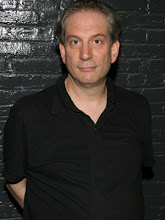
Bad Boy Author Tucker Max Makes a Movie And Survives

Exclusive Interview by Brad Balfour

Web phenomenon, book author and now film producer Tucker Max became an accidental Bad Boy through a combination of drink, smoke, willing women, too much testosterone and the Internet. Nonetheless, bad boy he became rather than a corporate lawyer. In his callow youth, he swaggered his way through a law education (at Duke) and reflected a frat boy wantoness that I have both hated and begrudgingly admired in its sheer assholic-ness.

Since he blogged it along the way, he garnered a virally expanding following, transformed his blog into a funny book, I Hope They Serve Beer in Hell, got it published by a division of Simon & Schuster, and has a huge following of wanna-bes, appreciators of his bawdy style and lots of women -- and most seem self-possessed and not self-flagellating.

So, is Max an heir to the sexual liberation of the '60s or just another exploiter of women -- a male chauvinist pig -- or both? Sitting down with Max, I got to see both his brashness and vulnerabilities when his film/bus tour came to NYC recently -- and we talked about his writing, his producing, his past and future.

Of course, both the business and the attitudes come easier when you've reached a certain plateau of success -- his book became a New York Times Best Seller and he co-founded Rudius Media, an Internet-based publishing outlet and management firm. That success paid off. It allowed him to hire a director, Bob Gosse, get Richard Kelly's production company -- Darko Entertainment -- and Freestyle Releasing to release it, with actors Matt Czuchry (as Max) Jesse Bradford, and Geoff Stults to star in the film.

And in the so far maligned film version of the book, Max even had a revisionist vision of his stories which reveal the value of friends and the virtues of a stable, long-standing relationship at the end of it all.

Q: You did it all for fun? The key was, you wrote it down.

TM: [Your generation] broke the walls down and we came in and said, "Alright, let's just have fun," instead of worrying about liberation, because you guys already did that.

For my parents, it was a different time; it was kind of shitty. Now it's much easier to do this stuff, be public about it and not have to deal with bullshit repercussions.

Q: Would you have had a life if there wasn't the internet?

TM: No way.

Q: You're like a Playboy Magazine manifestation through the internet.


TM: This is not a guess on my part. I tell you, in 2001, when I first started thinking about this could maybe be a career or I could do this, because I never thought I was a writer, I never self identified as a writer. And my boys were always like dude, these are the funniest emails, you need to write this stuff down.

Q: So you were writing these as blogs.


TM: Take the "Sushi Pants" story. I drove from that parking lot, drunk, to my office, wrote that story down. Do you know why I wrote in that time stamp format? Because I was too drunk to write complete sentences. Seriously. All I could do was get the jokes out and the time stamp thing was my way of showing progression, that was it.

So I stumbled into this stuff. I took maybe five or 10 of these stories and I sent them to publishing houses and agents, every fucking one, like I probably sent out a thousand query letters or some stupid shit like that. 90% ignored me. The rest sent rejection letters, and two or three editors actually took the time to send personalized rejection letters about what an awful person I was, how terrible my writing is, and how I should never pick up a pen again--that kind of shit. That was 2002.

At that point, dead in the water, no internet, what the fuck do you do then, right? Nothing. My buddy was like, "Just put it up on a website; fuck them." I put it up on a website and the shit blew up on its own. There was obviously a market for it; none of the publishers or agents saw it though.

Q: Did you do your own editing or did you have help?

TM: Nils [Parker].

Q: This is a pop culture book; though it's not written in a literary fashion, you're not outside of a literary tradition of J.P. Dunleavy's "The Ginger Man" and other books about bawdy characters or cads. I'm sure people have said you're a post-literate Henry Miller.


TM: The two comparisons people use a lot -- and I don't really agree with either one -- are Hunter S. Thompson, which I feel like doesn't make any sense because he's so political and so drug oriented and I think he's a lot better writer too, and Bukowski, and I don't feel like that makes any sense either.

Just because the subject matter is generally the same -- drinking, women, partying -- they're like, "Well it's the same," but I feel those two are both not only much better writers, but they come from such a different perspective than I do.

I come from a perspective of... to me, it's all about joy; the stories and everything. It's funny, it's all about making people laugh and being entertaining. Theirs is like your generation's perspective, which is totally totally different than mine. Hunter S. Thompson is nothing if he wasn't a political animal, and Bukowski, the dude was depressed, man.

Q: Are you the end result of the sexual liberation? That's to say, what's wrong with fucking? It's like enough already with all sort of political correctness. Don't get me wrong. You're just as much of a dork as the girls are. But in a funny way, girls are totally in control of you; it seems you're not really the cocksman that you like to think you are.

TM: I know as well as anyone that everything I do is to get laid. People are like, "Don't you hate women?" Hate women? I love women; everything I do is to impress women, dude. Everything. It's not just about getting ass; if it was just that, you get prostitutes. It's more about interacting with women.

Q: You are really fascinated and obsessed with them. Some men are p-hounds. Or have been. There is something to having that sort of completely unabashed encounter.

TM: It's almost like Casanova.

Q: It's all possible; you're not the most beautiful guy in the world.

TM: Not the smartest, not the funniest, not the best looking.

Q: But you're pretty funny; I'll give you that.

TM: There are tons of people funnier than I am. Nils is way funnier; that's why he has such a hot wife.

Q: That's why he has the hot wife.

TM: His wife is rich too; so fucking rich it's crazy. I was kind of jealous but whatever.

Q: So, the art of cocksmanship. Is it 100 women? 300 women? 50 women? When did you lose count?

TM: I know I was in triple digits before I put the website up, but not much into it, and since then dude it's been... If you're like over 30 or 40 and you know your exact number it's kind of creepy. I have no idea.

Q: Do you consider yourself specifically west coast animal -- aren't you based there?

TM: I'm not West Coast at all. I was born in Atlanta, but I grew up in Kentucky, outside of Lexington, in Winchester.

Q: Do people perceive you as a right-ish kind of guy?

TM: Usually, whatever people's particular political leaning is, they either think I'm just like them or the opposite. I never talk about my politics in the book ever because I feel it's irrelevant to the comedy, but personally I guess I'm what you'd call a "South Park Republican" -- fiscally conservative and socially liberal. Very much pro-choice, pro-legalization -- it's so stupid that pot's illegal -- all that sort of stuff, but I'm not very progressive economically. Not like asshole George Bush Republicans, but more like a classical one.

Q: You could be a Democrat nowadays?

TM: I could find a position in Obama's cabinet, yeah, if they ever wanted me.

Q: He's had more Republicans in his cabinet than any Republican has had Democrats in theirs in recent years.

TM: Seriously, that's true. Even if I was a Republican, George Bush would have pushed me out of that party.

Q: They definitely are the guys that would have repressed and jailed you.

TM: No question; evil, those guys.

Q: So it really is your movie.

TM: For better or for worse it is ours. Nils and I are the co-creators start to finish; we wrote the entire script, we picked the director, cast the actors, picked the financiers, and we were not just on-set producers but made every creative decision, it was us and Bob.

[Tucker and cast member Keri Lynn Pratt]

Q: Did you get to say everything about the casting?

TM: We did this as an independent movie for that specific reason. Nils and I had every opportunity to sell this; Fox Searchlight offered us $2 million for this script but we turned them down flat because they were going to pick the director, pick the actors, and they'd make the movie they wanted to, not the movie we wanted. We had a very specific creative vision, which is why we adapted the screenplay and we independently financed it.

Q: That's another thing that's different from the writers of the old days. You can make your own movie. You're a creation of the internet and you culminate in the post-literate media era.

TM: Believe me, I am acutely aware of how I'm taking advantage of opportunities that were not available to people before me. Before the internet, if the gatekeepers of media stopped you, you had almost no way around them. Now, you can go directly to your customers, and that's what I've done since day one.

That's what this premier tour has been about; we didn't advertise this, we didn't sell this through Ticketmaster, I put it up on my site, on Facebook, on Twitter, and we sold out the whole tour just going directly to my fans.

You can't really release a whole movie like that; we're going to buy plenty of commercials and normal theaters, but the initial grassroots marketing came from my direct interaction with my fans.

Q: So where'd you get this ego?

TM: That's a good question dude; I don't know. Narcissism, dude. I have a Narcissistic Personality Disorder; in some ways it's beneficial. There are many ways that it's not, but some ways it actually helps.

Q: Your parents didn't fill your narcissistic needs when you were little.

TM: My parents were very much absentee parents. From a very young age I was kind of on my own; not like a street urchin, I always had food and clothes. But they were very much in their own worlds doing their own things.

My parents were divorced when I was a year and a half; my mom was a flight attendant so I was always on my own so it's kind of like sink or swim. And I just from a young age did everything on my own and developed this narcissistic confidence.

Q: Do you think of yourself as a guy's guy or not?

TM: I'm always hesitant to say I'm a man's man because that has such loaded connotations. I feel like I just am who I am, and some guys see me as a role model, some guys see me as a pariah, some guys love me, some guys hate me. Whatever; people just bring their own baggage to what I write and some people love it and some people don't.

Q: Can you talk to women and do women like being your friend?

TM: Oh yeah, no definitely. I don't really have a lot of female friends I don't sleep with. I have a few, but most of my female friends I hook up with, I call them fuck buddies. So it's like, a girl you're sleeping with and not dating, not like a booty call and not a girlfriend, but kind of in between.

It's great because it's like the transition stage between pure bachelorhood and a committed relationship. You have a couple of girls you're really good friends with, you like hanging out with, you hook up with once or twice a week, but you can still chill and go out drinking with and it's no pressure; it's great.

Q: So you have the choice of becoming a producer, where you're encouraging other writers and a new lot of productions like this, or you're going to become a monk.

TM: There's no question; I'm not going to act at 43 the way I act at 33. [And I'm not like I was at 23.] I'm going to be like Dr. Dre; make your mark in front of the mic and then step behind when you're done.

Q: What's with the idea of making it with physically challenged people?

TM: I don't prefer disabled people -- that's like a fetish -- it's more like... You know how when you're in a group of friends and it's like who can drink more, or you kind of one up each other? With us it was always, who had the best story, and so if you've hooked up with a midget that's kind of funny. It's fucking hilarious; the sex wasn't that great, but it's the ability to say "I hooked up with a midget." And same thing with a deaf girl; it's a novelty.

Q: How did you cast Traci Lords -- the former porn star turned conventional actress?

TM: She read the script and she loved it. And the reason she wanted to do this role is because if you look, the female characters are actually pretty smart, strong and in power. They're not dumb sluts or ridiculous, omniscient characters like you see on sitcoms; they're really good, strong female characters. And she loved the script, she thought it was hilarious. So she did it.

Q: Did someone bet that you were going to get arrested.

TM: During the shooting there was a pool, it was a joke, like who would get arrested. Nils, like third day, he gets arrested at a horseshoe casino. He was the first one to get arrested.

Q: Was there any temptation to play yourself?

TM: Yes, there was. Early on in the process...[I realized] I'm not a very good actor. I'm good at some things, acting is not my thing. I set up in my house a camera and I read a couple of the signs with myself.

I threw that shit away because it was embarrassing; I was terrible. I had very little respect for actors before I made a movie, and now I have a lot of respect. It is very hard. I had no idea how hard it was until I tried it and I watched myself and I'm like, "I suck! I'm terrible!"

Q: What gave you the most anxiety? Casting someone to play you? Or casting the women?

TM: There are so many great actresses in Hollywood and there are so few good parts, I knew we would find good actresses, so that wasn't the problem. I was anxious that we would get the Drew character right and the Tucker character right. I thought the Drew character would be harder but Jesse Bradford was the first person we saw and he nailed it right off the bat. After that we just couldn't find a Tucker; it took 200 or 300 actors coming in.

Q: Really? You must have been sick of yourself.

TM: Dude, you have no idea. It was so hard to find that balance between guy who is redeemable and likable but still kind of edgy and an asshole. Actors were either kind of creepy and aggressive, or weepy pussies; no one fit that line. Czuchry came in though and nailed it.

Q: You can't be too creepy and disgusting because you have to create a sympathy.


TM: I feel like in a lot of ways he's a better me than I am because he's so much more likeable.

Q: After I got through the book, I thought there were many times when you actually displayed a moral rudder and had a sort of positive point of view. It's a little unfair to call you completely an asshole.

TM: Well you can be an asshole and still not be a bad person. You can be a good guy and still be an asshole. Well there's no question I've grown. Making a movie is no joke man; you've got to learn how to collaborate and how to work with other people, and I wasn't good at that in the beginning. I've gotten much better now.

Friday, September 18, 2009

Media Mogul Tyler Perry Does A Good Job Talking About I Can Do Bad All by Myself

Story by Brad Balfour

Sitting at a conference table almost too full with cast members of I Can Do Bad All by Myself, the mulit-hyphenated Tyler Perry came to Manhattan to offer a lively Q&A session with a broad range of press people. While his latest film is remotely based on an early play of his of the same name, Perry's feature focuses more on his on-going positive message of redemption and growth than the antics of his flippant but caring Grandma Madea character. And again, once it opened it topped the box office.

Coming from poverty and homelessness, Perry has gone on to make an incredible success of himself, first as a writer/director/producer of plays, then as the creator of films and television series. Through his female alter-ego, Medea, he became a huge comic phenomenon, and a whole industry in and of itself.

Besides producing plays, film and television out his huge Atlanta-based production studio, the 40-year-old has become a media mogul and motivational speaker with various charities under his auspices. According to Wikipedia, Perry's films have grossed just under $400 million worldwide as of July 2009. And to add to his list of accomplishments, Perry co-produced--with Oprah Winfrey--director Lee Daniels' Precious based on the novel by Sapphire--a movie that has won top audience awards at both Sundance and Toronto Film Festivals, will be the centerpiece film at the upcoming New York Film Festival and is already stirring Oscar talk.

In I Can Do Bad All by Myself, Madea (Perry) catches 16-year-old Jennifer (Hope Olaide Wilson) with her two younger brothers looting her home. The big-mouthed, wise-cracking granny takes matters into her own hands and delivers the young delinquents to their only relative, aunt April (Taraji P. Henson), a hard-drinking nightclub singer who lives off her married boyfriend Raymond (Bryan J. White). April wants nothing to do with the kids who live with their grandma (but she's M.I.A.). When a handsome Latino immigrant Sandino (Adam Rodriguez) is sent by the pastor of their neighborhood church (Pastor Marvin Winans), he trades work for a place to live in her basement.

The closer April and Sandino grow, the more she realizes the importance of faith and family. Once she's told by church elder Wilma (Gladys Knight) that her mom has died, she knows she has to take care of the kids, and reluctantly sees her life in a different light.

Things come to a head--Ray and Sandino fight; Sandino proposes to April--her best friend bartender Tanya (Mary J Blige) sings a song that is both the film's title and its signature statement: I Can Do Bad All By Myself.

Q: What’s the key to your success especially with this subject matter.

TP: I’m just a man that has used what I’ve learned in this life and I’ve tried to put it in film. I don’t want to just do film to make a movie for people to see; to blow up something, to kill somebody, explosions. None of that is attractive to me because what I’ve tried to do with my work and with my life is inspire and motivate people because I’ve come through too much hell to be able to sit in this seat.

I have a tremendous debt to pay so I want to just pay it forward and pass it on to other people; that’s why I keep doing positive movies. This is what I know for sure; you reap what you sow. That’s why I think I’ve been so successful; god is just blessing me and honoring everything that I’m doing.

Q: Your films are based on your plays; you’ve been able to work out the experience before a live audience. How has that experience of working in theater educated you and what your plans are with theater going forward.

TP: There’s nothing like a live performance; it’s immediate. And being on the circuit that I was on for a very long time doing 300 shows a year, most of them sold out, for 10 years straight, I learned a great deal. What will work and what won’t work and how far I can go and how far I can’t. And I’m still writing from those experiences. Everybody at the table can attest to that immediate give and take from an audience, and you take that and you go with it.

Q: You have a knack for talking about contemporary issues as you do in this film with the child molestation element.

TP: In writing this and talking about molestation and sexual abuse, it is very very clear to me that a lot of our own issues, including myself as a person, are a result from what has happened to us as children. So when I was thinking about April and her, “I don’t care about anybody but myself,” where would that come from? And molestation is the root to so many things, so I wanted to explore it a little bit and I think that when people really see it, they get it. They understand that, “Wait a minute; is this why I’m this way?”

Because it’s happened to so many people, and [because whatever goes on in this house stays in this house and nothing ever gets covered], that’s why I wanted to address it. I think that as people see it they’ll really get it.

Let me say this to everybody here; I’m speaking to people, for the most part, my base, my core audience, that everybody has ignored for years. And we are a people that exist and need to be spoken to in a way that we get, in a way that we understand. And I’m just really really fortunate and blessed to have that opportunity to do that.

Q: What are your thoughts on the current status of African American women who are not getting married at the same rates of other ethnic groups or white women, particularly because you cast another ethnic minority in a role that is the love interest for an African American woman. Were you subtly suggesting that African American women need to exercise other options [laughs]?

TP: I want to make sure that this is clear; hell no! No, the thing is this; I didn’t suggest anything, I didn’t even know those stats. I was once accused of being anti-Semitic last time I was here doing a press conference because one of the attorneys in “Diary of a Mad Black Women” got an award called the Feinstein award and they said that was anti-Semitic because I named the award after a Jewish person.

I don’t get it. It’s kind of similar to this; I’m just writing. I’m not thinking about what race a person is because I don’t live my life that way. I just write the story and I thought these two would be a good look and be good for each other with his story, his problems, his issues that he’s worked through, and her with hers. He could have been Tyrone Jackson, it wouldn’t have mattered, but in this case it just happened to be somebody who’s Latin.

I had the same issue in the first two movies; a couple of critics went off because all of my heroes seem to be light skinned. It’s not something I was even thinking about, it just happened. And so I went and found some dark skinned heroes in the next one. So I will take this into consideration; next time I will make sure that the black woman finds a black man.

Q: While white and Hispanic women may be on their second husbands, many African American women have never been married by the time they are in their 30s and 40s. One reason for that is that African American men are more likely to marry outside of their race.

TP: It doesn’t matter who they are or where they come from, but my point was that part of the reason that a lot of people are not married is because they have this list of what they want their men to be, have, make. And more important to the point of what Adam was making, it doesn’t matter if the person has nothing; if they can bring you love and the love you need then that should be enough.

Q: You do allow for some adlibbing; not everything is scripted. Were there parts of the movie where you were allowed the cast to expand their roles?

TP: Well there is this one scene, it was a really serious scene where Taraji and Adam are sitting on the sofa and we’re shooting the scene and Taraji leans over and she starts to kiss him but it wasn’t in the script. So I’m looking through the script and I’m sitting at the monitor watching and I just sit back and see how long it’s going to go. I don’t understand how when you’re kissing somebody you put your tongue in their mouth and you’re supposed to be acting, when there’s no camera inside your mouth to see the tongue.

So the kisses went on and on and on and I sat there waiting for them to finish and they just kept kissing. I have it on video; it’s a long long long long long kiss and they wouldn’t stop. So I finally said “Cut” and I said, “What the hell was that? Where did that come from?” Taraji was like, “What? It’s in the script,” “Show it to me,” so they adlipped.

Q: Being around such soulful singers and such an amazing pastor, was there ever a time during taping when you were doing the church scenes, that you literally go to church?

TP: Yeah, the entire church scene is real. I had five cameras rolling because I knew the only way to capture what I wanted is to have church, so that’s what we did. He actually preached a sermon and sang the song, that was it. It wasn’t like we did a million different setups; we did maybe one or two, but that thing that you feel when you’re watching it is real and you can’t fake that. You can’t cut and resetup and cut again and re-setup and try to get it; you have to get it as it happens and I was very adamant about capturing that moment.

Just like in “Diary of a Mad Black Woman”, when she comes in that church, you feel it. It was the same way I wanted it in this situation and the only way for that to happen is it had to be caught all at the same time.

Q: “I Can Do Bad” is one of your earliest plays. Why did you wait until now to bring it to the screen? And what sort of changes did it go through in the adaptation?

TP: No rhyme, no reason. And it’s so different from the play; the only thing that the movie has in common with the play is the title and Madea, that’s it. It was Madea’s first time on stage, I was scared to death. It was the Regal Theater, 79th and Stony Island. I had rehearsed all month the show without ever looking at a costume or putting it on, just like this. The night of the show I put the costume on and looked at myself and was like, “Oh god, what have I gotten myself into? It’s sold out out there and these people are waiting.”

So I’m standing there and they’re saying, “Go, go, go,” and Brown pushed me on stage. And that’s where she was born. But no rhyme or reason for it; I just thought the time was now.

Q: What are your upcoming projects?

TP: I’m working on a new album with Mary J. Blige [laughs]. Not. I just finished Why Did I Get Married Too; it comes out in April. The first thing that comes out in November is Precious directed by Lee Daniels. Oprah and I are presenting it. And then it’s Why Did I Get Married Too and I can’t wait for you guys to see it because Janet went through all the stuff with Michael at the time and she needed the work so she brought everything she had into the film and she’s got some scenes in here that I can’t wait for you guys to see.

Q: And you’re adapting For Colored Girls Who Have Considered Suicide When the Rainbow Is Enuf--a challenging and highly respected plays. What makes you want to do that as your first adaptation?

TP: ’m writing it now, don’t worry there will be no Madea in it. I know there are For Colored Girls fans who are wondering, “Why the hell is he doing For Colored Girls?” but I really really embraced the material and listened to the stories and the cast I think is going to blow people away. It is the most incredible cast of women of color, and Latin, that has ever been assembled in film. Ever.

Q: Are you sticking with the play?

TP: It’s all of Ntozake Shange’s work, her poems, but as you know, as everybody who knows For Colored Girls knows, there’s no story there; it’s all different vignettes. But what I did was each woman has her own story and all of their lives cross. It’s kind of like Crash; none of the women know each other. They pass through each other’s lives and they’re all living their own lives but nobody knows that they’re all on a collision course to meet each other.

At the middle of the movie what happens is one of the women has just started a For Colored Girls center, where women go through this 12-step program of healing from relationships and everything. A lot of the poems happen in this center when all of these women come together. So it’s going to be fantastic.

I’m also working on a new play; the first date is October 4th and it’s called “Laugh to Keep from Crying” but I haven’t written a word yet. But it will be ready.

Q: Have you cast For Colored Girls yet?

TP: I have made five phone calls. We haven’t made an announcement yet; the five women that I’ve spoken to have said yes, but it’s sixteen women, sixteen major roles, and I can’t wait to tell you. But the dream cast is pretty darn exciting and most of the dream cast has said yes.

Monday, August 24, 2009

Doc Director Robert Stone Reviews Our Earth Days

Exclusive Q&A by Brad Balfour

In light of the on-going ecological crises we seem to face daily, it was not only a massive task that veteran doc director Robert Stone tackled by making his latest film, Earth Days, but it was crucial for a movie like this to have come out this summer (it debuted as the closing night film for the 2009 Sundance Film Festival).

The film documents the history of environmental activism from its roots nearly four decades ago through the eyes of some of its key participants. To Stone, the modern ecological movement began with the first Earth Day on April 22, 1970, and is moving on to a new and hopeful phase today. To illustrate such a globe-spanning movement, Stone chose to focus on a small set of its crucial players and thinkers.Employing interviews, a strong historical reference and beautiful scenes of Earth's natural riches, Stone draws on his own personal commitment to the subject to propel his film forward.

Stone's witnesses includes former Secretary of the Interior Stewart Udall; biologist Paul Ehrlich; Congressman Pete McCloskey; astronaut Rusty Schweickart; writer Paul Ehrlich and Whole Earth Catalog creator Stewart Brand, among others.

Q: Your film is at the center of all those films that covered the panorama of ecological issues; it looks at the roots of it all.

RS: A lot of what people are talking about are symptoms of a larger problem. What I tried to do is to step back and look at the root causes of it. All of what's going on now has a context and a back-story. If you just look at each of these little crises that these various films represent or book, it's almost like throwing paint at the wall. And what I'm trying to do is step back and put this all in context so you can understand what's going on now.

Q: It's almost like you're there at the core of it all and every other feature or story emanates out from here.

RS: Exactly. The root cause of all of it is that there's too many of us, and nobody talks about that anymore.

Q: How did you choose the specific people you focused on? There are a lot of others you could have used as well. Orville Schell is one who comes to mind but these people provide an interesting set of choices.

RS: A film dealing with a subject of this magnitude had to be grounded in personal narrative in order to work. So I wanted it to be personal stories that would carry the film forward. The fewer people you have the more personal the story's going to be. I thought nine people would be the maximum the film could carry.

There are three main characters in the film and the rest are sort of secondary. With each of them, their personal life stories mirror the journey of the film. You see them in their childhood and they undergo a personal change which mirrors the changes that happen in the society at large. Also, taken together they represent the different strands that came together to create the [environmental] movement. I wanted the film to be a personal story, not one where the subject dominated it and you just have this brief chorus going on, just interviewing experts. They're experts but it's also about their personal experiences.

Q: Were you conscious about environmental issues from an early age?

RS: My mom read [Rachel Carson's] Silent Spring to me when I was eight years old so that had a pretty profound effect on me. Then [the original] Earth Day absolutely was a big turning point. I grew up in a college town and was really exposed, even though I was a young kid, really exposed to the demonstrations against the war and the political activism. Though I wasn't really a part of it, I saw it.

When the environmental movement came along with Earth Day, it was like a children's crusade in some way--kids got involved and that was our revolution. Kids have a natural understanding about the environment and a fascination with nature in a way that grownups don't, I think. When you're a kid you're interested in animals and the world, so the environment is something that children immediately glom onto. I certainly did.

Q: You picked some of my cultural heroes; Stewart Brand has been here since The Whole Earth Catalog came out. It was like the internet on paper--"this is the coolest."

RS: It was. He ended up becoming a real pioneer of the internet, but that's been his whole thing from the beginning.


Q: Former Arizona Congressman and, later Secretary of the Interior Udall (under Presidents Kennedy and Johnson) was really fascinating. What was it about him and the others that you felt A) were really important to you, that focused you on them, and B) why did you think they'd still resonate to people now--for the historical context or because you want people to see the continuum culturally?

RS: Each of them plays a different role. Authors Paul Ehrlich and Dennis Meadows wrote two of the seminal books that had an enormous resonance in the culture and the whole debate. Though Rachel Carson's dead, she's in the film. Those three books: Silent Spring, The Population Bomb and Limits to Growth are the three seminal books, so those guys are in it.

Former astronaut [Russell Louis] "Rusty" Schweickart has an incredible story that's one of the great astronaut stories that's not been told. People know about the guys who landed on the moon but his is really remarkable. I'd met Rusty about 15 years ago and heard his story. I always was amazed by it and surprised that so few people knew about it.

Rusty's another example of why I chose my characters. He's a minor character in the film, but not only does he go up in space and have this amazing revelation, he comes back and puts it into practice and becomes the Commissioner of Energy for the State of California and does all these radical innovations with energy conservation. So all the characters reemerge throughout the film in different phases.

Q: I could talk to you all day about Stewart Brand. He is one of the most fascinating personalities in the world. The Whole Earth Catalog came out and changed everybody's thinking in this time when the movie starts.

RS: Yeah, that's one of my favorite people in the world. Stewart had a profound impact on me and the visual palate of the film. Originally, when I started delving into this and finding archival footage, the first thing we did was find news footage that covered the topics in the film. It became clear early on that that wasn't going to work visually for this film because a lot of what they're talking about is almost unfilmable.

The whole message Stewart's been putting forth for 40 or 50 years now is that technology can enhance our perception of the world and by enhancing our perception, is the only way we're going to get a grip on the problem. You have to understand the problem to perceive the problem before you can start to find solutions.

He's always been pro-technology when the rest of the movement was really anti-technology. He said, "Look, rockets can get us into space and that can allow us to view the world from above and get a new perspective on our place in the universe. Airplanes can lift us up in the sky. Stop-motion photography, you can look at a smokestack and it might seem rather benign; you speed it up 100 times and you see how awful that amount of pollution going into this tiny veneer of an atmosphere we have."

So we started using those simple visual techniques to not only visually depict what was being talked about, but also since so much of the film is about this change in perception that we had going from the '50s into the '70s, [it shows] a revolutionary change of perception about our relationship to the earth. So Stewart had a really profound impact on how the film actually ends up looking.

Q: You talk about pesticides, Carson and President Kennedy. How significant was the President in an environmental issue?

RS: It was hugely significant. Because she didn't have academic credentials, she was a scientist, a woman--a single woman--so at that time the pesticide industry went after her with a real concerted campaign to discredit her, calling her a hysterical woman, that she didn't know what she was talking about. They were trying to destroy the message by destroying the messenger.

Udall had given Kennedy a copy of Silent Spring. He read it and was very moved by it so he came out and publicly supported her and set up a scientific panel, a commission, to study what she had done. He ended up supporting her and backing all of her research. That really silenced the critics and it went on to become a huge international best seller. Carson and the book had a profound impact on starting the whole environmental movement.

Q: If it had been Al Gore instead of George Bush becoming President would there be a whole different perspective right now?

RS: It goes back to Reagan really. I don't think you can just blame Reagan as a person, it was a whole movement. Reagan was elected by an overwhelming majority of the American public; America adopted a very conservative ideology that was easy. It's very easy to say the magic hand of the marketplace is going to solve all of our problems because then you don't have to do anything.

Reagan basically said we can go back to a 1950s mentality and the marketplace will take care of things, and people bought into it. As Hunter Lovins says at the end of the film, "We lost 30 years. For 30 years there was absolutely no movement forward In fact there was movement backwards, and we're just now resetting the clock and getting back to where we were."

Q: Ironically, the marketplace has been the one area where there is some movement in that people are trying to come up with new technologies to try to get ahead. Even during that 30 year period.

RS: It wasn't a fair market; it wasn't a market, that's the thing. The free hand of the market actually will solve these problems if it's a real market. If when you buy a car, you're paying the full value of that car including the damage to the environment that went into making the car and all of the pollution that's going to come out of that car, that's the value of that car. If you pay that, if it's a real market, that will solve the problem. And that's where the environmental movement is going now.

Q: The irony is that if they had allowed proper market forces to allow for technological innovation, there would have been alternative energy sources years ago. But there's a sort of corporate totalitarianism; they're not free marketers; they're corporate socialists.

RS: That's absolutely true. That's addressed in the last part of the movie when Dennis Hayes talks about the solar entrepreneurs as being crushed by these giant corporations who wanted to control the power industry.

Q: Pete McCloskey was a sort of liberal to moderate Republican but I didn't realize he became a Democrat. It must have been fascinating to talk with him and see his cultural and personal evolution.

RS: It's not that he's changed, it's that the Republican Party just shifted so far to the right and completely abandoned all the principles of environmentalism that it founded. And he's not the only one, there are other people I interviewed that didn't make it into the film; I interviewed Russell Train who was Richard Nixon's environmental advisor and the second head of the EPA. He's a staunch Republican was a big supporter of George Bush Sr. and everything, but he voted for Obama and is just appalled by how the Republican Party has abandoned environmentalism.

He's like, "We started environmentalism, this was our cause." Talk about conservation, this is conservative. And this corporatism you mentioned, corporate socialism, is exactly what bothers them; that the Republican Party has just shifted into this craziness. Republican environmentalists have just abandoned the party in droves.

Q: It amazes me sometimes, how could a Republican think that environmentalism is bad? I don't get it. Did you figure it out?

RS: It got caught up in the culture wars, and the Left has some blame here as well in that what you saw happening in the '70s with that initial burst of legislative success coming out of Earth Day, is that these minor, marginal environmental organizations became huge, they moved to Washington, they became these giant Washington lobbying organizations doing battle with corporate lobbying organizations. And the American public outsourced their activism to these Washington groups and they lost because they were overwhelmed by bigger forces.

I see the same thing happening now, and that's a warning of the film. Right now, the current battle over climate change, all it is being debated by Washington lobbying organizations, and how much money can you put into The Left versus The Right? Who has got the most amount of money and the most clout?

As long as that's where the movement is going, it's a recipe for disaster. That's what happened in the 1970s. Right now you almost have a complete reversal of how things were then. In the early '70s, it was a grassroots movement, with the mass public demanding change on a political level. And in the late '70s, as it is today, it became more about scientists, environmental activists, and a segment of the political class who were leading the whole thing. But they'd lost the support of the mass public who didn't understand the problem.

I think you see the same thing today. So unless you get back to it being a grassroots movement, it will be like the recent climate change bill that passed by what, three votes in Congress? With Obama in power, and the Democrats in control of the House and Senate, everybody's talking about climate change, yet with everything that we know about it, it passed by only three votes? That's not good.

Q: We have the nuttiest strain of Republicans in power that we've ever had.

RS: That's true. The film addresses this moment in time where there was a big focus on the environmental movement about perceiving the larger problem. In the case in the environment, people can get their heads around the big issue, and it's not a Republican or a Democratic issue that we need to care for our planet and that we're all in the same boat here. That's a big picture thing; when you start to get into arguing about the minutiae and the details about how we get from point A to point B it becomes politically divisive. So I would hope the environmental movement could get back to focusing on the big picture and not the minutiae.

Q: Many politicians prefer to tackle other issues because they usually resolve those issues in a short time. In order to get elected you have to solve a certain issue. Do you think that's part of the problem?

RS: Yeah, they're not going to tackle long term issues unless they're forced to do so because there's no political advantage to tackling long term issues. So again, as long as it's a battle of lobbyists in Washington it's going to be a losing battle for environmentalists. And I think the lesson of that is clear by what happened in the late '70s.

Q: Do you think that movies like yours and these other ones will help on a grassroots level? Because they don't make the larger political issues, they give it a more personal connection.

RS: I hope so. I don't think anybody can say that documentaries don't make a difference anymore. An Inconvenient Truth undoubtedly made a difference. Some films do and some films don't. My film is designed to reach as wide an audience as possible and not be a polemic. It's an effort to put this whole thing into a larger context, so for anybody who wants to really understand the environmental movement now, [they have] to understand how we got here.

Friday, August 21, 2009

Youthful Actor Jonathan Groff Is Taking Woodstock And The Stage

Exclusive Q&A by Brad Balfour

For such a young actor, Jonathan Groff has had this charmed life. First, he lands one of the highest profile roles in a musical, Spring Awakening, a show that was meant to confront Broadway conventions. Right after he leaves that show--with a Tony and Drama Desk Lead Actor nomination in hand for his performance as Melchior Gabor--he goes on to play Claude in The Public Theater's Shakespeare in the Park 2008 revival of the '60s revolutionary classic Hair. In both roles, the sweet-faced Groff challenges authority with a smile and triumphs theatrically, if nothing else. And this is all accomplished before his 24th birthday. As a newcomer to New York City, making his way here from Ronks--a town near Lancaster, PA--Groff went from high school theater geek to Broadway contender in a very short order.

But of course, with these two achievements under his belt, getting tapped to play the part of Woodstock organizer Michael Lang in Ang Lee's Taking Woodstock seemed a natural progression from "Hair." Though he has limited screen time, he so effectively slipped into that role that he physically seemed to mutate into Lang.

Now, besides his illustrious cinematic debut playing a historically resonate figure on the heels of the 40th anniversary of the actual Festival, Groff adds further heat to this summer's boil by playing Dionysus in The Public Theater's Central Park presentation of Euripides' The Bacchae.

And despite some mixed reviews for The Bacchae, the play provides him with another way to provoke through a sort of primordial counter-cultural figure. Groff has had an uncanny instinct for landing provocative parts in great shows, created by well-recognized artists such as the legendary Greek tragedist, the Oscar-winning Lee, or the award-winning playwright Craig Lucas.

Q: Seeing you in The Bacchae, it's clear there's a connection between lots of the things you've done so far. Though Dionysus is a dark figure in this context, the idea of him unleashing sexual tension fits with your other projects. You embrace that kind of role. In Spring Awakening you are part of a generation that would have been hippies if they'd been in the 1960s. So you've experienced this cultural phenomenon being expressed in all these different vehicles.

JG: That's so true. It's funny; I've never even thought about it until you were talking about that. Yeah, I feel really lucky to get to play these revolutionary guys that are working for a cause; it's a really exciting thing. As we were rehearsing for The Bacchae we were doing the press for this movie, and I was on the phone with my dad a couple of weeks ago. I literally said to my dad, "I can't believe it, but there is a lot of Michael Lang in Dionysus."

Everyone talks about Michael's smile and how certain people view it as an angelic smile and other people view it as a devil's smile covering up something. It's the same thing with Dionysus; in the mythology, when they originally performed it in Greece, the mask for Dionysus was a smile. He was doing all of these evil things with a smile on his face.

Q: Wine was the intoxicant of the time but it could have just as well been psychedelics. You've got him going to the women and saying, "It's okay to be yourselves, to leave your husbands. It's okay to frolic nude in the woods with other women." Using intoxicants, unleashing women...

JG: Totally. And the gender-bending; seeing a man dressed up as a woman, which was a clichéd thing for some people, it still is to this day. Anthony Mackie, who plays Pentheus, was telling me about how people from his life, his neighborhood, are like, "Dude, I can't see you in a dress." They won't come see the play, they're like, "It freaks me out, it makes me feel weird," and he's like, "Really?" They know me, they've seen me in a bunch of stuff and it still freaks them out." It's mind-boggling.

Q: I guess they liked you at the Public after you did Hair; that led you to doing The Bacchae?...

JG: I did a Craig Lucas play at Playwrights Horizons, Prayer for My Enemy, and then did a Craig Lucas play at the Public, The Singing Forest and was playing these characters that were incredibly moral, searching, confused and heart-breaking.
[Groff won the 2009 Obie Award for both productions--he's pictured at left with the award and former fellow Hair cast member Karen Olivo]

I was talking with Craig one day, and he was like, "What do you want to do next?" I was like, "I think I want to do a classic play because I've never done a classic. I'd love to play a character that's not so moral, not so upstanding."

Even in Hair and Spring Awakening, they were rebels but they were really good people. But [Dionysus] is very revengeful. At the end of the play I ruin the old man, Cadmus' entire life but he didn't do anything wrong.

Q: When I look at the metaphor, I don't find him all that bad--at least not in you.

JG: It's interesting because there are a lot of parallels between Jesus and Dionysus. I mean, a new religious figure coming in out of nowhere and people starting to worship him.

Q: When you look at the values of the time there was the male dominance and women were supposed to follow orders--he attacked the values of the time.

JG: Totally. The son of god, the son of Zeus; a mortal mother, a sort of immaculate conception thing that some people believed in, and some people didn't. Spreading a new way; Jesus did, "Here's my body and here's my blood." That's all in there. It's really fascinating. I literally have so much fun doing this play, I go to bed at night thinking about how I get to do it the next day so I wake up in the morning and I want it to be 8 o'clock.

Q: How do you do this in all the heat we've had?

JG: We rehearsed in that heat. We we're there all day rehearsing, which is a lot. But the park is the most incredible space in New York; it's just magic A) because it's outside, and in the middle of Central Park which is my favorite place in all of New York, and B) because everyone, most everyone, that comes has waited in line all day to see the show so it's an audience like no other because people are hungry to see this play.

People have to work, or know someone, or find a way in, so when you they get there, and are in the audience, it feels very special and of the moment.

The other night, for example, there was that huge storm that came so we finished just in time before it started raining. There were huge cracks of thunder and lightening. And they keep calling the god whose voice is thunder, I was standing at the end, and I revealed myself as the god in the end. I was standing at the top in my sparkle thing, and there were, literally, strikes of lightening coming down from the thing and we were like, "Whoa, this is so cool!"

We had those moments in Hair too; suddenly a breeze would come through and it changes the entire meaning of everything. It's like you're standing there and suddenly a wind catches you. One night in Hair we were so hot, literally, that our bodies were steaming, and just the energy of it, it's just an amazing space.

Q: You played the one character who is the link to the real Woodstock experience, Michael Lang. You're at the right age, and getting to see this experience filtered through meeting him... How was that whole experience for you?

JG: Now Woodstock is obviously such a huge part of my life and I know so much about it, but when I try to think back to what I knew before this movie, even before I did Hair and before my life was consumed with the late '60s, I remember knowing that Woodstock was a very famous concert in the late '60s and knowing that Janis Joplin, Jimi Hendrix, Richie Havens, and The Who were all there.

It was a movement in some way and that's pretty much all that I knew about it. Now I know so much more about it, and have been learning a lot about it, so being a part of it and living in it for that summer was really inspiring. Michael Lang was 24 years old when he did that and it's mind-blowing. I'm 24 years old and to think that someone had the vision, that drive, and that idea at 24, and actually saw it through, is completely inspiring.

Q: And the fact that he wasn't intimidated.

JG: He's just this chill dude. I asked him, "450,000 people, a disaster area, not enough food, not enough bathrooms, people threatening not to play, rain--why were you so chill? Or even building up to that; what made you so relaxed the whole time? Is it just who you are?"

His answer to me was that he saw it. He said he was the only one; he knew exactly what it was going to look like, what it was going to feel like, what it was going to be like, and what the movement was going to be--what a beautiful thing it was going to be. He saw the light at the end of the tunnel.

Everyone else was sort of throwing their arms up, screaming, running around and doubting, not knowing, and he said, "I just knew that it would work and so I had complete confidence." It's just also who he is.

Q: How much are you like that or not?

JG: He and I have a lot in common; I think we share a similar quality. Like when I spent the weekend with him I learned just as much about playing him as a character as I did about a way in which you should live your life. I felt like what a cool thing, beyond finding a mannerism, or talking to him about the experience and getting information, it was just cool to spend time with this guy who knows how to live his life with such ease, passion and confidence. He has a lot of faith in people and I think he's incredibly positive. We sort of share that. And it takes a lot to ruffle his feathers; I'm sort of the same way.

Q: Sometimes, it's not good to meet the person you're playing, and there are other times when it's essential. This was an essential moment because you were the one person who plays a character that has to give authenticity to the film.

JG: That was one thing that when I sat down with Ang for the first time and he put the research in front of me, he was like, "Michael Lang, people not only know what he looked like, what he did, and they know his name, but they also know how he interacts with people, how he smiles, his look on his face, his vibe."

Michael's vibe is very specific and people that really know Woodstock really know him. He's also an important part in the movie because he represents all the business stuff like finding a location and doing the press conference and changing the hotel and making it offices and all of that stuff.

But Ang said to me, "When you come off that helicopter in that scene, I want to see Woodstock in that moment. Like Woodstock is landing in his front yard, like this is the start of the whole thing." So he was very, very intent on that and on that day when he shot, he kept saying that to me, he's like, "I really need that vibe, I really need to get that vibe."

Q: Had you ridden horses before?

JG: My dad trains and races horses for a living, but he does harness racing so I had never been on the back of a horse; I didn't know how to ride a horse. A huge part of the joy of shooting the movie was that for two weeks I got to go horseback riding in upstate New York. That amazing horse that I ride at the end, this beautiful white chocolate horse that is RJ, the horse they use in Hidalgo. It was incredible, literally the most beautiful fields and trees and forests; it was so much fun.

Q: In Spring Awakening you're the character that leads the charge, in a sense, right?

JG: Yeah, Melchior's an atheist. It's a society in 1891 Germany where the kids are completely repressed, sex is obviously completely taboo; the very first scene of the play this young 14 girl asks her mom where babies come from and she says the stork. And my character is the only one in the whole play who was raised with liberal parents who taught me about sex.

With my best friend in the play, Moritz--who ends up committing suicide because his body is so out of control--I end up educating him and I write him a sex essay which gets me then kicked out of school. I have sex with that girl and get her pregnant; she has an abortion and dies. So Melchior's the rebel, the revolutionary; he's the open-minded guy that's going to lead. The final lyric that I sing in the show is "One day all will know," because he's going to go out and change the world.

Q: I really like the songwriter. Duncan Sheik. His pop music sounded a little bit like he is an heir to David Bowie for that post-Bowie generation. ?

JG: Duncan can't write a bad song. I'm a fan of his music as well; I listen to it all the time, I have his anthology. But it's so stunning. It's totally his own voice and it's completely unique.

Q: Then you do Hair--they came to you for that?

JG: At that point I had an agent so they submitted me for it, then I had an audition, a call-back for that, and then got it.

Q: Though it's very much an ensemble, the one or two of the characters that anybody remembers is yours, the nominal leader of the Tribe. Did you actually grow your hair for that part or was it a wig?

JG: A wig.

Q: You were never tempted to really grow it out?

JG: I totally would have if I could have, but I didn't have enough time. It was incredible though, to go from Spring Awakening where we were in these buttoned-up, 1891 costumes. Yes, we got to let loose in the songs, but the teachers were hitting us, we were on wooden chairs.

But then in Hair I got to literally release, physically. The whole show is about freedom, as if the kids in 1891 could have had rock 'n roll--that was the whole point of Spring Awakening.

Q: So when you get into Hair, the actual cast really is experiencing the idea of Hair--the idea of the moment. And, except for yourself, everybody else gets that moment of nudity on the stage. I'm sure they didn't do that before on stage back then. The fact that it's still provocative is even interesting.

JG: It is, it's fascinating. You know they say that moment of nudity in Hair, it's always optional, it's always been optional, like since '68 you could do it if you wanted to. They said that moment is about feeling free, whatever that means to you.

Q: You're the only one that isn't supposed to get naked.

JG: Yeah, because I don't burn my draft card, so I'm not free. And so I sing a song about it, and get completely upstaged by all the naked people. Literally, I've never been more upstaged than at the end of Act One of Hair, when you're singing this ballad, "Where Do I Go?," and you're crying and singing. It's this beautiful song, and people are literally in the audience craning their necks to look around you to see the naked people. It was hilarious.

But, when we started rehearsals, that show forces you to experience the vibe of the time. If you're really going to do Hair, you're really going to go there; you live it. It's pretty much all music, with some scenes here and there. Everyone's on stage the whole time. When we were doing it, we were outside in Central Park under the stars, the stage was made of grass. It was like we were really experiencing something that was other worldly.

There are lines like "look at the moon" and there was the moon in the sky in Central Park; and "Good Morning Starshine," and the stars are literally right above you. There are people dressed as hippies in the audience, people that actually experienced that time, and they're pulling out their own clothes and coming to celebrate. Then people that are my age that think that it's cool, are dressed up and sitting in the audience. And they come on stage with you in the end and dance with you.

Q: I went up on stage.

JG: Wow, that's so cool. One of the first things that I asked Michael while I was at his house--because obviously he's a pretty savvy music guy--I was like, "To you, who really knows the music of the late '60s and was really involved in the authenticity of what it really was, is Hair sugary and silly to you?" And he was like, "No man, that was the real thing. The Vietnam War was happening and they were protesting it on stage."

I was talking to some of the original cast members that came to see the show and they said that after the show was over, at the stage door, some kids would be like, "Do you think I should burn my draft card?" I mean, I can't imagine what it must have been like to be performing that show in 1969 on Broadway.

Q: So how long a gap was it between Hair and Taking Woodstock?

JG: Spring Awakening closed and five days later I auditioned for and got Taking Woodstock. And then I got Hair and Hair began. And then I was performing Hair at night, getting in a white van that drove me to upstate New York to rehearse with Ang, and then the van would drive me back the next morning and I would get up, go to rehearsal and then do Hair at night. That was back and forth for a while. And then I left Hair on a Saturday night and started shooting Taking Woodstock on Monday. So it was literally those two projects back to back.

I did it for about a month. it was a really intense time. It was completely joyful and exhausting at the same time.

Q: Well, I must admit, I wasn't sure how I was going to be affected by Hair. Did it resonate with Ang?

JG: When he cast me, he didn't know that Hair was happening. He didn't know anything about it. He just cast me. I literally put myself on tape, and hours later got a call that they had fast-tracked the tape to Ang and he was interested. So it was this happy accident; Woodstock didn't know about Hair, and Hair didn't know about Woodstock. They just happened to overlap and all the research was good for both. The characters that I played were actually pretty different, but to feel like you were in the world and you were living that time was a real gift.

Q: It was amazing to see how people were trying to re-embrace it and, I think, are still trying to re-embrace. I'm curious to see how Taking Woodstock is accepted.

JG: I can't wait. I think the thing that we have gotten away from, or at least that my generation has gotten away from that we're ready to re-embrace, is the idea of being passionate about something.

I feel like detachment and being an arm's length away and not caring or whatever is like the cool thing. Because in the '60s it was the very passionate defiance of the authority that was great, do you know what I mean? It wasn't that you were detaching like, "Fuck you, we don't care," it was like "Fuck you, we do care about something else."

There was a fire underneath everyone, and I think that that's what is coming back. For example, I was in Midtown when Obama got elected. First of all, up until the election, kids my age were going to Pennsylvania and Ohio and they were campaigning and they were asking questions and they were passionate about something.

Then, when he got elected, I was with my friend Allison Case from Hair, we were at a bar in Midtown when he got elected. It was like New Year's Eve; people were crying and running and screaming and shaking each other. That's the thing; whether it's peace and love, there's always an opposite and all of that, but it's the passion. It's the idea, which Michael had too, the idealistic view that we can hold each other's hands and make change, make something happen, and that we, whatever little thing that I do, can make a difference.

Q: Well I'm hoping is that people can have that feeling without being embarrassed by it.

JG: Exactly.

Q: Well, as good as those guys at Focus Features are at making hits that also have political and cultural credibility, Taking Woodstock is a risk. As Ang has said, "I want to do something that not everyone thinks about doing."

JG: I'm so inspired by Ang. Someone mentioned to me in an interview--that some critics at Cannes were disappointed because they thought it was going to be more about a concert and they also thought that, with Ang Lee, it would be more deeply, dramatically, intense or something.

Q: It is but it's not negative.

JG: That's the thing. When you go and see an Ang Lee movie, you should have no expectations--he reinvents himself with every film. All you know is that you're seeing a piece of art because Ang is a true artist and he listens to his instincts. He listens to his heart, is incredibly detail-oriented, does his research, is a hard worker, has an opinion about things, and puts together a work of art, whether it's comedy, a drama or whatever.

Like the inspiration for Taking Woodstock was that he was doing The Ice Storm and he always researches back five years before the movie. He was taken with the Woodstock thing and wanted to do something positive. This is a guy who reinvents himself every time he makes a movie, from Crouching Tiger, Hidden Dragon to "Sense and Sensibility", to The Ice Storm, to Ride with the Devil, to Brokeback Mountain--which is about gay cowboys--now to this movie about Woodstock. He's unbelievable.

Q: So are you getting weird offers, getting good offers or what?

JG: I'm back to auditioning again; back to square one.

Q: At least you're making a living.

JG: Totally. At this point, it's about just looking for the good writing. I love acting in the theater,but I'm fascinated with acting on film. I love acting on film, but I've been fortunate enough to work on projects and with writers that are really challenging.

I've learned so much from them and grown as an artist so the rule is if it's well written you can't lose. If it's a film or a play or whatever, if the writing is good and you really feel passionate about it, you just can't lose. You'll grow from it. Whether it's a success or not is neither here nor there; you're going to grow as an artist from this experience.

Q: When this is over do you have other things in hand?

JG: No, I have nothing, I'm free. As of September 1st, I'm unemployed.

Q: At least you get unemployment right?

JG: I do actually; in theory I can.

Monday, August 17, 2009

South African Sci-Fi Director Neill Blomkamp Finds Life in District 9 Is No Picnic

Exclusive Interview by Brad Balfour

Who would have thought that this quirky, controversial, though sometimes uneven movie, District 9 could knock a tentpole picture like Paramount's G.I. Joe: The Rise of Cobra off the top of the charts after its first week. But besides being a classic science fiction tale in the best sense of the term, it has two other charmed words behind it--Peter Jackson. After complaining that there's a paucity of fresh ideas coming out of Hollywood lately, the Oscar-winning Lord of The Rings mastermind has put his imprimatur on District 9. Nonetheless, this feature is thoroughly the creation of 29-year-old South African-born writer/director Neill Blomkamp, based on his 2005 short.

Twenty eight years before the "now" of this near-future thriller, crustacean-like humanoids inhabit a vast galaxy-spanning spaceship that appears in Earth's atmosphere. Not there to make formal first contact, the "prawns" (as they become labeled) arrive here because of some unexplained (at least to the humans) mishap that forces their ship to hover motionless above Johannesburg. After some debate, humans helicopter up to the ship and cut their way in to find thousands of aliens starving and stinking up their vessel.

Relocated to Earth, they are crowded into a small neighborhood called District 9 where, over the ensuing 20 years, it becomes a shunned slum (a clear reference to District 6, the Johannesburg slum created by the ruling Afrikaans as a ghetto for its Black population). The obvious metaphor is there, made even moreso, when the South African government of this near-future's present decides to re-locate the one million-plus "prawn" population to a decidedly smaller, more isolated camp--in tandem with a corporation, MNU, running the alien ghetto while secretly trying to tap them for their technology and biology. Though humans and aliens can somehow communicate--humans can sort of decipher their gutteral clicks and snaps (which sounds a bit like the real Xhosa language)--there's a huge misapprehension and resistance by the prawns to their forced move.

Applying a range of extrapolative techniques to explain this alien society with its heirarchy of common citizens and elite technologists, the film shows how they survive, and hope to cope with post-20th Century South Africa world. Blomkamp does a good job in delineating this complex alien culture as one of its scientists plots to get them off Earth. Thrown into the mix is the Nigerian criminal gang that exploits the perimeter of this ghetto and its denizens--much like it happens in South Africa today.

While the film challenges expectation and grapples with first contact, it humorously exposes human foibles in an oddly skewed mirror-like fashion. It also offers a cool spaceship, funky aliens and great weapons. Loaded with homages to tons of sci-fi images and ideas, the film breezily makes its mark on this genre.

Q: Why did you chose this direction for your first feature film rather than make a more obvious, socio-political film about the same issues?

NB: I grew up in Johannesburg. The genesis for the idea came out of the fact that I just love science fiction and Johannesburg, so I wanted to see science fiction mixed with Johannesburg. It didn't come about like, "I want to talk about these issues that had an effect on me when I was growing up, like segregation and aparthied and everything else."

The second you put something in Johannesburg, you start raising these issues. Before [I thought of] District 9, I felt like half of my mind wanted to make some serious film about these topics and the other half wanted to make a bloody genre film. And then I thought maybe I'll be able to do both. So there's never been a second in my mind where it might have been set somewhere else, because Joburg came first.

Q: You focused on one character throughout the film--an MNU field operative, Wikus van der Merwe (Sharlto Copley). Why did you identify with him; is some part of him, you, or someone you know or were taking the piss out of?

NB: I was definitely taking a piss [British slang for making fun of someone]. Afrikaaners don't occur that often in movies, but when they do, they're usually tough militaristic guys. They are the guys that created the apartheid and stuff. So there's an image of what the Afrikaans male is. The reality in Johannesburg is that lots of those kind of guys work for massive state-owned companies, and are much more bureaucratic, pencil-pushing dudes.

I loved the idea of having a guy who is comfortable in his life and with what his company was doing, who always says "yes" to whatever the company asks for, and genuinely believes it is in the best interest of everyone to do what the company wants. It was awesome to take someone like that, who is comfortable in their position, and have them turn into the thing they are oppressing. It's mostly a satirical take on that kind of character, which is what I like about District 9.

Q: Do you find it amazing how alien South Africa is to most people?

NB: I still don't have a good handle on how alien it is. Johannesburg is weird, because half of it is like Los Angeles. It feels like just wealthy parts of LA. But half of it is severe slummy, something like Rio De Janiero or something. So it's kind of weird, because it's both happening at the same time.

Americans will easily understand the company, the way it's being promoted, and most of the white parts of South African culture. But it's the real bad place, the stricken townships, that I didn't know how they would take. They may take that as being very alien, but in the best-case scenario, they'll be interested to see science fiction occurring in that setting.

Q: How much experience did you have with the townships? Where are you living now?

NB: I left just before I turned 18. I went to Canada in 1987--Vancouver--so up until I moved at the end of grade 12, I had exposure to the townships but it was limited. Maybe once every six months to a year, I would be there for some reason. Then when I went to Canada, I started going back to Johannesburg every year. That's when I got seriously interested in it, and it was a very different type of thing.

I lived there when I was younger, and it was under apartheid; when I was coming back from Canada it wasn't. It was more the stuff you'd see on television, the way blacks were segregated, and you'd see the armored vehicles going in--this oppressive thing that's happening next door to me. It was almost society from a white kid's point of view when I lived there. From 1997 onwards it was like going in the townships, and then I became more and more interested in it.

I never viewed that interest as connected to science fiction. That was just one part of my mind that was interested in this topic, and the world of films was in another pocket of my mind and very separate.

Q: I see how alien your experiences are from even South Africa so I thought the Nigerians added resonance. And it seems you wanted to give a deeper mythology to all three cultures: the South African, the Alien, and then, adding the Nigerian to bring in a sort of African point of view.

NB: The Nigerian thing is there because I wanted to take as many cues from South Africa as I could. I wanted South Africa to be the inspiration. If I try to keep South Africa as true to South Africa as I could, then, unfortunately, a massive part of the crime that happens in Johannesburg is by the Nigerians there. It's just the way it is. I wanted to have a crime group, and thought the most honest refraction of a crime group would be Nigerians, for one.

And then secondly, the Muti, the African witch doctor, is also a huge part of Africa and many African countries. So I wanted to incorporate that as well. At the time I was writing the movie, there was all these tribal witch doctor attacks on Albinos, because Albino flesh were worth more than normal humans. That was the analogy to a different group or a different race, [with their] traditional medicine, or traditional Muti--even cannibalism, in some instances. I incorporated aliens into that.

Q: In a lot of literary science fiction, it doesn't operate according to obvious, clichéd premises about first contact. By sheer serendipity, a spaceship was damaged and ended up on Earth. I liked that about your premise.You made it feel realistic because you wanted us to accept the realness of it. It doesn't have to be a fantasy.

NB: I wanted to make the most real feeling portrayal of impossible elements that I could make. But it's still different from my actual belief as to how first contact with aliens would go down, because I wanted to make a movie, not a documentary.

Q: Why does first contact have to be in New York or Washington, especially given the circumstances of your film? It doesn't have to occur in obvious places such as Paris, or D.C. Why not come to Johannesburg? Why not stop there by accident? This was more realistic than what we intellectually envision in our head.

NB: Maybe it is more realistic then what we're used to in Hollywood. But still, in my opinion, it's opposed to reality. If some species were able to make some kind of serious interstellar travel like that, or intergalactic travel, they would be at a technological level where there'll be a merging between [them] and [their] technology. It's a lot like what humans will go through as well, provided we don't wipe ourselves out.

Whatever this race is, it would merge with their technology at some point on their planet, and it would be a biological, mechanical crossover, as scientist/writer Ray Kurzweil puts it in The Singularity Is Near--and their society would be altered after that point. There would be a new type of life.

Because they can exist in binary code, as an algorithm, or can download themselves into whatever physical presence they want or exist on computers, they can then determine how they want to travel through space. They could occupy micro-starships and travel just under the speed of light. They may have figured out beyond-speed-of-light travel and gotten around theory of relativity.

And they would come to our planet, for whatever reason, because they chose to come here. There's no way that they would be a destitute refugee group.

The concept of xenophobia and us not being able to accept them is also highly unrealistic, because we can only do that with something that mimics the human form at a similar intelligence level to us. It's difficult to apply racism and xenophobia to a supercomputer. So I think it would be a completely different thing.

Q: What were the greatest challenges you faced in making this film? Obviously the special effects resonates; that's got to be CGI. Was there any time you put people in outfits?

NB: No. It was always digital.

Q: With Peter Jackson on hand were you able to get the special effects more smoothly done?

NB: First of all, visual effects were done in Vancouver, Canada. Weta [Jackson's effects company] did the spaceships. But the aliens were all Canadian.

Q: You must have had fun sketching out what you wanted to the aliens to look like.

NB: It actually wasn't that fun. It was kind of grueling. I had a different design for about six months, and it was the one design that I just didn't feel 100%. Then one day I realized that the ride in reflected this insect hive, and we were really dealing with lots of the drone workers in the hive. So when I figured out that they should reflect this insect biology in a way that they're illustrated, then we went down the road of making them more insect-like.

Q: You got the texture right. That must have made you nervous. Did you test it, or when did you know it worked?

NB: There's two parts to how you pull that stuff off. One part of it is the way that it looks on a frame-by-frame basis, where, hopefully, the goal is that it looks like a photograph and the way it's going to tell what's real and what isn't. That's one part of it. 


The second part is, how does that creature interact with the humans? And how do the humans interact with it? That will be the thing that either will make it work or not. So I used an actor who played Christopher to play off Sharlto, and that meant I was filming those scenes a little different to how you film two normal actors. The process was that we would remove Jason Cope and replace him with Christopher, and his performance would be crossed over to the digital aliens, so both performance were organic and real.

Once I figured that process out, and we had this process where we would remove Jason but capture the essence of his performance, I then thought, "Okay, we're in a good place in terms of how these two people are going to interact with one another," and that felt good.

Then, once you go into postproduction, you work with the effects guys to get the most realistic results. I tried to set that up beforehand--like I tried to make sure that the way I photographed them a lot of the time would be in really harsh African sunlight. That would make them feel more real. Then we had the insect-like, hard-shell surfacing which would make it feel real as well.

Q: In writing the story, did you have some science fiction books or films as a reference?

NB: All of the science fiction in the film, the fantasy part of the movie, is a distilled-down, melting pot of all the stuff that I like in these genre movies [we all know]. But [for] the story itself and the arc of Wikus's character and everything, I tried to use some of Africa and Johannesburg for inspiration for a lot of that. It's almost like reality provides the inspiration, so the science fiction, is, in a way, was almost meant to be familiar. [It's] the African setting that's unfamiliar.

Q: Hopefully, when a writer or producer makes a science fiction movie, they map out its internal logic so that things don't appear inconsistent with the storyline.

NB: I figured out their back-story and their way to the world: once they've arrived here, like 28 years later, how that would work, multi-national corporations getting involved, where they're getting segregated off to. How the humans see them, how they see the humans. That's all part of the set in the world, though, before you start writing the story itself.

Q: By locating the moment of first contact in a very specific place it makes the story more resonant. Will audiences grasp the alien-ness of the story and how the alien-ness of its location enhances it?

NB: That was the goal. Set it in an unusual place, and therefore make it feel more real. So time will tell.

Monday, August 10, 2009

Oscar Winning Director Ang Lee Enjoys Two Retrospectives--One, A Career-spanning Look and For The Woodstock Film Festival

Q & A by Brad Balfour

With his feature film retrospective taking place on at the Lincoln Center Film Society's Walter Reade Theater and with the August release of Taking Woodstock, Taiwan-born director Ang Lee is being put into an ever-bright spotlight. A premiere was already held in Woodstock and Manhattan to commemorate the Woodstock Music and Arts Festival's 40th Anniversary. And now, Lee, with primary screenwriter/producer James Schamus (also CEO of Focus Features) in tow, unveils a new 138-minute long director's cut of his fascinating western, 1999's Ride with the Devil.

Detailing the underexamined conflict between the pro-Union Jayhawkers and pro-slavery Bushwhackers along the Kansas/Missouri border, the film focuses on friends Jack Bull Chiles (Skeet Ulrich) and Jake Roedel (The Ice Storm vet Tobey Maguire) as they wrestle with battle, romance and death. Lee and Schamus will appear on stage following the 7:30 pm screening to discuss their careers and filmmaking process.

Lee's 11-day series, Intimate Views from Afar: the Films of Ang Lee, (it ran from August 1st to the 11th) spanned from his 1992 debut Pushing Hands, to his most popular, groundbreaking masterworks such as 2000's Crouching Tiger, Hidden Dragon and 2005's Brokeback Mountain. In the following interview--part of a small roundtable held in order to promote Taking Woodstock, the 54-year-old auteur discusses these films and his career in light of this retrospective.

Q; You've made several films that deal with the nature of family. Taking Woodstock is as much about dealing with family as a lot of your earlier films, just a different kind of family. Do you look at family because of your own family experience?

AL: Maybe [because] in real life I'm actually a family man. I don't have a lot of life experience adventures.

I'm not particularly interested in the subject of family drama. But I am interested in the change of time, something you think is secure, that's believable, that ultimately is not true, or it will change. And you feel insecure and try to find your balance and place.

I think that's the thing that kept getting back to me. It just happened that I know family better than anything else, so I started writing them. It just got under my skin, they're profound. And people can relate to it without talking too much about it or introducing too much to establish it, because it's a very common feeling.

Q; In the recent New York Times piece about your Lincoln Center retrospective, it mentioned that your grandparents had been executed.

AL: Yeah, the whole family was liquidated.

Q; Being so close to violence personally, how is it to do movies with violence?

AL: It's very difficult. That's why I needed to do a comedy next, just to let me take a breath [after making [Lust, Caution]. I [didn't] take it lightly, I seriously made the movie. But that was a very heavy three years that I lived in that world. And the place had nothing spiritual holding it together except patriotism, so I sort of put female sexuality against it in the movie to examine it. It was very nerve-wracking.

It was very scary; just psychologically very threatening, even though I got a lot of help. Miraculously, the movie got made the way I wanted to make it; the version outside China is precisely how I wanted it to be made, no compromise. But the fact that it exists is pretty miraculous. But to live through that is a lot.

That may make Brokeback Mountain like a musical to me [laughs].

Q; Growing up in Taiwan, you had this cultural distance from Woodstock, how did you come to appreciate it? Was that distance an asset?

AL: My idea of Woodstock, perhaps like many things I deal with in the movies, is a gradual evolution. When I first saw it, I was 14 in Taiwan. The images of Woodstock on television news, some huge hippie happening--guys with big hair jamming guitars, a sea of people, young Americans--[it was] really cool.

At the same time, big airplanes hovering overhead, American Air Force landing inside my hometown [to] get fixed before they take off at the air base. We [were] at the peak of the Cold War, we're the front line protecting Americans--what are these young people, are they out of their minds? But they're so cool. So it's nothing like, a [year before], the moon landing was all positive--it's nothing like that. It's a mixed feeling. But to a young person, they're pretty cool.

And when I came to the States, I just gradually knew Woodstock because you keep hearing references about it, and the influence got bigger and bigger; ideal utopia. And I saw a documentary [Woodstock: Three Days of Peace and Music directed by Michael Wadleigh] in 1980 when I was a film student here. I saw it at the Bleecker Street Cinema. Which I used. As you can see, I took many shots [from it but] I didn't imitate it. It just kept on growing, kept on growing.

Q; What the tools did you use to make the film seem so authentic?

AL: Of course study, working with smart people, interviews, reading--that all helps. And I have a little experience in doing period piece, which is important. I found that doing The Ice Storm helped.

Just the way people were holding each other; people holding themselves differently. The attitude was different; that, you have to get right. I think to get things like props, hair, everything, that's laying bricks, that's just hard work. There's no secret; if you want to do it, do it. But I think to get the attitude right, even down to the extras, that's a lot of work. A labor of love--you have to love it, love to do it.

Q; How did you decide to risk the movie on comic Demetri Martin, a guy who never starred in a movie before?

AL: Well, his name came from James. After I met Demetri I did a screen test, thoroughly. I took a whole afternoon just trying him out and watching his captured image. Once I believe in him, I [could] believe that's the guy who took us through this biggest party.

Q; You got a great performance out of him. We expect veteran actress Imelda Staunton to be good, but he is an unknown.

AL: At some point I just had to take a leap of faith. I believe in my gut reaction a lot. [Elliott Tiber] is clumsy, he's a fish out of water, he's [slow] in what's happening--he's like always a bit late, maybe because he's too smart or something. He just has that quality, and those who look at him are very sympathetic, good natured, and all that. I [can] believe he's the guy who took us through the party.

If you strip down to family drama, it's pretty thin. What makes that work is not in motivation and action, but the reaction to what happened two miles down the road, which is the biggest party ever. At the end of the movie they changed.

Technically, for a director, it's very hard to do. It looks easy but it's very hard, because people didn't do anything. I believe [Demetri] is the guy; nothing to do with his jokes. It started out because I didn't really speak English; I struggled to get my idea out, and also I found that's very effective. [laughter]

Q; And how did you think of Liev for Vilma? He said it was your idea. Had you seen him in something where you thought he would be perfect?

AL: No, after I cast him [I learned] he did something before [ Mixed Nuts] , so I checked.

The main thing I wanted from this character is he's not definable; you cannot put a category on him. And just the way he dressed, you could not pinpoint what kind of gay he is even. And he's using cigars... And he's comfortable with himself.

And also he follows out his own war. Think about it; children are fighting in the Vietnam War, and the children [are] leaving the parents who fought in the Second World War. And there is a forgotten war in between which played a big part, and that's the Korean War. So there's a veteran part; he's playing a catalyst for everything.

So you really needed a good actor to do it effortlessly without leaving any trace. He's just comfortable with himself, which set a good example for Elliot, and also bridged him and the father and everything. There were actually not a whole lot of choices. And James was insisting he has to have good legs.

Q; This seems to be a kind of an epic too. Is there still material that is going to be in the DVD?

AL: Tons of them; a lot of scenes got cut out. Some I'll bring back to the DVD, some I probably shouldn't. But there are a lot, it's very hard. That's why I have that big long tracking shot, to try and fit in as many as I can.

Q; You dealt with more actors in this movie than in all of your movies combined.

AL: Probably.

Q; Then you got hundreds of people cavorting naked, and people making little documentaries of people cavorting naked. How was that managing?

AL: I was pretty smart and determined about that, that's no joke. You can't just like throw the dice and expect it to happen. I have a big rehearsal room and I call that the war room, [with] the big board.

I spent months building boards; every scene, all the different elements, groups, and how they develop from scene to like three scenes down. Everything you talk about, different tribes, the type of people, how they develop, all the elements, the war theme, the this theme, that theme. It [was] all [broken] down, so everybody checked that board and saw what they had to do to get prepared. It's a lot of work.

Q; How many shooting days did you have?

AL: 45. A quick shoot, too.

Q; Speaking of nudity--and violence for that matter--what did you find out from the reaction towards Lust, Caution? Has it been allowed to be shown in China or is it still banned?

AL: Well, it's not banned, you know.

Q; It was censored. Did they cut it?

AL: I cut it. I had to deliver it like an airline version, because they don't have rating systems. It went all right, it didn't do great business. Sometime later they'll pick it up as a DVD from Taiwan and Hong Kong.

There was a backlash to The Real Deal[directed by Tom Burruss], I think, and the government has kind of stayed back and let whatever happened [happen]. At one point they did come and say "Okay, no more arguing about Lust, Caution, let's just forget about it." Or something like that.

I don't really [discuss] it anymore. I don't know if the turbulence is over yet. But it certainly had a big impact in China.

Q; How are you going to cut an airline version of Taking Woodstock?

AL: Well, this one won't be shown in China. There's nudity, there's drugs, there's gay.

Q; And what are you doing next?

AL: I don't know if I should mention it. I'm still working on the script. I'm developing a script, Life of Pi. I'm not committing to directing it, I'm just seeing how the script works. And James still sends me stuff. Everybody sends me stuff.