Wednesday, April 16, 2008

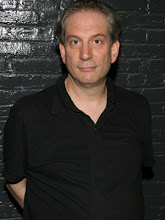
Director Thomas McCarthy Discovers “The Visitor”

Feature Interview by Brad Balfour

Though Irish American actor Tom McCarthy has been in feature films since the early '90s, most audiences became familiar with him as a supporting player in several George Clooney starrers such as "Syriana" and "Michael Clayton." But for this New Jersey native, directing his own features was a goal he wanted to achieve as much a working actor in quality productions; So far that he has done that and been 2-for-2 in terms of respect and success.

McCarthy's "The Visitor" stands to become an even bigger success for the 42-year-old director/actor than his debut feature, 2003's "The Station Agent." This feature, a low-key film about disparate people (Peter Dinklage and Patricia Clarkson) who become an unusual surrogate family. It won all sorts of awards from the Audience favorite at Sundance to several Independent Spirit Awards.

Striving to have a sleeper hit, McCarthy lined up socially conscience production company, Participant Media, to get behind his story of Syrian musician (Haaz Sleiman) befriended by a college professor (Richard Jenkins) who is inadvertently swept up by U.S. immigration and deported. Starring longtime vet character actor Jenkins (with 75 roles since 1985 under his belt) his understated performance made him the perfect lead—and this his first leading role. The rest of the cast especially Hiam Abbass ("Munich," "Paradise Now," "The Syrian Bride") hits the right balance between tragedy and romance, political relevance and personal emotionality necessary to make the film a praiseworthy.

Surprisingly, though this story sympathizes with Middle Eastern immigrants once reviled as the enemy right after 9/11, this story caught the attention of audiences and critics and became an indie sleeper this summer. While McCarthy has two high profile pictures in the works—"Duplicity, "The Lovely Bones" and "2012"—in the works, he's surely cooking up his next intimate social portrait as well.

Q: How do you balance your work as an actor with your work as a director.

TM: It’s an evolving process. My agent jokes with me. She was watching the final "Wire" episodes and said, “every time I want to say, ‘just focus on writing and directing;’ then these great things come up.”

I was editing “The Visitor” when David Simon called and offered me that role [Scott Templeton] sight unseen and I had been a fan of the show and a fan of his. So it was a pretty brutal couple of months. When I wasn’t in the edit room I was in Baltimore, and visa versa, but it was worth it to be a part of the show.

I’m also working on Tony Gilroy’s new film here in New York ["Duplicity" starring Julia Roberts and Clive Owen] when I’m not doing that, but they’ve been nice enough to work around my schedule. To work with Tony and Julia and Clive, and with Bob Elswit, Paul Giamatti, and Tom Wilkinson—both as an actor and as a writer/director—it would be foolish and almost irresponsible not to work with these guys.

So it’s a balancing act. You have to choose your jobs. With acting, you have to be incredibly picky. I won’t take a job just to take a job, even to generate money because I can generate money other ways. I’ll only do it if I really want to work with the people.

Q: Do you partly see doing these roles as a chance to meet people you can later cast?

TM: Totally. You spend a lot of time getting to know Tom Wilkinson, for instance, whose work I’ve admired forever and you think, “I like him and I like the way he works. He’s a pro and he’s damn good.” He’s someone I’ll keep in the back of my mind. As a director, I couldn’t think of anything better.

So It’s all starting to mesh in a nice way. There are times where it becomes difficult to manage just on a practical level and a time level so I’m trying to gauge that. Plus I think I’d like to make another movie quicker. I’d like to do that sooner than later. I’d like to not wait another four years.

Q: It took that long?

TM: "Station Agent" was [made from] 2003 to 2004. It’s funny how time just goes by. I was writing. I did some work with the guys at Pixar for a while and did some other writing projects—one for ["Austin Powers" director] Jay Roach, and one for some other friends. I enjoy doing that sometimes because it takes the pressure off.

When I’m working on my own material that I know I’m going to direct, the process becomes very insular. Sometimes when working for another director you sort of give up. You give up a bit. You say point me in another direction and I’ll write. I’m like a hunting dog and there’s something very freeing about that.

Q: Now, finally, your second directorial effort, "The Visitor" is out. Did longtime character actor Richard Jenkins come to mind for the role of Professor Walter Vale because you had worked together in some capacity?

TM: No, I never worked with Richard but I was a fan of his. I had an idea that I was going to have this sixty something year old man and I want an actor who can really disappear into the role. I’m a big believer in taking actors and using them in ways they haven’t been used before. I did that in “Station Agent” with almost all the characters. I had a short list and Richard was almost always on the top of it. By the time I actually began writing the script I knew it was going to be him.

I was actually in L.A. at the time, working on “Good Night and Good Luck” and staying in the same hotel as Richard, who was working on another movie there. I’m not sure which one. We had the same agent and I called her and said, “you think Richard and I could set up a dinner?” And she’s like, “I think you should call Richard.” And I did; it was like, “have you eaten?” He said he’d love to get dinner.

We had never really met before. I’ve been a fan of his. He’d seen the “Station Agent” and really enjoyed it. So we went and had dinner and by the end of that meal I had his voice in my head.

Q: Was there pressure to cast someone with more name recognition?

TM: Not really. One of my producers was saying that from the beginning of this project I never wavered on a lot of things and one those was Jenkins. They were like, “We love him, but can he do it and can we sell it?”

Now they couldn’t be prouder of the film and how it turned out. Specifically they like him in that role. So I don’t think I wavered on that. There was some concern. In fact, I had that dinner with Richard, and a year later I sent him that script through my agent Rhonda. A week later, he called and said he'd let her know that he’d love to do it. We had lunch where I officially offered him the role.

He came down to New York and when I offered him the role, his first comment was, “I’d love to do it, but you’ll never get the money for it if I do it.” I remember I helped Tony out one night on “Michael Clayton.” I was there to be a voice on the phone for George Clooney.

I’ve known George for a while now and we were just hanging out and I said, “Let me ask you something. What do you think of Richard in this role?” I greatly respect George’s taste and business acumen. He said, “It’s such a great call,” because he loves Richard and has worked with him. He thought it might be hard to get the money I needed, but I didn’t need that much. I can make my movies in such a way that I don’t need that much money. He said, “If you can figure out a way to work it out where you don’t feel like you’re sacrificing than anything, go for it.”

Q: It’s better to make a low-budgeted movie than to not make it at all.

TM: Yeah, and it was difficult and it would be tough for me to make another movie at that budget to be quite honest because it would be such a struggle. When you’re working in New York, there’s a lot of huge movies shooting here and there just weren’t a whole lot of options in terms of man-power and equipment and stuff.

That’s the tricky thing about these movies. For them to work, you kind of have to play a perfect game and you’re doing so without the resources of a lot of the big films. It’s an uphill battle. I think the key for me has been original characters and that’s been my inroad into the script.

Q: People see that this story has all the right elements, but are concerned that it can’t sell. Do you push aside those concerns when you sit down to write?

TM: I do think you have to put aside those concerns when you approach a story, because to write the most interesting thing possible you should focus on one thing: the story. Let the marketing people worry about that stuff.

Overture Films has a crack team of people worrying about that. If you tell a good story that’s the best marketing device. It’s bigger than stars and bigger than having a huge company behind it. A good story sells itself and that’s our philosophy for this movie.

Q: Your film has a lot of integrity. Had you taken a different route, would it have significantly changed the shape of the story?

TM: My style is usually a bit more subtle and a bit more ordinary and about finding the extraordinary in the ordinary. I did a Q&A after a screening recently where a gentleman stood up—an African man who lives here in New York and works in the Immigration Rights Council—and he said, “I spent time in this detention center, you could have a gone a lot further and blown the door off this thing. Why didn’t you?”

My answer was, that until I walked into one of these detention centers three years ago, I knew nothing about them and I guarantee, most Americans have never seen the inside of a detention center. Seeing this movie will be the first time they do. So that was an indication to me that we’re at point A with this. It’s not like everyone really knows about this. So this is subtle in the sense that it’s happening everyday and not in an extraordinary way, but in heartbreaking ways.

The best I can do is shed some light on [this situation] and let people know this is going on right now. Even on the most basic level, families are getting separated, people are getting sent out. There are people whose lives are at stake here and can we do it better. That’s where I start with this film.

Q: It’s not just Arabs and Africans being deported.

TM: Everything. Irish. I was talking to an immigration lawyer the other day who said one of her stories was that an Irishman she was defending was stopped, and this is the kind of thing that had I put it in my movie I would have been lampooned for, and he was arrested and he was checked for papers and pulled into detention. He was a painting a restaurant on Liberty Island at the base of the Statue of Liberty where they were renovating. The police did a sweep and picked him up. If there isn’t irony to that, than I don’t know what irony is.

Q: And you’re of Irish descent.

TM: My family's from Cork.

Q: I’m surprised you didn’t feature that kind of Irish story here as well.

TM: I heard it too late, but the reason I didn’t, honestly, is my stories always start with characters and Tarek was the character. In part, what I wanted to do with this movie was not shed light on immigration, but to put on the screen an Arab character that I haven’t seen in movies and television as of late. I knew I was on to something in the audition because I had so many Arab actors come in and say, “good luck and thank you for this, we haven’t seen this before.”

I knew then that they got what I was trying to do and it was only with that character and when I was developing that character’s storyline here in New York I realized that it would be irresponsible of me to ignore the immigration issue.

Q: What made you decide to shift the focus of the film to the romance half way through and introduce actress Hiam Abbass’s character, Mouna Khalil?

TM: For me, that was the biggest challenge of the script because basically I’m introducing a character 40 minutes into the movie that we haven’t seen. So the challenge was, as you say, to shift the storyline and then how to keep them all operating at the same time.

For me as a writer and as a filmmaker that was my most challenging obstacle. I think the reason I did it is because it feels organic to me. It doesn’t feel like I’m manipulating the plot in any way and I think in Hiam, who I wrote the part for, I had an actress who could pull that off, who could come in with such history and presence that she would immediately command the audience’s interest and take the story over.

Q: There wasn't a problem with having a romance with older characters?

TM: No; that actually never occurred to me until right now. I’m 41 and still single and I know there are 21-year-olds who are married. I don’t think about that. I think there’s something much more compelling in the romance that develops between those two [particular] characters.

Q: Did you learn any drumming?

TM: I took drumming lessons. When I was doing research on my character, I read a book called "The Prophet of Zongo Street," which was something I just picked up in a bookstore to get some background on West Africa. This was Ghana actually. I read this lovely story about a man retuning home from America to his land and it was written by a guy named Mohammad Ali. I flipped over the cover and it said, "Mohammad now lives in Brooklyn with his wife and two children and he plays the djembe in a jazz trio" and I was like, "That’s weird."

So I had my agent contact him. It turns out he went to Bennington College and knew Peter Dinklage very well. He said, “What do you want from me.” I said, “first of all, I just want to congratulate you, and second, will you give me djembe lessons.” So I took lessons from Mohammad through the winter.

Q: You could have learned Irish drumming too.

TM: I realized I didn’t have a future in drumming after the first couple lessons.

Monday, April 14, 2008

Director Stephen Walker Celebrates Being "Young@Heart"

Feature Interview by Brad Balfour

Of the many surprises at this year's Sundance Film Festival, one of the most charming was a little doc called "Young@Heart." Filmed over a several months' rehearsal period leading up to a concert tour, veteran British director Stephen Walker and his wife, producer Sally George, tell the story of the Young at Heart Chorus based in Northhampton, MA. Given that Sundance is thought to be the mega-festival for the cutting edge of indie film, this documentary of people growing old with dignity—still enthusiastic for learning things and accomplishing new challenges before an audience not just of peers, but of all ages—was downright inspiring and an important treatise on coping with aging.

The film details their struggle to overcome physical adversities in order to learn the songs and actually make the tour. Going against the stereotype of this age group—whose average age is 81—music director Bob Cilman (who is in his early fifties) gets them to perform rock and soul songs by the likes of James Brown, Sonic Youth and The Rolling Stones. Over 25 years ago, Cilman had been hired to work with this community of seniors at a local assisted living apartment complex, where he got the idea over lunch at the senior center. Since that time, this chorus has included World War I vets, elderly comedians, former Broadway performers, classical musicians and vaudeville performers. Given that turn-over is inevitable, Cilman decided not to draw on songs from their own generation but ones that would be entirely fresh to them, those from Cilman's generation and more.

Over the years, the group has established quite a following. They have toured Europe and sang for royalty, and released CDs of their performances (there is a new live one out now, . Though they have been subject of other films for television, this full-length feature focuses on how they prepared new songs for a concert in their home town—not an easy endeavor—which succeeds despite several heartbreaking events. The group is so compelling that, notwithstanding Cilman's own strong personality (he now heads the local arts council as well), they become richly defined characters in their own right.

In fact, the four that came to New York to debut the film—Stephen Martin, Stanley Goldman, Patricia Linderme and Jeanne Hatch—were so engaging that it was worth seeing them at the Q&A at their premiere public screening—something that's recommended if the opportunity affords itself. And given the talk even now of this being a Best Doc Oscar possibility, there should be more chances to see members of Young@Heart not only on the screen but live as well.

Q: Younger people have misconceptions about seniors; they can be pretty perky like the folks in this film.

SW: That’s one of the things that people get from this film. For us, it’s really quite overwhelming, and I often find it hard to put into words. We’ve had a lot of screenings since the Los Angeles Film Festival [where the film premiered]; we won the audience award, which was great—the audience really loved it. Then we took it to Sundance, and since then we’ve been on this tour. God, the reactions we’re getting from audiences, particularly when the audiences get big, have been absolutely overwhelming as well.

I just sit here thinking that this is way beyond anything I created here, and it’s not even me, actually. It’s them, and that's something, because they aren’t actors, these are real people which I documented. There’s something so remarkable about them, and I’m just delighted that somehow we managed to capture that on film.

It’s clearly reaching out to audiences in a really extraordinary way, particularly when the chorus [members] come on stage for the Q&A at the end. Entire audiences get to their feet, and I’m told that doesn’t happen very often. People are connecting on all kinds of levels. There are people who’ve got parents [this age]—I’m in that situation too—and there are people who are younger, who are thinking about grandparents. There are people who are loving the music because it’s great fun, or enjoying these people’s characters. And there are people who are addressing their own mortality.

I hope the film is allowing people to address their own mortality—and this sounds so corny that I kind of hate saying it—with some sort of hope in there as well. Here are possibilities, ways to live your life. Although I hate the idea of a message film—because I think the important thing is to just make a good film—it’s implicit all the way through the story.

Q: There’s another film out now called “Hats Off” about a 93-year-old woman who became as an actress at 65 when her husband died. Especially if you include the new Rolling Stones concert film (which is of post-60 year-olds still rocking), is this a mini-trend of films happening? What were your perceptions going into the film, how did they change and what do you think about the idea of this being part of a trend?

SW: I can speak for Britain. I can’t really speak for America, though I know this country quite well since I was educated here and this is a world I feel pretty comfortable in. But it would be presumptuous of me to speak of Americans because I don’t live here now. But I do live in Britain and do think that two things are happening. One, there is a kind of reexamination of old age, and [two], that people are more and more starting to get bored with [this] youth obsession, with that celebrity obsession, and you’re finding it more and more. There are a lot of articles coming out in newspapers in Britain about actually, "you know something, I’m fed up with this, it’s so much of it" and you know, it’s actually quite refreshing.

I have a shot in the film which I’m really proud of. It’s a shot of Eileen after the announcement of Bob Salvini’s death, the first person who dies in the film, and they get on this bus and they go to this prison to perform.

A lot of people talk about the prison performance, which is, I think, very moving. But there is this shot just before they start, of all of them lined up waiting to go into the courtyard, and there are these harsh fluorescent lights throughout the prison, and this shot that I did on Eileen’s face full of lines. There are a million, billion lines in her face, she looks like 170, and to me it’s a beautiful face—I really think she has a beautiful face—and I just hold the shot for ages. It’s a huge close-up. They’ve just heard this news [about his death], and you can see she’s registering what it all means when she’s standing there waiting to perform. To me, that shot speaks volumes.

This is not a woman who’s botoxed to the hilt, this is not somebody who’s trying to be young in that kind of plastic sense, but this is someone who’s genuinely young at heart, somebody whose spirit is young—and because it is, she’s able to embrace her age at the same time and not be frightened of it, not even to be frightened of death, which she talks about quite openly. She even tells us where she’s going to be when she dies: on a rainbow.

That’s amazing, and audiences respond really well to that. We’ve had so many people who come out of screenings and say, “I’m so sick of all these 'bang ‘em up, shoot ‘em up' movies, one after another, which is so anti-life in a way and here are these real people, living with real life and reaching out to us." They find that inspirational, as I did, but I didn’t think anybody else would. It was when I was making [the film], but I was really shocked, and again—it’s one of those verbs I really hate using because it always looks awful—but actually it’s completely sincere, quite humbling actually, to see that response from others.

Q: As a documentary filmmaker, you’re always piecing together what’s dramatic and drives a story from the material you collect. But those deaths were something couldn’t have been anticipated. Was there something else you focused on before death arrived and shifted the film?

SW: When I first saw the chorus in London I was incredibly excited by the challenge of [filming it]. I’d seen them before and I saw Eileen, amongst the many others, step up to the microphone and sing “Should I Stay or Should I Go” by The Clash. Great shock, amazing to watch, very funny, but it could be a one-trick pony. You know, "ha ha that’s great, isn’t that funny, goodbye, a five-minute news item, the end."

But when I saw that—and you don’t have to be an Einstein to see it—[I realized] what you’re actually looking at is somebody singing about life and death. At the end of the song, when she calls out one more time “should I stay or should I go,” the audience all shout out “stay,” what they’re actually saying is "live" and I found that very moving. Of course, all their songs do that. When Lenny stands up and sings “Purple Haze,” he’s not singing about drugs, he’s singing about dementia, and the fact that he can’t remember the words is actually part of the point.

“Road to Nowhere” is actually a celebration of being on that road to a place that is nowhere. It’s not clever-clever, but the songs are really good and they mean something. So I came out of that theatrical experience, saying to my producer Sally George, "this is an amazing opportunity to make a movie about old age like no movie that's been made before"—because what we can do is a rock opera about old age. We can actually look at old age through the medium of rock music, rock music people will know and identify with because they’ll know the words. And that immediately struck me as being an incredible challenge.

The music videos came out of that first conversation. I said, “You know, this is the way to sell it, because we’re never going to get a film about old age off the ground anywhere.” I had made films, actually, about old people before, different ones, and had close relations with my parents, and before that, my grandparents, and find that—and I hope this doesn't sound patronizing—they’re human beings, for God’s sake! They have a lot more wisdom than any of us in this room, frankly, and I just thought, let’s see if we can do this.

So the challenge right there was to make that story. In fact, I went back and looked at my original proposal recently, and apart from the deaths—which obviously we didn’t anticipate—it’s the movie that you’ve got there, or very similar. I knew we were going to be absolutely unflinching about certain aspects—really look at the fun things like sex. People don’t talk about the taboo, but why the hell shouldn’t they have sex, and why can’t they talk about it? They have organs like the rest of us, so why the hell can’t they?

I just thought, that’s sickness, we’ll talk about somebody who can’t walk properly, because they’ve got spinal stenosis like Stan Goldman. We’ll talk about death as well. I had every intention, and in fact I had interviews of many of the chorus talking about death experiences in their own families, or near-death experiences themselves, which would certainly have been in the film but for the fact that people actually died in the film. That, of course, is what took over, because suddenly you’re in the now rather than retrospective.

But I also knew it had to be fun, because these people were fun, too. One of the things I’ve worked on in my own films over the last four or five years, is that I do move from comedy to pathos very quickly because I think that you do need to find the comedy and the pathos, and the pathos and the comedy. I think both work really strongly, as they do in real life, when they’re actually joined at the hip.

Q: The music videos adds so much of a dynamic to the film...

SW: Absolutely. I didn’t direct the music videos, Sally did. I was going to direct the music videos, and what actually happened was, I was swamped with 140 hours of material. I mean, we storyboarded them very closely together and worked on them really closely together. But actually in the end, I said, "Sally, I just can’t do this." So we worked on them, she flew out, she’s a really good director. We work pretty closely together, kind of very 18th rate Coen Brothers, but it works really well like that— we kind of always think as one. So we very quickly worked out that we wanted to think of really interesting ways of standing out of time. I had been really influenced by a lot of different [music videos], but I love [music videos] just for the kind of glamorous style. It’s really just fun how you can take music and do stylized things with it.

There was also a very successful series, a drama series back in the '90s in Britain, which I think came here, called “The Singing Detective”—this guy has cirrhosis and he’s in a hospital and suddenly you’re across a cut and you’re into a music video type world. I always thought, God, what a great opportunity, to step out of time. I never wanted this to be a classic observational documentary. I knew that I wanted to make the film authored.

And the reason I wanted to make the film authored was because I knew that the way to work with these people was to treat them like I would treat anybody, and like I treated my parents and my grandparents or their friends. That is to say—I wouldn’t say these are my parents, but—come on, Steve, tell us about your sex life. Once you’re into that kind of dialogue, you’re a personal friend. You’re not into that kind of interview with somebody up against a bookcase with a potted plant and a lampshade behind them, and they just magically speak from questions you never really hear, you’re in it and you have to be honest about that. So I knew that was one thing I wanted to change about classical observational narrative documentaries. But I also knew that these videos would be really an exciting part of it by stepping out of time.

We worked them out. We thought, there’s Eileen in her old people’s home, why don’t we move from an old people’s home into a real Punk protest song, “I Wanna Be Sedated”? Some of these guys are sitting in an old people’s home, it’s the true punk song, what they’re really saying is, don’t treat us like this, and they’re singing it angrily. It’s got an edge to it; it’s not cutesy-wootsy. Invariably, large audiences applaud when they see that because they’re totally not expecting it, it comes out of nowhere, which we really liked. So we worked those things out.

"Road to Nowhere" was a very interesting one to place, because—and it was actually something I felt very strongly about—it was one evening I remember saying, "You know, if we’re being really bold about this, we should start that song in a hospital and we should start it while this guy, Bob Salvini, is being put (inaudible 24:48). We should do that because that is the road that he and all of us are on, and these people sing with joy about that. They’re actually smiling as they talk about it, you know, and here’s a guy, whatever happens it’s a good life—if he makes it to the concert that’s great, if he doesn’t that’s not a tragedy, actually, but it’s very sad. So we did that, and then we looked at it, and we thought Gosh, have we gone too far on this? So just to be absolutely sure we weren’t going to be doing something that was absolutely tasteless, I did send that to Bob Cilman, and also to the Salvini family. I said, you’ve got to let me know if you’re comfortable with this. They both came back and said they really liked it.

So, Ok if the family is happy, the musical director’s happy, and I’m happy aesthetically, it’s okay. If some audiences think we are—which actually nobody’s said so far—then they can deal with that. But as a filmmaker I felt comfortable that I hadn’t actually trespassed on a private world. Equally, you’ve got to be very careful with grief, because we made the decision not to film on that bus when the announcement of Bob Salvini’s death was made. I felt very strongly that is actually crossing the line, when people are hearing about somebody’s death the first time—to hear it with a shot of the bus but to see the grief in a shot of their faces with a camera. It’s just wrong. Other people might do it, but I wouldn’t do it, I just feel you cross the line.

Q: What did pitching Bob entail?

Pitching Bob was an interesting one.

I made this film as the director, and Sally George is the producer, and Sally George is also my wife and we worked very closely together on this film. It’s actually the first time we’ve worked together, which is in itself an interesting experiment because at three o clock in the morning, instead of doing more interesting things, we actually sat having meetings in bed, which is disastrous, really. But nevertheless we love each other dearly.

And we have what then was a 13-year-old daughter, and we took her to see this show. We loved it and she hated it. That is a really hard age to see grandparent-type people jumping up and down and singing rock songs—you’re just trying to be really cool at that age. It plays very well to college students, actually—even 17, or 18 years-old and upwards are fine. But at 13, you just can’t... It’s really difficult to get that age group. So after the show was over, we started to kind of mill around.

We tried to get to Bob, but it was impossible because he was surrounded by all kinds of well wishers. So we ended up talking to his amazing assistant, Diane Porcella, who, although she’s technically the administrator, basically keeps the whole thing [together]… He’s the genius, and she enables the genius to happen, so she’s incredible.

So we talked to her. What I didn’t know then was, they had nine other production companies and HBO, all kinds of people, after them at that time. And there was little us, rapidly going broke with a new production company, working out of our kitchen at times, and desperately looking for an idea. We went up and said we thought the show was wonderful. What chance and all the rest of it, and Diane was playing it quite cool because she had all these offers from much bigger companies than us—HBO, for god’s sake—and we were small. Then she turned to Kitty, our daughter, and said "What did you think of the show?"

And Kitty said, “I hated it. I thought it was really embarrassing.” And that’s the moment... Diane told me that was the moment she decided we were the right people to go with. Because she felt—and this was her logic—that if our daughter was able to be that honest in front of us, then we could be trusted, because [Kitty], knowing that this was potentially a gig for us, felt comfortable enough that she could just say that. Now if you asked Diane, she felt "That was okay, because they brought this kid up to say what she feels and she thinks, and that’s exactly what we need here. We don’t want to be lied to, we want to know how [the people who would direct this would] feel." I was amazed when Diane told me that a year or two later.

Q: Has your daughter come around?

SW: She adores them now. She thinks they’re great. She’s two years older than she was then, she thinks they’re great all the time. Because I went “Oh God! thanks, Kitty, that’s really great, Christmas forget it” (laughter).

Q: How has this changed you?

I’ve become very close to these people. I could give you the banal, pat answer. I did that once in a Q&A, and I really hated myself afterwards—and I lay in bed and I said, what the fuck was I doing giving that answer? The banal answer is it’s changed me because I realize there’s hope and inspiration in these people and therefore my life, etc. etc. and I must call my parents more often, there’s that side of it.

But the truth is, what this has actually done, I’ve really grown to like these people. I’ve spent a lot of time with them and I’ve gone back to see them again and again. I really try when I’m over here to see them. These have become friends. Fred Knittle and his wife have adopted Sally and me. He said "you’re now our adopted children," which means we get fed a lot when we go over there, and they are the most incredible people. I know that for me to try and define or delineate how this has changed me is ludicrous.

What I do know is that it has. What I also know is, the way it has is not likely to be clear or felt, really, for another 20 or 30 years, if I get that far. The fact is, this film will be a very distant memory; but the impact of what I’ve been through with these people will have an impact on me in some way, and it really does and they really do mean a lot to me.

When we went to Los Angeles last year, we won the audience award. Suddenly every studio wanted the film and they all bid for it. It was all terribly exciting. We had that kind of amazing, husband-and-wife-from-Hammersmith in London and suddenly we find ourselves in the middle of a bidding war. It's an amazing experience, and we were really out of our depth. We work first for television, and with that we just humble along and deal with our overdraft and our mortgage like everybody else, and that was an amazing experience.

When I flew back to Northampton and was told that Eileen was very unwell, I went to see her with Diane, and then, three days later, I was due to fly back to London. I was on my way back to London, heading to the airport from Northampton to Boston's Logan Airport, and I had this really strong feeling that I had to stop by and see Eileen again. I tried to ignore it: “come on, you're going to miss my flight” but that voice goes “fuck off, go see her now” and so I did. This was just after L.A.

I was at her hospital bed and she was morphined out of her mind. The doctor said that she could hear me and understand me. I was with her for about an hour and I remember stroking her hair—she has this amazing white hair—and I remember saying, I was so glad I did this. I remember saying to her—it’s so corny I’m really embarrassed about saying this—I said to her, “You know, you’re going to be a movie star. You’re going to be up there on that screen forever.” I said, “It’s there, Eileen. You’re going to go on and the audience is going to love you and they’re going to keep loving you forever.”

I told her that and kissed her goodbye, and two days later she was dead. But I absolutely know that she heard that. I’m so pleased I did that, because you can’t go back when they’re dead, you just can’t. I just thought that, in a way, that defines the relationship, if that makes some sense. I find it easier to define things through concrete examples rather than generalities.

Q: She was such a star onscreen.

SW: She was an amazing person. I had a real issue there [over whether] I should put that caption at the end, should I not put that caption at the end. I thought, gosh you know, I could go on a real high here, because they’ve just had this great thing, this concert. I went, you know, Steven—I talk to myself a lot, but I remember the dialogue was this, actually—this is really what it’s about, and what you’re really saying is, this is a life well lived. She opens the film and she closes the film. This is true to the philosophy that I always felt was central to the film, which was, we have to be unflinching about this. There is mortality, we are all going to die, all of us, but that doesn’t mean that the manner of our lives can’t be amazing and also our deaths, too. And I think she had a good death.

Q: How did you decide what to cut out and what will be added to the DVD?

SW: It was the toughest edit I’ve ever done in my life. As I was saying in an earlier interview, the reviews have been wonderful on this film, which has been great. But I remember one reviewer said somewhere—and he really did like the film—but he said, "it was all very well that Stephen Walker could just turn on the camera and off he went and started filming this thing. It was just that easy."

Hardly. The truth is it was two months of pre-production and then 140 hours of material and then we cut it. And if you think about the elements in this film, you’ve got five or six front characters you have to empathize, with otherwise you don’t care about any of it. You’ve got a whole chorus that you can’t lose sight of in the background.

You’ve got four music videos that have to be placed, not arbitrarily but so they’re actually commenting on what’s going on. You’ve got five songs that have to be tracked all the way through to a concert, so when they step up to sing “I Feel Good” you’re on the edge of your seat thinking it’s going to be a car crash. That’s really manufactured. We are quite manipulative with the audience about how we actually get you to that point. We’ve got two deaths to put in there as well. I mean, one is difficult enough; but then a second one, that’d feel like, frankly, an anti-climax, to make that really matter as well.

It’s very interesting that if you deconstruct it, you only have three interviews, three moments where we interview Joe, the second guy who dies in the film, but you think you know him, and when he dies, it matters. But actually if you take any of those out or position them differently, you don’t even know that he dies, it’s not quite clear who he is or that he’s died. So all of that has to be carefully and painstakingly constructed out of 140 hours into a film that this reviewer said is so simple—which is a great compliment, in a way.

There’s a huge amount going on underneath that, of actually one million doors and which is the right door that doesn’t lead to a million more but takes you in the right [direction]. This could have been a disaster easily, actually, and it’s wonderful to us to see that for whatever reason, at least for most people, it seems to be working.

Sunday, March 30, 2008

Jim Sturgess Bets on "21" to Transform His Acting Career


Feature Interview by Brad Balfour

Based on Ben Mezrich's non-fiction book "Bringing Down the House," about MIT master math student Jeff Ma and his blackjack team, the film "21" details the story of Ben Campbell and his card-counting crew that ravages Las Vegas casinos for little over a year (making oodles of bucks along the way). Under the guidance of their conniving, beguiling professor, Micky Rosa (Kevin Spacey), the five-student team secretly hits the casino winning blackjack games with their card-counting skills while skirting the edge of the law and their prime adversary, suspicious loss prevention consultant Cole Williams (Laurence Fishburne), who hunts them down through the casino's security cameras.

Starring the 27-year-old Englishman Jim Sturgess—he had previously played Jude in the vibrant musical drama, "Across the Universe" and was in the fine costume drama "The Other Boleyn Girl"—the film focuses on how he harnesses his math and memory skills and evolves from a shy, insecure genius (from the working-class side of Boston) into an arrogant, greedy king of the casinos.

As directed by Robert Luketic ("Legally Blonde," "Monster-in-Law"), Ben's journey involves a brief romance with his gorgeous team member Jill (Kate Bosworth), wrestling with his professor—a senior MIT math prof—for control of the team, evading a beating from Fishburne, and ultimately returning to his original goal of paying for his schooling in Harvard's Medical College.

Q: Did you feel any apprehension in doing this film? After all, it is about gambling.

JS: I was more excited than apprehensive. It was my first experience being in a glossy Hollywood movie, so I was excited to see what that was all about. I was excited to work with Kevin Spacey, Laurence Fishburne, two actors that I'd seen. I was excited to work with Kate [Bosworth]. There wasn't any apprehension. I was just desperate to get out there and make the film.

Q: Any apprehension in doing the sex scene with your co-star, Kate Bosworth?

JS: There's always some apprehension about doing a sex scene. But luckily, by that time me and Kate became really good friends so it was laidback. We saw it for how silly it really was and made light of it.

Q: Did you get a chance to gamble while in Las Vegas?

JS: While we were there, definitely. One, it was a huge part of getting into the whole world that they created [of] these MIT students. Two, that's all there is to do in Vegas. We were there for about a month and a half, so we got up to do a certain amount of gambling.
Q: Did you win? How did you do?

JS: I guess I learned not to gamble unless you're counting cards, because it will beat you in the end, which is why I love the story, really. Vegas to me was a culture shock. I was surprised at how calculated the whole place is and how designed it is to take your money. It pays attention to every last detail, from putting slot machines that pay out more money at the front so you can hear the sounds of change hitting metal… Everything, everything is calculated. I think the story's great in the way these MIT students took some of that money back. I think I was one of the few actors to leave up, but I certainly had my downs and thought, "oh my god I've lost all my per diem."

Q: Did you learn how to count blackjack cards like in the movie?

JS: I wanted to desperately. It's really not as easy as you think. These guys are so mathematically-minded, which I'm not. Plus, they worked out this strategy for a long time before going to Vegas and they had many years of mathematical training. To learn how to do that in two weeks in preparation for a film just wasn't going to happen. Jeff explained it to me time and time again, the theory of it, and I understood the theory, but putting it into practice is just a completely different thing.

Q: How good were you in math?

JS: I was never very good at math. That's why I enjoy this role the most, because I get to pretend that I am somehow mathematically minded. I like the thought of some of my math teachers from the past…

Q: The subtext of this film is gambling addiction. Did that theme resonate with you, and are you now more reluctant to gamble?

JS: Spending the amount of time in Vegas that we did, you see some people that you're like, why are you throwing all that money into that machine? It seems ridiculous to me. I think it can be an addiction. It's also a lot of fun, like anything like that. But I didn't come away thinking that gambling was a particularly great idea. They [the characters] were never gambling. That's the whole point. Certainly, the life seduced Ben, which I think is easy to do if you spend some time in Vegas—I think it's a place designed to seduce you. But the film tells you to have as many experiences as you can because that's what makes you the man you are.

Q: Which casino did you like the most?

JS: The Palms Casino. Jeff Ma, who the story is based on, would often take us there. They have this Playboy Bunny kind of lounge and it was as ridiculous as it got, so that was a favorite spot for us.

Q: Kevin Spacey can be a tough taskmaster to work with; how was it working with him?

JS: He's just tough about the nature of the work and getting it right. That goes for anybody. He wasn't tough on me specifically at all. He cares about making the right film, about his performance [and] about all the other actors that are around him. It's not toughness, just passion. It was exciting to see someone so immersed in his work. At that time he wasn't only acting in it, he was producing it. His company was very involved in the making of it, and he was just about to start doing this [Eugene O'Neill] play ["A Moon for the Misbegotten"] over on Broadway, that he done over at the Old Vic [Theater Company in London]. He had pages and pages of dialogue he was learning for his play while doing the film.

Q: And going toe to toe with Laurence Fishburne; he must be pretty intense?

JS: Amazingly intense, but it's an intensity that you look for and hope for. You want it to be like that. Certainly the scene where Laurence Fishburne was knocking seven bells out [out of someone], I couldn't say it was fun, but it was definitely exciting. [Fishburne] kind of intimidated me off-camera as well as on-camera. He gave me a big "Laurence Fishburne man-hug" at the end of it, which I think is the most pain I was in throughout the whole day.

Q: He contrasts nicely with Kate Bosworth, though.

JS: They're all such good actors. There's nothing more exciting than being put in a space with good actors. You only learn and try to up your game. It was very exciting.

Q: Do you think "21" could have been made in the UK?

JS: This film could never be made in the UK. We don't have anywhere like Las Vegas at all. It's a completely different culture of gambling. Gambling in England is much more putting money on dogs, horses and that kind of stuff.

Q: How did you get that Massachusetts accent?

JS: We talked about it very early on with [director] Robert [Luketic] and various people in the studio about what we're going to do with the accent—whether he's going to have a thick, Southy Boston accent. We all decided that it's a very colorful, charismatic accent, so we wanted to keep it milder so that he doesn't jump out in any way.

Q: Well, they vary from neighborhood to neighborhood.

JS: Being English, you think you have some American accent tucked in there somewhere. Then you realize you just don't. You're put with a dialogue coach and you work out how certain words have to sound.

Q: Do you think you are skilled at accents?

JS: I don't know. It's a big part of the acting process. Finding the way your character speaks is a big part of finding your character. It's rare that I do my own accent. When I did "Across The Universe," I did a Liverpool accent, which is very different than my own way of speaking. I just did a Belfast accent, a thick Northern Irish accent, in "Fifty Dead Men Walking," which is probably the hardest out of all of them. I find it exciting. I like working on accents. I don't know how good I am at it, but I enjoy the process. When you work on an accent, you really find your character and the way he speaks.

Q: What kind of accent did you have to use for playing George Boleyn in "The Other Boleyn Girl"?

JS: Just very posh. I needed a dialogue coach to push me in the right direction with that one, making sure I sounded my Ts.

Q: What's your native accent?

JS: I guess you called it a standard sort of London accent—not a cockney accent, and there's a thick London accent which I don't have.

Q: Did you enjoy making a big Hollywood film? Is this something you'd like to do more of?

JS: It was fun. It was interesting. It is different in certain ways and very similar in other ways. "Across the Universe" was my first experience with a big film, and it really didn't feel any different from that except there weren't giant puppets and people breaking out in song every five minutes. But as far as the scale of it, I was used to it. It wasn't any different than that really, but of course, I would love to do some more [big Hollywood films].

Q: Could you relate to your role in "21?"

JS: Yes and no. There was a point in my life when I didn't really know what I wanted to do. I looked into going somewhere like drama school and knew I was interested in acting. I found out that drama school was just ridiculously expensive, so it was impossible for me to go there because there's no way I have that kind of money. [Despite] being disheartened by that, I realized that I had to do more than I would have done had I gone to drama school, through the experiences that I had in my life. I was lucky enough that Julie Taymor understood those experiences and knew what I had been through. That's why she wanted to cast me in that role. It was actually life experiences that got me to where I [didn't even] dream of getting to.

Q: What were you doing when Julie tapped you for the role of Jude in "Across the Universe"?

JS: I'd been playing in a band and just hanging around London, getting into various mischief, I suppose. It was going very up and down. It was a huge relief when the band finally split up. It was hard work. We all put a lot of work into it, but being in a band is a fairly hairy rollercoaster ride. It was a relief when it was over. When it was over, I wandered around not quite sure what I was going to do next. She found me at a point where I needed to be found.

Q: That whole experience must have made you appreciate the stability of being a working actor?

JS: Exactly. I had been working at some pretty terrible jobs throughout the whole time, so this feels like a more secure job than anything I've ever had.

Q: What did you learn about the '60s?

JS: A lot. The '60s was a time that had inspired me anyway, so I was very aware of stuff from the sixties. I read a lot of books. I knew about Ken Kesey in a big way. I'd even been to see him at the end of a festival. I was interested in all kinds of stuff: The Grateful Dead, [Jack Kerouac's] "On the Road," the whole culture. When I read the script and realized it was tapping into all of those things, it was so exciting to me that Julie was switched on by all that stuff. It was great spending all that time watching all these documentaries, all this stuff about the Vietnam War, rock and roll, and Woodstock. I liked seeing Joe Cocker do this amazing performance at Woodstock and then meeting Joe Cocker.

We had such a good time. It was my first time really spending time in New York. It was a great young cast, there were all the dancers and artists and musicians. It was a melting pot of madness and creativity. It really felt like what I imagine it might have felt like in the sixties. I hung out with Don Nates, who was a painter, because I wanted to brush up on my drawing skills. So one day I'd been painting and injecting paint into exploding strawberries and exploding it on walls and the next day I'd be hanging out in a studio with a lot of musicians and we'd be playing music. The next day we'd be acting. It was so much fun. It was incredible.

Q: Would you ever consider becoming a director?

JS: Yeah, I think so, only because when I was experimenting with what I wanted to do, we started making short films and putting on theater productions by ourselves. There was definitely a point when I was making short films and interested in that kind of path. I see so many films that I'm in and I don't know how they do that, so I don't know if I'll be good at it.

Q: How are you at watching yourself onscreen?

JS: You get more used to it. The first time you watch your performance, it's very difficult. I've seen "21" three or four times now, and so you relax a bit and know how it sits. You can start enjoying it as a film, but you're always like, "oh what am I doing."

Q: How about forming another rock band?

JS: Well, I still play music and I still write music. Most of my friends are musicians back in London. It's still a big part of what I do and who I am. I instinctually like doing it.

Q: Do you perform?

JS: No, I haven't done any shows or gigs. That takes a lot of rehearsal time. I definitely continue to write and play music. Whether anyone will listen to it is another thing, but I'll definitely continue to do it.

Q: Where you always a singer? How's your singing voice? Do you expect to be cast in more singing roles?

JS: I was a singer and I was playing in a band back in London before I was cast in "Across the Universe." I play music and music's been a big part of my life for many years. I never expected to combine being in a film with singing, but it was a really interesting way of taking music, and I've done acting as well, so it was a nice blend of all the things I've been interested in all in one project.

Q: It must to be nice to get a job where they don't ask you to sing.

JS: Yeah, music and acting had always been kind of separate [for me]. When you're acting it's one thing and when you're playing in a band it's another. So it was nice to combine the two, but I never wanted to be a musical theatre performer or only star in musicals. So it's nice that I've done some acting that's very separate from acting as well.

Q: Is it true that you will be in a Spider-Man musical directed by Julie Taymor?

JS: Yeah, we actually did a workshop for it, which is how this all started. [Julie Taymor] asked me and Evan [Rachel Wood] if we would come down and help with this workshop that she was doing. I look up to Julie so much, so I said, "yeah." So it was a chance to work with Julie and Evan again. At that point, I didn't really know anything more about it. We just did two weeks [of it] and hung out with Bono and Edge, and sang songs about Spider-Man. We then did a rough performance of the play as a read-through and we sang through the songs. It was an incredible experience. When you're around Julie Taymor and people like Bono, it's very creative and very exciting. As a young actor and musician, it was an incredible experience to be so involved in that. It's going to be an incredible piece of work, as ridiculous as it sounds, which I think is the appeal.

Q: So you'll be starring in that?

JS: I don't know. I haven't spoken to Julie since. I don't know when she plans to do it. It's a timing thing. It all depends when it comes to the surface.

Q: Can you sing one of the Spider-Man songs?

JS: I can't remember any of the words.

Q: If you're good, will they want you for the "Spider-Man 4" movie?

JS: I don't think I would do that, no.

Q: And your next film to come out will be "Crossing Hope."

JS: It has a huge ensemble cast in that film. It's amazing being in a film with a lot of those actors. People like Sean Penn, Harrison Ford, Ray Liotta, Ashley Judd, and then a great mix of ethnic actors from all over the place. It really tells lots of stories about the complexities of immigration here in America and different backgrounds with their different stories. I played an English guy and you never consider an Englishman to be an immigrant, but it was a very exciting experience. I never got to work with Sean Penn or Harrison Ford or Ashley Judd. My story was separate as a lot of them were. They were "Crash" or "Traffic"-esque in the way that the stories are told, but I did get to meet all of [the other actors] so that was cool. All my stuff was shot in about six days back to back.

Q: Do you have a dream project with someone you'd love to play?

JS: No, not at all. I don't think about making a plan that I don't know anything about. You read a script about something your really interested in… I could never say I want to work with this person in this thing playing a comedic role as a Jewish priest. They just happen.

Q: So it's not as though you see these superhero movies and say one day I'd like to play one of those guys?

JS: No, I've never seen myself as an actor that might pass as a superhero. So I'm amazed that I'm even being considered for the Spider-Man role. Maybe it's the long legs.

Q: Or a music biopic?

JS: Yeah, that’s always scary. When there is talk about playing someone you really admire, that is sort of a scary prospect.

Q: Who would that be, beyond what you've done so far?

JS: The Joy Division film, "Control," I took my hat off to [actor] Sam Riley because it's a big deal to play someone who's so iconic, and there are people who absolutely love Ian Curtis [the late lead singer of the dark iconic '70s band]. It's just a brave kind of thing to do, I think.

Q: Is there a musician you'd love to play?

JS: Oh god, I mean there are so many. I guess someone I'm interested in is [the melancholic folk singer] Nick Drake. I've always wondered what was going on in his mind. He's a beautiful poet and a beautiful artist.

Q: Good choice and great music. You could also do the late founder of Pink Floyd, Syd Barrett.

JS: He'd be great. He'd be another one. I'd get to take lots of acid and spin out, lose my mind.

Tuesday, March 25, 2008

Michael Pitt and Brady Corbet Aren't Joking Around in "Funny Games"

Feature interview by Brad Balfour

Ten years ago, German director Michael Haneke created a harrowing, near-psychotic film, "Funny Games," about two young men, Paul and Peter, who force a couple and their son in their vacation cabin to play sadistic "games" with fatal results. A critique of our society's fascination with violence as well as a dire warning about how thin is civilization's veneer for victims and tormentors alike, Haneke's film stirred both admiration and revulsion for unseen violence and depravity. Given Haneke's cultural origins, his psycho-crime film had a resonance that extended its impact well beyond its decade-old release.

In Haneke's current shot-for-shot, English-language remake of "Funny Games," actors Michael Pitt and Brady Corbet are two individuals who express a beguiling quality aligned with a sociopathic unpredictability that leads them to perform far more torturous scenes, showing much more pain and horror (without actually seeing it) in comparison to the more overt blood and gore fare of such "torture porn" films as "Hostel" and "Saw."

Yet this film not only fits the genre of "sadistic men who torture a family in suburbia" but also deconstructs the genre, with such quirky moves as Pitt addressing the viewer directly, and reversing a sequence that might offer the audience the relief of revenge.

In their short careers, Pitt and Corbet have already established themselves as veteran actors who have worked with an impressive list of directors. The 26-year-old Pitt got his break in Bernardo Bertolucci's "The Dreamers" and is known for his Kurt Cobain-like portrayal of a fatalistic rocker in Gus Van Sant's "Last Days." But he foreshadowed his sadistic role in "Funny Games" with his work in "Murder by Numbers." The 19-year-old Corbet, who starred in two dark films—"Thirteen" and Gregg Araki's "Mysterious Skin"—provides a perfect Peter to Pitt's Paul.

Q: Since this was a shot-for-shot remake of his own German-language original, how was it working with Haneke on this film?

MICHAEL PITT: He was difficult, but he's really smart so I didn't feel that it was unjustified. I knew going in that it was going to be like that, though. I did a work session with him, and I could tell that... Some directors are very free and some directors are very specific. It seemed like doing a play, [it was] that relationship with the director. With Michael, I would've been in hell if I didn't know that that was the way that he was going to work.

Q: Did you see the original film before you worked on this version?

MP: I saw it once.

BRADY CORBET: I've seen it a few times.

Q: How did you guys read your characters and prepare for them?

BC: They are characters without a past or a future. They have no backstory. They are a device. At least for me, they are nothing more than a device. I think it ultimately came down to not being "true" or organic; it was more about being successfully manipulative, charming, and charismatic.

Q: Was that harder for you?

BC: In a controlled environment like that, it was very, very easy to be charismatic, if you have the right dialogue and the right captain. It's much more difficult to be in Tim [Roth], Devon [Gearhart], and Naomi [Watts'] shoes. They were a wreck every day. Tim in particular had a pretty tough time. He has kids so he had a very rough time.

MP: I didn't come up with a back story and I never analyzed why Paul was doing what he was doing. I wasn't sure I was going to do it that way. Then I decided that based on what Michael Haneke was telling me, I shouldn't analyze what I was doing. In a weird way, it really freed me.

Q: Did either of you see one of your characters as being the leader, maybe Paul?

BC: Absolutely, it's like Laurel and Hardy. It's like Paul's in the motorcycle and Peter's in the sidecar in a way. I found it very interesting. I tried to convey in a subtle way a sense of knowing. I didn't want to be a genuine goofball or clumsy, but I wanted it to feel exact—like when I drop the cell phone in the sink, I know what I'm doing.

Q: How would compare Haneke's direction with other directors—what element stood out for you?

MP: Every director is different and they all have different styles. I've worked with directors who were very specific and their direction was very high—they gave a lot of direction. The one thing about Michael that I think is interesting is that he really has a reason for everything he's asking you. If you challenge it, he is open for discussion, but he has a clear idea of what he wants with reasons why. There are directors whose direction is high but can't back up what they are asking; then when you challenge it, they crumble.

Q: Michael, how did he chose you for this role?

MP: I wasn't looking for a project. I wasn't interested in working in film at that time. But a friend called me and he suggested I check it out. I made a phone call, and originally they said that they didn't want to do an audition because I didn't have dark hair, so I thought that was fine. Then time passed, and they had trouble finding someone. I had lunch with Michael, and then we did a work session, and then I got the part.

Q: Did you rehearse before shooting?

MP: I rehearse all the time when I get a role.

Q: Brady, how did you get the role of Peter and meet Haneke?

BC: I met Haneke for the first time at the Egyptian Theater in Hollywood about six years ago. When I found out he was making a film in the States—this was before he was remaking his own film—and since I was a fan of his, I made a lot of phone calls and asked to be put in a room with that guy again. I would do anything for the film. They initially didn't want to see me because I was too young and I was too skinny.

MP: They were right.

BC: After that, I was taking bodybuilding supplements without exercising, where you don't retain water, you just bloat. I wore a little fat suit underneath the shirt. I had a face to match the little pad I had.

Q: How was it working with both Tim Roth and Naomi Watts?

MP: I was really impressed with Naomi. She was a producer on it and she was doing things that I wasn't really aware of. The way she was able to switch in handling problems, and then also shoot a really difficult scene I think is a real testament to her true ability. Tim helped me a lot. Sometimes when I had a problem and I couldn't figure it out, he would talk to me, because Tim is also a director.

BC: Tim is an incredibly smart man. He's got a little pit bull in him, this Eastern London thing. But his first film, "The War Zone," which I saw again recently, is amazing, it's a great film. He should direct more. I think Tim and Michael Haneke had problems, because Michael is intelligent but so is Tim, and he had very particular ideas.

MP: Tim was constantly very worried about making a film that would be perceived as just a violent film, and he was very concerned about people taking it the wrong way. So I think that a lot of the battles that were happening on set were as a result of that.

BC: He's a father and what was interesting about "The War Zone" is that as aggressive as it is, it's also very sentimental. I do think that he has this sensitivity in him as an actor and a father.

MP: Tim definitely had the hardest role. That is by far the most difficult role to play because [George is] not strong and he's not attractive. As an actor, for me that would be the most challenging role. In a way, even if you succeeded, very few people would realize.

Q: Since it's a shot-for-shot remake, it's like a play where you are seeing the same art form but with different performers. Do you think movies can work as plays?

MP: I think it can, but maybe I can't be as objective if I wasn't involved. It's interesting, because if you keep it shot-by-shot, then in a weird way you see what the actors bring that's different. Where[as if] it was filmed differently, it would be a different film.

BC: It's a great cinematic experiment.

MP: It's a tough movie in a sense [that] it's very difficult—when you watch it the first time, it's very rough to watch it again.

BC: It's good because we did a good job, we all worked very hard on it.

MP: I hope that this will broaden Michael Haneke's audience, because in America, if it's not in English, there's a very select few people who watch it.

BC: The themes are clearer not because it's a better film, but because it's the second time around. I think that the first movie is a movie about movies, and the new film is a remake of a movie about movies. So if the first film asked the question of why are you watching this, then the new film has to ask you why are you watching this again?

It's the only film of Haneke's that could be remade successfully. The original and the new film are on the nose in a way that his other films are not, because it's his way of conforming to a genre in a smart way.

MP: I also think it's good that Michael did it and it's not some American director doing it some other way.

Q: Why do you think he decided to remake it?

MP: I think he was approached and had this idea to make this film. What he's told me, and what I sensed when I watched the original—it seemed like it was making a comment on a very American topic. Then I found out that it was true and that's what he was intending. I think he's even gone as far to say that he wanted to shoot the original in English and in America, but he didn't have the money.

BC: The original film has an English title.

MP: He's getting to finish what he started. Also, I do think that he is thinking that possibly it could broaden his audience. If a young kid in America sees this film, and he likes this, I would be worried about this. But he would want to research the work of Michael Haneke, then hopefully he'll have the opportunity to see all of Michael's films.

BC: It's important to point out that there was no real financial gain in this for Michael. It's a bigger film, but it's a still an independent film.

MP: I hope he gets some kind of gain from this. He deserves it.

BC: What I mean is, he doesn't have anything to prove at this point. He wanted people to see this because he felt that it was an important issue. It wasn't that he wanted more people just to see him.

Q: Are you concerned that some people in this wide audience that Haneke is trying to reach might not get what the film is going for and might look at it on a base level?

BC: Yes, but what about all the people that will get it?

MP: I am a little worried that people will think [the violence] is cool.

BC: I don't think the film is that hip, though. There's a section in the middle of the film that shows the aftermath of this violence, this long, static shot, that's not Quentin Tarantino. Nobody's going to watch that over and over again. That's what is so smart about Haneke.

MP: He makes a decision every time not to make it cool. Even when the woman is taking her clothes off, he makes the decision not to show things. So hopefully that will come through to the audience.

Q: Since the original came out, there is a rise in the genre of "torture porn." Did you have a philosophical discussion with the cast about the changes in film since then and about this new genre?

BC: That's just how ahead of his time that he is. He foresaw all that.

MP: It would be great if this came out in 1997 in English. Out of all his movies, to me, it's making an obvious statement about that type of filmmaking.

BC: I don't think we discussed it very much. Making a movie is very practical. You find the art in it before and after making the movie, but during [making it] it's too practical.

Q: How long was the shoot?

BC: Eight weeks.

Q: Michael, did you find it hard to make that break into the fourth wall, to look right at the camera?

MP: I think I got better at it. I don't think the first time is as good as when we did it later in the film. I didn't know at first exactly how to do it. What I did later was, instead of making a decision to break the fourth wall, I just played it as though it's already been broken. At any point, I could just turn to it. It seemed to work better.

Q: How do you react to the rewind sequence?

BC: The whole movie is about manipulation. In that scene, he gives you what you want and then he takes it away. It's about building up a bloodlust in the audience. That scene is the only onscreen violence in the film, but he gives that to you and then he takes it back.

Q: Do you find acting to be a little psychotic, like delusional in a multiple personality way?

[Both laugh.]

MP: It's a job. I think that it's important not to take it too seriously. It's all pretend. It's a strange job; it can be strange.

Q: How easy was it to turn off these characters at the end of the day?

MP: It wasn't a very long shoot and we did most of it at a studio in Brooklyn. For me it was great, I just got into the car and went to work. I needed to stay in the character. I told my girlfriend that "I'm not here" and I just stayed in this character for the month and half that we shot it. Once we finished, I just left it.

BC: I'm not a method actor. However, something interesting happened while I was making this movie. While I didn't gain enough weight, I did gain some weight by drinking those shakes, which made me sick. I felt very unattractive and small. When you have gone out of your way to make a physical change, if you spend ten or twelve hours of your day devoted to whatever it is that you're doing, you can't help but take a little of it home if you intend to. I didn't intend to, but I wish that I could've just taken a pair of glasses off and felt attractive again, but I couldn't.

Q: Did you guys have nightmares while shooting?

MP: No. For me, it's pretend. I try to stay away from taking it too seriously. I think it's very dangerous for an actor to take it too seriously, because I think it could really damage you if you do that.

Q: What did you feel about filming at the Hamptons?

BC: Do I think that the film is a statement against the upper class?

Q: Yes.

BC: Michael Haneke is upper class, and I think he has been most of his life. He goes to the opera every Friday in Vienna. Anyway, nowadays he is part of that class so he makes films about what he knows. If you look at any of his films, he has tremendous respect for all his characters, they are all smart. In "Cache," the poor Arab is just as intelligent as the rich white man. He's really very generous. It's amazing.

Sunday, February 24, 2008

OSCAR WATCH: Directors Andrea Nix and Sean Fine Discover the War/Dance

Feature Interview by Brad Balfour

Despite its troubled subjects—three children who are survivors of atrocities suffered in Uganda's war-torn north—"War/Dance" is a beautifully shot and ultimately hopeful documentary about the power of music to heal. Its veteran directors, Andrea Nix and Sean Fine, have had considerable experience making films throughout the world and in all kinds of terrains but they've never shot in such a war-torn place before. Besides the usual problems of filmmaking, the duo had to worry about disease, a dearth of supplies and whether some of their subjects would be attacked again—these are kids who had nearly their entire families wiped out by rebels as young as themselves.

While juxtaposing the beauty of the region with dreadful stories of death and survival, Nix and Fine document several of these children living in a displacement camp who become part of a troupe that competes in their country's national music and dance festival.

There's nothing quite like this film; it arouses one's repulsion at the atrocities cited and awakens a well of compassion at the same time. Full of hope and pain, Nix and Fine's doc much deserves the Oscar nomination they have gotten for this year's Best Documentary. With all the trials and tribulations endured in making and completing this film, they had a lot to talk about as well.

Q: So had you been to Uganda before filming this?

AN: No, we've both been to different parts of Africa but never to Uganda.

Q: How long did it take you to shoot this film?

AN: 12 weeks. In two different shoots, but 12 weeks total.

Q: How long did it take to get the film altogether?

SF: It took about a year and a half.

Q: Was there any apprehension in shooting over there? It must have been quite a process to getting in there to do it.

SF: When we were first approached about shooting a documentary about the situation in Northern Uganda, we had to really talk about it and talk about the precautions we were going to take in order to insure it would be a safe shoot. Both Andrea and I have worked for National Geographic in the past, that's where we've met, so we've filmed in a lot of dangerous locations with dangerous animals and places and I've been to a bunch of war zones before. But this war zone in particular was really dangerous because of its unpredictable nature.

Kids anywhere to nine to 16 were waiting to ambush your vehicle with machetes or AK-47s and there is no reason behind what they're doing what they do--they're just told to do it and so if they get you, they'll pretty much kill you. They're not going to ask you for money, they're not going to negotiate with you. They're going to kill you, because if they kill you they're going to move up the ranks of their kind of "child-soldier..."

AN: ...hierarchy.

SF: Hierarchy. So it was pretty dangerous. We talked about it. Our son was 1 at the time we filmed this. We usually go on all our shoots together. And this time we made a conscious decision to split up.

I went to Northern Uganda and Andrea stayed at home but we were communicating every other day. We lived in the IDP camp an internally displaced camp, and then to speak with Andrea I would climb up this brick wall that was in a local brothel.

That was the only place to get cell phone reception and we'd talk and it would be until three in the morning and I would talk to Andrea about the things I've shot and it was really helpful working this way.

I was so entrenched in keeping everyone safe, and trying to stay healthy myself--actually I got malaria while I was there--that it was really rough going. Trying to keep all that together, along with the emotions going on with filming something like this and then being able to download everything I've shot to Andrea, just to talk to her about it, we we're so in sync that then for her to kind of look back, step back and kind of say this is what the big picture should be, have you thought of this angle, going this way, or ask this question, I mean that's what helped make the film what it is. This collaboration we had was hugely important. If we couldn't talk, then I don't think that it would be the film that it is right now.

AN: Structurally, its probably the most challenging film we've ever worked or taken on, because if you think about--as writers or journalists you have to tell a story that you really want to get to the human content. But you know there's a war, there's a music competition, you have three children to set up, there's a lot of things. We wanted to take people on a journey that brought them to the highs and lows emotionally.

I really wanted this not [just] to be a factual film; we wanted to make this film very different from things that we've made before, and that other people have made before, you know, these kinds of stories. We really thought about how we were going to tell the story in a different way, both in terms of message, as well as the look of it.

SF: They talked with us about the specifics of danger and working in that environment. How we were able to get where we were. Basically Uganda is separated into two countries as far as I can tell. There's the Northern side which is in the war zone and then there's the Southern side which is very peaceful and Kampala is a very peaceful place and everything seems to be going quite well.

And so when you go to Kampala, you have to meet with the military and get permission. That took a lot of meetings; they wanted to know what we were doing, so we got permission to go up and film but they also put restrictions on us.

We [were told] we could not leave the internally displaced camp, we could not be out before 9 in the morning, or out past five in the evening. For a filmmaker, that's awful. For a cinematographer, that's even more awful. That's like the best time to shoot.

So what we did was we said, "Okay," and we stuck to the game plan a little bit but as we decided on Potongo. There was no other way to make the film other than to stay in the camp with the kids. And so what we did was, we got to know the locals and the military really well there. We got to know them by playing late-night card games of "Uno" and we really got to know them and talk to them and once they saw what we were doing, once they saw it was about these kids, they said. "go ahead, do what you want." We did have some hairy moments.

One time we were filming, people would come and say, the rebels just crossed, and they just took three children. We would go where they were supposedly taken and look and we wouldn't see anyone. We had a moment when I had gotten the full-blown symptoms of malaria and not knowing what was going on and we were coming back late at night in a jeep and we weren't supposed to be out this late and we were coming back at 11:30 and there's this log in the road and we stopped and then a bunch of men in camouflage with RPGS come up to the car and with RPGS enter through the windows. It doesn't even make sense to me because an RPG pointed at point blank kills you and the person shooting it too. But they were screaming at us It just kept getting heightened and heightened--we couldn't figure out what was going on.

Luckily for us, it turned out to be the military, a small military outpost and they didn't know that we were allowed out but it took about two hours for everyone to calm down but we were ok. That's the unpredictable nature of what's going on. When you have someone with an RPG, and they didn't look all that well trained, and we found out later that they were really just local people the military hired on and gave them weapons. It's kind of nerve racking. Also I had malaria at the same time so...it was a pretty crazy moment.

Q: When you're in situations like that, everything is crucial and it seems everyone has their own agenda. As a filmmaker, how do you discern who is telling you the truth?

SF: That's a good question because we interviewed many, many kids. We actually started off with two different schools. I see it, as a filmmaker, to find the truth you have to ask the right questions. 75% of it is asking the right question and asking around to see if this is true. And I think 25% is a gut instinct. I rely on that a lot too. I can tell now when someone is really telling me what's going on.

We're also dealing with kids. On the one hand they're very honest, and on the other they do have a pretty wild imagination. So there are instances when they would tell us things that had happened then we had a translator there paraphrasing the answers to their questions.

AN: He was a former child soldier so he was able to so he was able to lend--then you talk to the headmasters.

SF: Yeah, you also rely on the translator as well. Like what's your feelings and interviews--we would take a long time doing interviews, spread them out over a many days. if we got into an intense moment we would let that finish, pack up and come back a couple of days later and maybe we would ask some of the same questions. We would have the question answered two or three times sometimes.

Q: What were some of those tense moments?

UM: Well the most tense moment moments of an interview...was when Dominick says, "I've never told anyone this before, but I've killed people." He tells this whole story of how he kills these farmers. And then he says he had never told anyone this before.

AN: Not even his mother.

SF: Not even his mother. And he and his mother have this really tight relationship and a tight bond. When I heard that I stopped and I said to the translator: "Are you sure this is what he is saying?" And we asked again and he said "Yeah."

We turned the camera off and I said, "You know Dominick, people are going to see this. Your mom is going to see this, I want to show this to you guys, I want to show this to all of Uganda."

And he said "I know."

And then I said, "Are you sure you want to say this kind of thing?" And then he said, "I think this is the most honorable way for me to tell people and that it is the biggest way that I can help."

That's exactly what he said. Even then we didn't continue to keep filming. We stopped. I had to think about it and I called Andrew, and asked "Should we go ahead with this?" And at that point we had it in the can--so we could leave it in the film or leave it out and we had many talks about whether we should leave this in the film. We actually talked about it to him even more and we was like "I want that to be part of my story."

AN: I think that anytime we are feeling, a sharing of something private, this came up with Nancy's scene of her going to her father's grave, a very private moment, actually more than Domnick's story and when he called me about that, that was the most rattled I had ever heard Sean.

And he said "I just don't know what we just filmed, it seems so invasive, so intrusive, so private, I sent the rest of the crew away because I had no idea this was going to unfold this way. And I'm not sure this should be in the film... and we started talking about it and we thought...What's the bigger picture here?

This is something that they trusted you with, they trusted you to be there. So it's not like you're taking something from them that they weren't aware of. Secondly, in terms of the film, some people felt that it was so painful and couldn't watch it anymore and we talked a lot about it because that scene went on for a few hours actually. But giving a glimpse of that allows people to put something in their minds, which is very important to us. There is not a lot of difference between human spirit, over here or over there, that people never get used to losing family members.

These kids are total survivors. Unless you see that grief, you may not understand the depth at which they go through the despair and they never get used to that. Somehow that wasn't just ok that Nancy lost her father and she's deeply affected by that despite how she acts and handles herself. We talked a lot about how that would be in the movie what our answer was in the film was that we just kept cutting that scene shorter, and shorter, and shorter. And it was something that we felt like "what are we leaving people with, what is the human story we're giving to people and what are they walking away with?"

SF: Especially for Nancy.

AN: She's so tough.

SF: She's a tough little adult. Even the way I'm shooting her, I forget she's a kid. She's taking care of her family, she's going to school, she's really good at dancing. And then to see her collapse like that...it was night and day between her personality and what I had experienced with her. We thought that was really important to see that she's a very dynamic individual and human being as well.

AN: That's actually something we felt very strongly about all these kids stories. Why did we approach it this way? We do want to show what's the painful part of what's happening, we wanted people to be aware of what's going on, we felt it was important to show the whole story of these kids, their lives, they are more then what someone has done to them.

They're not solely victims, they are whole individuals and that they are beautiful and talented and resilient and to watch them. And my hair still stands up when I watch the end of our film because that's the part I still cry at. I've seen the film so many times, that we are really taken by how amazing these kids are and that's what we hope the audience will also feel after watching.

SF: The other part about Nancy's scene which is sometimes forgotten, is filming her mother's reaction. It's the first time we get to film a parent's reaction. And I think Andrea and I as parents--your job as a parent first of all is to protect your child. Now when you're in a position where you can't protect your child, what does that do to a parent? And here you're trying to see this mother comfort her daughter, but at the same time dealing with her own grief.

I think sometimes people forget that that mother took her husband in pieces and made his grave and buried him there. So the grief she's dealing with , the trauma she's feeling with at the same time trying to help her daughter when she says to her, "You're too young, I don't want to tell you anymore." And then Nancy gets up and leaves, and then there's just a shot of the mother become helpless by herself. That was very poignant. I think that was just as poignant as Nancy crying. I hope people can look past just the tears and the initial "girl crying" to see more dynamic issues that are going on.
Q: You made a conscious effort not to show the actual, physical violence that goes on in Uganda. Can you explain why?

AN: We feel like those films have been made, again, that the message that we really wanted to get across was the personal experience and what these kids were thinking and feeling and not just about what it felt like to kill somebody. Those are their peak moments of horror in their lives, but the day to day, this is how they're living.

They see themselves as wanting a better life, they're complex, interesting people, they have feelings about being kids, being musicians, they have so much going on there we felt that that was a way that audiences relate to someone. Who hasn't gone gone to a talent contest, who hasn't gone to a swimming hole, who hasn't sit with their mother to tell them to stop fidgeting while she helps sew the hem of your dress, you know? Those moments are really important I think that that message that these kids are being more than just the violence of what had happened to them.

We wanted to share it but we also wanted to do it in a way that was the lease agonizing for them to go through that. We said how are we going to share these stories, in a film, you want to share what had already happened. That's when you get those recreations and all that kind of stuff. We felt we wanted to do it in a certain style and evoke a certain emotion of what they went through but we didn't want to be too specific.

SF: We also want the viewers to get into their mind the trauma that happens to a child. I think that its much more than the general blood and guts drama that we see. We have to face it too, as an American audience, we've seen a lot of that in fiction features. I think that initial trauma is an awful thing to see, that it affects you on such a deeper level, especially for a child. The way they talked about it really influenced how we wanted to shoot. Just the line where Ann says, there were "Ants and flies under that tree" and I remember that sound stuck with me. She remembers sounds and smells and heat, and the influence the visual style.

We did have an opportunity to show some of the violence, we were shown pictures of the massacre, some of the most horrible things I'd ever seen. Bodies, just hundreds of bodies laid across the ground with a big cooking pot...headless and legless. Some guy actually tried to sell them to me for a hundred dollars. I said I didn't even want them. It wouldn't have affected people as much as the way we did it.

Also in Rose's scene, there's skulls and some bones...those are actual bones of people from that massacre. We don't know if her parents are in there, her parents were never buried. She didn't see those bones, but somebody came up to us later and said there's a pile of these. And there was a huge pile of those bodies from that massacre. We didn't' take here there, but I think what Andrea was trying to say is that "yes, they go back to the place where these things happened, but they asked us to take them to these places. "Ok, tell me what happened here."

Q: How did you find this boy soldier/translator that you've found and how did you decide whether or not to include him?

SF: His name is Jimmy Oten, and we found him through...

AN: Human Rights Watch.

SF: Yeah, some of their workers go out into the fields to try and get reports and they go out and try to go out under the radar. And they said we've gotta call this guy. And I called him and we just started a relationship. He was instrumental to the film.

AN: He was very involved. We still keep in contact with the kids. Sean left his cellphone there. We'll get a call from Dominick or his brother and we'll often get it in the middle of the night, this enormous number, and he'd hang up because it doesn't cost him anything to receive a call so we call him back and we keep in touch with him. Jimmy goes back there periodically and he keeps us updated.

SF: We've started a fund for the kids, and Jimmy helps distribute the funds and helps organize that. And keeps up with the kids.