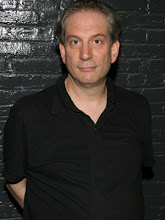
Tuesday, January 19, 2010

Native American Actor Wes Studi A Valued Player in Avatar and The Only Good Indian

Exclusive Q&A by Brad Balfour

It was no coincidence that actor Wes Studi was cast an the tribal chief Eytukan in director James Cameron's Golden Globe-winning 3D film Avatar or as bounty hunter Sam, the lead character in Kevin Willmott's The Only Good Indian. From the days he was in Dances With Wolves with fellow native American Graham Green, Studi's been a go-to guy for authentic native American characterizations. And though he has often played parts that had nothing to do with his heritage, his passion, and total commitment has made him immediately recognizable.

For the 63-year-old Studi, being a Native American has been a driving force for his career --whether in terms of the characters he has played or the issues they have addressed. Usually his performances are charged by a strong, almost arrogant stance, as if expressed by a man who is proud to have not only survived but thrived.

Vietnam vet, sculptor, musician, author, and activist, Studi caught Hollywood and the public's attention being in more than 50 film and television productions including Last of the Mohicans, Geronimo: An America Legend, Comanche Moon, Streets of Laredo, Mystery Men, The New World, Bury My Heart At Wounded Knee and Seraphim Falls. He also starred as Tony Hillerman's Lieutenant Joe Leaphorn in a triology of PBS films produced by Robert Redford--Skinwalkers, A Thief of Time and Coyote Waits. And before join the blue-skinned cast of Avatar, he hit the bullseye as General Linus Abner in the TV mini series, Kings.

Born in Norfire Hollow, Oklahoma, this fit six-footer exclusively spoke his native Cherokee language until he started kindergarten. A professional horse trainer, Studi began acting at The American Indian Theatre Company in Tulsa getting his shot in Hollywood but he and wife Maura Dhu never became Californians; they now live in Santa Fe, New Mexico, and perform in the band Firecat of Discord.

In Avatar, Studi plays an idealized character that comported itself with a dignity becoming of a tribal leader that represents the values and strength of the Na'vi--the tribe that resists the human invaders who threaten to destroy his community's way of life. In the indie-produced The Only Good Indian, he plays a very different character--a deeply conflicted Indian who stalks his own people--the young kids taken from their tribes and forced to be Christianized but who run away -- and strives for acceptance within a White world.

Q: Each of these films have their own little pleasures and difficulties. What were they for each?

WS: The pleasures of course were working on a huge blockbuster--and I don't think I'm premature in saying that's the case with Avatar. But of course, it had many difficulties. That world's language, for one, was fairly difficult in that it's a made-up language.

It also remind[ed me] that all these things were a very real thing to my ancestors. And then, in a way, we're reminded that indigenous cultures many times fall under the manifest destiny of those who would gain something from our suppression. So it's always a difficult and sad reminder that life is not as equitable as it could or should be.

Q: By becoming a successful actor and getting to be in a movie like Avatar -- where you are able to convey a message in a variety of ways -- is that part of the way you turned your anger into something positive?

WS: Right. Exactly. That's the whole thing in that you can't allow the anger to hold you in a state of mind that would prevent you from doing anything positive about it.

Q: Avatar's native characters have some characteristics like indigenous peoples from Africa, but they seem so connected to Native American traditions -- the relationship with plants and animals, especially to the horses. Did you have an opportunity to infuse some of your own experience or ideas in the process?

WS: I think a lot of the research had been done on the part of the writers themselves already. But yes, I could certainly relate to what was on the printed page, and I think they had a good understanding of the situation from a general viewpoint.

And the idea that Native Americans are perhaps more connected to nature is reflected in the Na'vi connectedness of the tree and the roots that expand everywhere. And it's a Native American premise to life that everything is connected and that we're all related in one way or another and it's a matter of cause and effect.

You know the old story about the flapping of a butterfly in China has an effect on things that happen in Maine or someplace. It's all an interconnected being that we're a part of.

Q: How did you get involved with Kevin Willmott, director of The Only Good Indian who had success at film festivals with C.S.A.: The Confederate States of America?

WS: I had met a couple of his producers, Scott Richardson and Greg Hurd, earlier. Then they got in touch and said they had a script that they'd really like me to consider.

I was working on Avatar at the time. I took a look at it, and sure enough, it has a story that totally piqued my interest because of the content. So we made arrangements to actually do it, and the rest is history.

Q: How long was the shoot and how close was it to where you live?

WS: It's actually about a nine-hour drive from where I live, but I was commuting from Los Angeles because we were shooting Avatar at the time.

I had about a nine or 10-day break from Avatar when we got started on the first part of the script in Wichita. Then I had to go back and finish up Avatar, and came on back to Kansas and we finished it within a matter of, I think, it was a seven or eight-week shoot.

Q: What were the challenges with The Only Good Indian?

WS: I'm at a loss to see it from the outside. I'm a product of those kinds of policies that led to the kinds of physical and emotional abuses that occurred during the transition from the 1800s into the 1900s. It's always been a reality to me; it exists at all times, it didn't just go away.

And I'm at a loss to see it from the perpetrator's side of the whole thing. I can only see it from our side of the fence.

Q: In The Only Good Indian, you had a more direct influence by being the Executive Producer. At what stage did you decide to do that?

WS: The intriguing part of the whole story to me, which I was part of bringing forth, was the idea of the vampire and how it spreads itself and continues to just grow and grow and grow when it's either accepted and/or adhered to.

When we first see me, I am totally working toward becoming that which is the oppressor. [I have] decided that the old ways are of no use, and so why not, if you can't beat them, join them. I have known many people like that throughout my life, and I wanted to be able to show that this kind of effect can be rampant.

It's like that Stockholm syndrome thing, in that we become one with our enemies, our oppressors. That is a reminder that we need to stick with the strength of that which we at one point believed in.

Q: You've been a carrier for your culture and other times had roles that were not necessarily reflective of that culture. Is it still hard not to be typed? Do you feel that it's important to be able to play those characters rather than let somebody else who didn't come from that culture?

WS: It's [important] to me to be able to play those other characters, because even then I've continued to carry the banner. And that's not just with American Indians. Actually, what it comes down to is that it's brown people; it's the fact that we see some brown people on screen. It's a matter of people of color is what it really comes down to, and anytime a guy like me winds up in a film like this, it's very good for people of color.

Q: Good thing you mentioned color because they were blue in Avatar.

WS: It's still a color, isn't it?

Q: So when you saw Avatar completed, were you amazed, were you glad, or did you have a whole different emotional experience?

WS: I was overwhelmed by the technology; I really was overwhelmed by the amazing 3D of it all. The story, yes, absolutely--I think it's a very old story, but this time told in a technologically new way that makes it even more acceptable for audiences.

It's a great pleasure to be a part of something that is not only technologically advanced to the point of amazement, but also one that carries a message that it does and acceptance of one group by another.

Q: How is it to have all those things stuck on you? And were you able to play that character while playing with the other actors, or do you do that individually?

WS: No, you play with other characters. The only thing that you have to be careful of is the camera that sits right in front of your face and the light. But once you become accustomed to that, it's acting in the grand old fashion.

Q: Are you upset when your character dies in movies?

WS: Well, of course I'm upset when he dies. I would rather have lived to see a sequel. Many times it's a matter of providing the drama of a death that adds to the film. I've died many times in film and television.

Q: At least you get to play the leader; that's something. You have been the sage, or the great father, a warrior or whatever.

WS: But in The Only Good Indian, I live. And live gloriously, at that.

Q: It must astound you when you look at it from the other point of view, the incredible arrogance. Is there ever a point when you can understand what was the thinking? Or is it just that you can only be angry about it?

WS: No. It's actually a curse to be able to understand that our people were somewhat imperial in their movements at times. I'm Cherokee, and there were times when social expansion was something that is needed by a cultural group or a national group.

I can understand that to a certain extent, but the arrogance of it is something that amazes me. And to use the use of religion or belief systems that contribute to the attitudes that came up with manifest destiny, that kind of thing, as well as the need for fuel that is apparent in Avatar.

All of these things come to mind. And while it's amazing, it's also a very sad thing that we actually can allow ourselves to become a part of something that is destructive to others.

Q: When you work on movies like these, do you get angry? Or do they make you feel that now you're at a point where you're able to get the message out?

WS: In a way, that was the case with the story of The Only Good Indian as well. Anyone in other places who gave a shit probably didn't know what was going on in the West at the time. Just as we may be a planet removed from what was happening on Pandora, anyone who was of any social conscience probably was unaware of what was going on out West as we portrayed in The Only Good Indian.

Q: Do you find that this movie was raising the consciousness of people that might not be aware of it?

WS: I like to be able to raise people's consciousness, yes. And to remind that those of us involved in the receiving end of the oppression, we have a duty. What they really make up is a prophecy of, "Why should we continue to do what we've always done? Can't we do it in different ways?"

Like the characters that Sigourney and Zoe play, in that research is one thing, and perhaps that would lead to a better kind of conciliation between the two groups if it wasn't just the out-and-out use of "might is right." It's something that, unfortunately, we as a human race haven't really learned up to this point.

Q: What was the best experience that came out of each movie? I guess you didn't have to shoot Avatar on location.

WS: All the locations were in the computers. One day before we started work, the actors were standing around there waiting, and James Cameron came walking up. I saw his shirt and I thought, "Boy, I like that shirt he's wearing." I said, "James, wow, that's a great looking shirt, I really like that," and he just took it right off his back and said, "Here, have it." And I still have the shirt.

Q: And working on The Only Good Indian?

WS: I think it was learning to ride the vintage bike. It really is just a bicycle with a motor installed and a leather drive. We had to find a real one we could use for long-shots, but the one that I rode was actually built to the specs of the original bike.

Its drive was a leather belt, and you know how leather reacts to heat, it stretches out. It was very hard to always be able to take off on, so we had to have another one built that worked off a different principle. I don't remember any funny anecdotes about the whole thing, but it was a pleasure to work on throughout.

Q: That subtle hit to Hollywood in The Only Good Indianwhen Sam says, "Now I'm going to move to Hollywood and play a cowboy." One of the great pleasures of making this film seems to be that irony.

WS: Absolutely. Irony is one of my favorite aspects of life.

Q: You've been able to play a Native American in a lot of different contexts. Do you feel that there are still other kinds of roles that you want to do and stories that you want to tell?

WS: There are more--perhaps more to the point, the kind of stories I would like to be able to tell. What I'd really like to say is that these, if you will, Indian Wars have never ended. They've been a continuation ever since we first met, ever since the creation of the United States.

It's been a continual warfare and a struggle to exist for most of the nations here in the United States, and it continues to this day. I don't really see an end to it because it's always a clash of cultures and interests here in this wonderful nation that we live in.

Q: Were you surprised to find somebody like Kevin wanting to make a movie like this?

WS: Kevin surprised me a little bit, but no, I think he has a mindset that agrees with my own outlook on life. Sometimes it's a matter of the better alliances to make in terms of what kind of story you want to tell. I think it was a great meeting of the minds and I think we both learned a few things from one another that can help us with our individual struggles in life.

Q: It seems you've worked with every major director that has touched onto the subject in one way or another in the last 20 years, so you must have probably one of the best surveys of directors. Who has inspired you?

WS: I don't know about inspiration, but I've taken away something positive from each and every one that I've ever worked with, I believe. I think one of the great pieces of advice I ever got from a director was from Walter Hill. He [told] me, "Talent is a wonderful thing, and it's something to be used and abused in every effort of storytelling. However, one of the things that we all need, those of us that are making movies, what we really need is stamina--emotional, physical, and stamina of the soul as well."

Q: And you've had a chance to work with some of these directors more than once?

WS: Oh yeah, I've worked with a number of them several times. I've worked twice with Walter Hill on Geronimo and Undisputed. And Michael Mann with [The Last of the] Mohicans and Heat. In fact, I saw Michael at the premiere; he's wild about the film.

Yeah, it's a business of creating relationships, you know. I'd like to work with James Cameron again, and of course we practically plan on working on something with Kevin again. It's good to work with people that you know how they work and they know how you work. It's mutually beneficial.

Q: You--and, I would say, Graham Greene--are probably the two best known Native Americans actors working regularly. Both of you are in the two biggest blockbusters of this season--he is in New Moon, and you're in Avatar. Both films in some way draw on the value, or the importance, of being connected to this cultural heritage. Has that had some larger resonance, or did you even think about that?

WS: I'm glad that Graham and I made it into a couple of films in 2009. It's kind of indicative, I guess, of the amount of interest and influence we have in contemporary and futuristic endeavors in Hollywood.

Q: That is a good thing. To think at one time they were having non-Native American actors playing Native American characters and making them villains, and 50 years later the most heroic figures in two of the biggest films of all time are Native Americans.

WS: Yeah, I think it's definitely a positive move; it's a move in the right direction. And hey, I'm catching some optimism.

Q: There's been an effort to have an activist African American actors community. Do you feel that the same thing is needed with the Native American community of actors?

WS: Yes, there is an American Indian community of actors, and fortunately we're getting to the point where we don't all know each other on a first name basis anymore. I would probably be referred to as the old guard at this point. A lot of younger people are coming along these days that are beginning to make waves and that's a great thing.

The doors have been opened and more and more people are deciding that they would like to step through the threshold. The activism I would leave to those who are younger than myself and have more energy to devote to that endeavor, and I applaud them for it. It's something that's needed.

Q: Are there stories that you feel still need to be told from the Native American experience, and are there stories you want to be a part of that don't necessarily involve it?

WS: One of the things that I would work toward is telling a contemporary Native American story that is of real consequence in contemporary times. It's always going to be a matter of connecting with the past and thinking about the future, but we also have to work on the really great contemporary Native American story. We haven't found it yet but that's what we're looking for.

Q: Are there particular Native American stories or books that you hope to see made or that you want to make?

WS: Yeah, I would like the story about a bicoastal Indian, maybe one who lives and works and functions in places like New York City or Chicago, San Francisco, Los Angeles--perhaps Tokyo; the world. Because that is the fact.

The fact is that we are citizens of the world as much as anyone else. A story that reflects that, I think, is something that we're really looking forward to being able to produce and throw up on the screen. And eventually, an Academy Award for Wes Studi.

Q: Was it inevitable that the Native Americans were going to lose, or do you think there was a point when they could have defeated the invaders?

WS: Tecumseh had a really good idea, to tell the truth. A unified front at that point maybe could have stopped expansion at the Ohio River Valley or at the Mississippi River, something like that.

As a matter of fact, I read a book a number of years ago that was called, The Indians Won, [by Martin Cruz Smith] which was a science-fiction at that point and time, but would probably put us at just where we are now. It was that coalition of Native nations had been able to stop the westward expansion and claimed an area within the confines of North America.

It was a nation divided; they were on the coasts, and then the Native Americans occupied an area in between, and we were on the point of shooting for the moon with rockets. It was an interesting story that I'd like to find again and maybe find the rights to it.

Q: Do people expect you to be able to use all these Native American weapons and ride? Are you a good rider?

WS: The first job I ever got out of Los Angeles was dependent on the fact that I could ride a horse, shoot a bow and a gun, and speak a language other than English, simultaneously. So I got the job.

Q: Are there other Native American languages that you speak?

WS: Not fluently, no. Just un poquito Español.

Q: The Only Good Indian has appeared in festivals, but this is an unusual effort that you're self-distributing it to a degree. Was there any frustration about getting it out there, or you just wanted to control it?

WS: It's really a matter of control. We don't want to bend over as much as distributors would like to have us do. I think it's a better choice to contain control of it on our part at this point.

Q: Did you think of writing a book based on your experiences?

WS: I'm probably working on my memoirs as we speak, yes.

Q: Make sure you add in this interview once it gets posted.

WS: I would like to be referred to as the 20th-Century Electric Indian.

Wednesday, January 13, 2010

English Actress Carey Mulligan Get An Education and Award Noms

Feaure Interview by Brad Balfour

With An Education, the 24-year-old British actress Carey Mulligan has come out of nowhere to garner the kind of critical acclaim and award notice that few receive so quickly -- she's up for a Golden Globe tomorrow for example. But her performance as 16-year-old Jenny in Danish director Lone Scherfig's version of Lynne Barber's story (adapted by writer Nick Hornby), not only glistened but showed an understanding of her character and the era beyond her years.

Stifled by the social conventions of 1961 England, Jenny's life changes when she meets a handsome older man David (Peter Sarsgaard) who both opens her eyes to world at large and the sexual life within her. Though he tenderly draws her in, he has an insidious, deceptive side, which unfortunately reveals itself, destroying her and her father's' (Alfred Molina) hopes for a life with him.

The London-born Mulligan had been in a few films such as 2005's Pride and Prejudice (playing Kitty Bennet alongside Keira Knightley, Judi Dench, and Donald Sutherland) and in the 2005 BBC adaptation of Charles Dickens' Bleak House (as the orphan Ada Clare). but the Covent Garden resident first established herself in the new version of Doctor Who as a guest actress.

According to IMDB, Mulligan has said that her passion for acting was first kindled at Woldingham School, where she performed in Sweet Charity in her final school year. Once she began her professional acting career, and found an audience she also started a relationship with Shia LaBeouf as of last August, who she met while they filmed Oliver Stone's Wall Street: Money Never Sleeps.

Q: Did you identify with your character?

CM: I think mainly in the way she feels about school. I got quite bored with school towards the end. When I was 14, I was really academic, and then I slowly lost interest in it towards the more important parts. It was just that I felt like I was doing things to tick boxes and to get on another level, and to just pass that exam so that I could get onto that exam, and I just thought, "This isn't interesting and I'm not learning anything that I'm interested in."

I just felt like I was doing it for other people, and I was doing it to please other people. But then I didn't take advantage of my education, and that's quite sad. I admire Jenny, in that she really does want to learn and feel passionately about things. If some of the things that I was taken to do when I was in school...

It was a really nice school in Surrey, and we went on really amazing school trips to really amazing places, even just museums in London or concerts and things. But it was just an opportunity for us to run out and find a Pizza Hut that serves alcohol, like where can we get drunk in 45 minutes before we have to be at this thing. So I related to her in the fact that she wanted to escape all of that, because I thought it must be better somewhere else.

Q: You and the other actors have a lot of theater experience. With this movie that would contribute to making some of the set pieces in the house and some of the other interactions work because you're really familiar with that kind of interplay of dialogue, that talk back and forth. Did the film have a theatrical, on the stage quality to you?

CM: When you do a play you come away from it feeling like you've really acted for a bit. But it pretty much would have come out of lots of people who are brilliant and have done a lot of film. It's the cast [that matters] -- when you get a group of people together who genuinely like each other a lot, and make each other feel comfortable. Those sort of things work when everyone feels at ease with each other, and so you don't feel nervous about making mistakes or are embarrassed.

Because I was probably the least experienced person, [that was] certainly the case for me. I never felt embarrassed, and that was because I was around a lot of people who don't worry about perceptions of themselves like that. So it had more to do with that; I've not done that much theater [actually]. We didn't have a huge amount of time [for rehearsal]; we had 6½ weeks and then two days in Paris.

Q: Did you enjoy having a chance to live through the experience of the '60s--especially with the clothes, and hair?

CM: It was great; I loved all that. It's always helpful to put on the shoes of the character you're playing, and it certainly helps wearing a school uniform. And then being surrounded by girls who really were 16 or 17 years-old; all the extras that age were really helpful. When you wear no makeup, or film no makeup -- which is lots of makeup to make it look like you're not wearing anything, and a school uniform, and then someone puts on a nice dress and does your makeup, you do feel like you've been done up and transformed.

You walk around and don't feel so horrible in front of the crew; all those things make you feel generally better about yourself. It was great and it was fun, with girls false eyelashes are always fun.

Q: Was the '60s music a revelation?

CM: Lone [Scherfig, the director] made me lots of CDs before we started shooting. Also they'd written this sort of soundtrack, or the piano piece that goes over the whole film, and I had a minute of that, it was put on one of the CDs. And then it was on my iTunes and I didn't know what it was, and six months later I was going through it and played it.

I had no memory of where it had come from, so I labeled it because I was going through a labeling phase. I labeled it as "Pretty Song." It wasn't until I Dominic Cooper and Peter Sarsgaardwent to Sundance and heard the song that I realized it was from this. I love the music in the film; the Duffy track at the end is cracking.

Q: What was Lone's direction like?

CM: she doesn't see the task of making a film as stressful. I'm sure she has enormous stress, but you never feel that stress from her, and she sees it as a really joyful thing that we've all be given this gift of a script. So it does feel very measured really.

Q: Do you think that 16 years old girls nowadays could fall in love as easily as a girl in the '60s?

CM: Yeah, definitely. Probably the only difference is that I wouldn't advocate getting in the car in 2009. Don't get in the car. But then, my dad would tell me that when he played on the streets -- he'd played football in Liverpool when he was growing up -- if you got thirsty you just knocked on the door and asked someone for a glass of water.

You just wouldn't do that now. So I think the only difference is she wouldn't have got in the car. God, girls at my school would just go crazy, and instantly, and I don't even think Jenny ever falls in love with him; I think she loves him and finds him endearing and he introduces her to a different world, but I don't think she's in love. I don't think the sex would be so calculated. But I think she does love him.

Q: Is she more in love with her projection of herself in that world?

CM: Absolutely. She's becoming who she thinks she wants to be, and then realizes of course she's not. There's one good thing that someone said the other day, there are a few shots in the film where the lighting changes, or moments when she's realizing stuff about herself that she doesn't particularly like, and every time there's a shot like that, in the car when she reads and she finds out that he's married, and there's another moment as well, the makeup suddenly doesn't sit on her face anymore; it looks like she's put on her mum's shoes and done her makeup.

The lips look wrong and the eyes look wrong, and I like that. I think the lighting suddenly becomes harsh and you see a really young face with too much makeup on it, and you suddenly see her, and those are the moments when she realizes that she's just gone way too far.

Q: It wasn't a problem for a girl that young to get involved with a guy that old? Not a problem conceptually, but did it seem realistic?

CM: Oh absolutely; definitely.

Q: You get a chance to live 16 again, so were there things you've thought about or learned or reflected on so that you say, "At least I didn't do that," or "Oh yeah, I didn't think about that?"

CM: She's more rebellious than I was; I wasn't that interesting. And I wasn't that bold either; I would never have got in the car, and not even in the '60s, I would have just walked away and waited for the bus. I think I wish I'd taken more advantage of the stuff I got to at school. I think I wasted quite a lot of time. I had fun, but I didn't do very much.

We went on a choir trip once to Washington and we spent the whole time being like, "Oh it's so hot." Like, come on; we had amazing opportunities and threw them away, and I feel a bit guilty about that.

Every time I do a job I'm always amazed by how knowledgeable people are, and on Wall Street, the amount that Oliver and Shia and Frank and Michael have all learned about, they already knew so much, but the amount they know about finance and the economy, and I kind of come in a go, "god, give me a copy of the 'Economist', I need to figure out what the hell you're all talking about." So I think I'm trying to learn more for myself than I was before. I was kind of coasting along before, quite happily ignorant.

Q: Have you every tried singing?

CM: I sang a lot at school but I've never done it professionally.

Q: Who are your role models as actresses?

CM: I think people who've had interesting, varied, gone back and done plays and lots of different things. Like Samantha Morton, Emma Thompson obviously, Kate Winslet, Toni Collette, Claudie Blakley, but lots of American actresses as well. Penelope Cruz; I met her in Toronto and almost cried.

Q: Dominic Cooper said you went to lots of readings and auditions together but never got the role. What do you remember from that time?

CM: I love how he's telling that story. The reason Dominic and I know each other is that, when [the production company] Working Title has a new film they have a big roundtable read and they just ring up actors to come play the parts, not necessarily the people who will play the parts, and in our case, definitely not.

So we've been in, a fair few times where we've been called in to play very small parts in big films, and we sit around and we get really horribly nervous because we've got like three lines and then we just make a complete mess of it and then they never call us.

Then you find out when you watch the film that everybody else around the table ended up playing those parts, apart from me and Dominic. So that's how Dominic and I met basically, by being rejected together.

Q: Dominic made it sound much more glamorous when he was telling it.

CM: He does [like to milk it].

Q: After all that rejection how do you feel about everybody saying this movie is a big vehicle for you?

CM: I'm amazed by the reviews. I'm not amazed, I think it's a lovely film, but I think it's been wonderful to be part of something that people seem to genuinely like. But it hasn't come out yet, so. It hasn't been years and years of rejection; I've a had a really lucky, nice career so far, Dominic's just made it sound like we lived in hovels and occasionally sang songs for people.

Q: Well he did.

CM: He did; yeah that's true. But I can't say enough about what this has all meant to me. But really the best thing that's come out of this has been spending time with the people we made it with.

Nick just gave me this, and when we were about to do a Q&A and showed me the dedication at the beginning and I just burst into tears. I've got so much love for all the people that we did this with, and the fact that I get to spend all this time around them again is just great. But if these nice things mean that more people will see the film, that's nice, because it won't just be your aunt and my Welsh granny.

Q: How are things on Wall Street: Money Never Sleeps?

CM: Good, they're good, yeah.

Q: How did you land the role in Wall Street 2? How is it working for the first time here?

CM: This is not the first time I worked here; I did a film here last summer, The Greatest -- which was also at Sundance -- and then I did the play here. But someone slipped Oliver a copy of An Education and my agent rang me when I was still shooting Never Let Me Go and said, "Oliver Stone's going to give you a call."

What a strange phone call to have. I was sitting with Andrew Garfield, who was in Never Let Me Go with me, and he just went mental. I went and got a hands-free so we could both lean over the table and listen, because we just wanted to hear Oliver Stone speaking, which I've never told Oliver and now he'll know.

Then he offered me the job and I went over to L.A. a couple of weeks later and read it and loved it. I had versions of the script since July and we started rehearsal; we had about three weeks of rehearsals about two months ago, and then we've done about four weeks of shooting. I haven't had to do very much yet, they've been kind to me and [scheduled] all of my big stuff for after I've released this. But it's great; it's an amazing cast.

Q: You've seen the original movie?

CM: Yeah. It was weird actually because the day before I was going to meet Oliver to read it, and I still didn't know if it was something that I, I didn't know what to do really, I didn't know what the part would be like and I didn't know if I should just dive in regardless of the part because it's Oliver.

I was staying at this hotel and I was doing this thing with the New York Times and I went to rent a dvd the night before I left, and I opened the dvd player to put in the one I'd got - I got Risky Business - and Wall Street was in there. And then when I was flying to LA I was reading this magazine and my horoscope said, "blah blah blah blah blah, rubbish rubbish rubbish, like Gordon Gekko said in Wall Street, "Greed is good." And I thought, "Why is the universe telling me to do this film?"

Q: Who do you play in the movie?

CM: I play Gordon Gekko's daughter.

Q: Working with Oliver Stone, and all the good reviews and award notices for this movie, it is a big break in a sense of global domination. How you feel about that, because everyone wants a piece of you; there's also the bad side of fame and the paparazzi and of course once everyone recognizes you on the street...

CM: I mean, I've been recognized twice [laughs].

Q: That could change.

CM: Well, I don't really look like I do in this film. My years so far, and my life so far, and even to do with Wall Street, and there are paparazzi and it is distracting because you're trying to film a scene on the street and you're trying to think about your character or the other person you're acting with, and you have 20 people taking other images of you.

When you think there should be just one image of you there are all these images of you, and so you have to try and not think about any of that, so it's distracting for your work. But ultimately, you can get upset about it, but it's not a bad position to be in. I'm doing the job that I love with people that I really respect, so it's like a 98% good situation with a 2% downside. I'm so absurdly lucky to be working, let alone working with the people I'm working with. I don't even know if it will enter my world, but if it does it's not bad in the grand scheme of things.

Q: Are you irritated that when you're out with Shia [LeBouf, star of Transformers] that everybody's is clicking camers and, everybody surrounds you? He's probably stalked by people.

CM: At work there are always paparazzi there, but there are always paparazzi on the set of Sex and the City and everything else that shoots in New York or any major city, so it comes with the territory.

it's irritating at work really because you don't want to think about it, but then they're doing their job and 're earning their living for their families. You just have to block it out.

Sunday, December 20, 2009

British Actress Emily Blunt Reigns In "The Young Victoria"

Q&A by Brad Balfour

One of the great things about English actress Emily Blunt is that she carries no vestige of her characters beyond the set -- especially since she played the British Queen Victoria.

At her roundtables for The Young Victoria, she showed no royal imperiousness, no contempt of the masses, no unwillingness to answer questions that didn't please her. But her characterization of the youthful Victoria was so dead-on in the award-worthy The Young Victoria that you’d have expected her to be a royal pain.

It takes a fine actress to make interesting the story of a young princess who has basically been a prisoner in her own home, trapped by her mother, the Duchess of Kent and lover/consort, Sir John Conroy. When they try to force her to give control of the crown to her mother, she resists. On her 18th birthday, she becomes the Queen -- but the power really shifts to her once King William, her uncle, dies shortly after her birthday.

Of course, Blunt’s on-screen intensity is what makes the 26-year-old actor such a hit in the films she's made from her breakout role in The Summer of Love as a well-educated, cynical and deceptive 16-year-old beauty, Tamsin. She went on to have key parts in such films as The Devil Wears Prada, The Jane Austen Book Club, Charlie Wilson's War and Sunshine Cleaning but nothing has brought her to such public attention as this film about the English monarch who reigned the longest and changed her country's culture. Blunt's already been nominated for a Golden Globe and a BAFTA award for Best Actress -- and she's expected to garner a few more award noms including one for an Oscar.

Q: How aware were you of the Victorian period? What were your prior impressions, and how did they change?

EB: I actually had a rather limited knowledge of Victoria and Victoriana -- how they created that -- and of her and Albert together. I had the image of her as the old lady who’s mourning and dressed in black.

I had no idea about the antithesis of that, when she was young, rebellious, spunky and bright, and she partied all night. It was these elements of her that I never imagined possible, so when I started reading about all of that, I was very surprised to hear about the character traits I never thought were there.

Q: What did the director Jean-Marc Vallée or the producers do to inform you? Was it just what you got from school?

EB: I had no idea, because I took geography, which I thought was the easiest subject compared to history. I took geography and can’t remember any of it. It was probably a stupid thing to take because I think history would have been a better way to go. It certainly would have helped me more with this. But maybe not; we have a whole lot of kings and queens, so I think that I probably would have only known a paragraph about her anyway beforehand.

It was really fascinating to read about what they did together, really mainly under Albert’s influence, because he was very educated in all these departments -- social reform, architecture and the arts and the sciences -- and what they did for [curing] poverty. They were very progressive in what they wanted to do for the country.

Q: How did the producers help you?

EB: [Screenwriter] Julian Fellowes is a historian really; you can’t try out history on Julian Fellowes because he will nail you every time. So it was very helpful talking to him and then reading books that he had encouraged me to read: biographies, diaries of hers and letters. The diaries were most helpful to me, because you can learn as much as you want about this history, you can read about it out of your own interest, but it doesn’t necessarily help me with trying to play this person.

At some point, you have to drop that and make it your own. Another actress would have read the same diaries and had a different take, so it was just my personal take on her, what I felt I could identify with, what I thought was important to bring across.

Q: Was it hard to keep that balance to make her relatable?

EB: It’s interesting... I wanted it to be accessible because I feel period dramas can be quite staged almost, and stiff and arch, and I think that that stops people from actually getting in and identifying with what’s going on. At the same time, you don’t want to risk losing those constraints because then you lose the whole nature of the implications of what happens if you do a certain thing in that period. And if you’ve lost any of those constraints and any of the world then it doesn’t become relevant.

It is a tough balance but Rupert [Friend, who played her husband Albert] and I approached it very similarly. I was very lucky with him because he is such a natural actor, so we fed off each other trying to make those moments incredibly real. Love is this thing that is all about emotions and instinct, and so you can have this flowery dialogue, but at the end of the day, instinctually, it’s about love.

Love is timeless and I think that we really strive for that, to fight against the dialogue, fight against the costumes, to try not to be swallowed up by the sets and the opulence of it. I thought this was a love story, but I also thought it was a film about a dysfunctional family and about a young girl who’s in a job where she’s in way over her head. So I tried to approach it in a way that I could understand. I have no idea what it’s like to be Queen of England.

Q: Did you feel the chemistry was there between you and Rupert or did you only see it when you saw the film?

EB: I think you know it [from the start]. Rupert and I met and we just got on so well and that really helps. When you have a genuine liking for that person it gives you a freedom within the scene to try stuff.

There’s a lot of trust there so you can improvise moments and they come alive, and sometimes you strike gold and sometimes it’s like watching paint dry, but at least you can try it because you have the trust there with that person.

Rupert was wonderful, and it’s just because he was the only guy to play that job because he was so perfect as Albert. He was the last person that came in to read and I was like, "Thank God," because he just blew it out of the water; he was so fantastic.

Q: Lord Melbourne -- her early advisor and friend who helped before she got involved with Albert -- was the other major male relationship in Victoria's life. He is so incredible -- what a dynamic between the two of you.

EB: It’s a really interesting relationship because Melbourne was sort of everything to her. He was a father figure, she was infatuated with him in a slightly teenage way, but she didn’t have those romantic feelings towards him. It was more sort of a teenage crush that developed into very much a real friendship.

She had a real love for him but at the same time he was manipulating her and was toying with that, but he actually ended up having a huge amount of respect for her when he realized he couldn’t do that anymore, the tables turned.

So it was an interesting dynamic to get because you wanted to see that there was a threat to Albert, but at the same time that nothing shady was going on. So he was great with that pull because he’d add elements of being vaguely flirtatious but not seedy, and you could see he really liked her but it wasn’t that he was completely trying to sabotage, or use her as a pawn.

It was a very complicated dynamic to get [right] and it was mainly on [Paul Bettany] to create that. He created it because it should always have been ambiguous as to what that relationship really was. I thought he was great; it was very delicately done.

Q: Did the corset help you find your character?


EB: It's very good in that it transports you to moving a different way, holding yourself differently. You do have to kind of glide with it, so I think it does help me. I usually try and approach characters in that way, I mean everyone’s very different, but I find the physical aspects of creating that person very helpful, like the costumes, the clothes, the way they move, the voice, and everything like that. I usually start from that point.

Q: Did you ever faint wearing those corsets?

EB: I got close to it. Miranda Richardson [who played Victoria's mother, the Duchess of Kent] was the one who had the closest call, after claiming she was amazing in the corset and that she could take it as tight as anyone wanted. We call it in the UK, she “pulled a whitey;” she literarily went white. She was sitting at the table and she was talking and she suddenly just went… and she was like, “Get me out of it!” and had a panic attack.

I was alright; I got very used to it and by about four o’clock, that’s when it starts to hurt. But they look beautiful so you’ve got to just suck it up, really. Or suck it in, as they say.

Q: One of the most powerful scenes was between her and King William. Was he as entertaining in real life?

EB: Oh he’s so entertaining. She did adore her uncle; he was always wonderful to her and very much a father figure. She was kept back from seeing him and that was always very sad for her. She was kept from seeing anyone. It was really an oppressive, lonely childhood.

There was one story I read about that she was walking with her mother in the gardens -- and her mother was reluctant about being there with King William -- and he came past in his carriage and just picked her up and they went on this crazy ride around the gardens in his carriage. So that was her outlet, going to see him. But Jim Broadbent [as King William] is absolutely as fun as you can imagine. He’s really wonderful. That’s my favorite scene in the film, that dinner scene.

Q: What do you think you'd do if you lived in that time?

EB: It’s almost an impossible question because I have no idea. I would hope that I could be as forward-thinking as she was. She went against protocol and she was determined to make things better and she overrode tradition. I thought that that was a really wonderful quality for her, and surprising that she had the guts to do it.

It probably helped her not growing up at court amongst those stately manners, from the mannerisms to the etiquette, and I think that she was kind of a loose cannon in a room like that. She had a horrible temper, which correlated as well to how passionate she was as a character. I think that she was a modern girl and that she was independent, so I would hope I wouldn’t be manipulated and controlled in a way that a lot of women were in those days.

Q: What about handling fame and wanting to be a young person?

EB: It’s funny because I think it is all about choices, from the choices you make as to where you want to go and eat dinner, like don’t go to the scenes, don’t go to where you know people are going to take your picture. Just find a dive bar. Why do you have to go to a scene?

Are you talking about me or Victoria? It’s a similar thing.

It’s interesting. You have to develop quite a thick skin because people are going to trash you. Not everyone’s going to think you’re great. I think that that’s important to remember… You’ve got to relinquish that and just let it go, because you have no control over that side of it – of people’s opinions – but I do have control over how much I put myself out there.

I feel that in a way I now lead a similar existence to what Victoria led, although certainly not under the amount of pressure that she was under. I have a good life. It’s not compared to the ridicule that she was put under, but I think it’s that sort of element of a dual existence. You have yourself at home behind closed doors and then you have an awareness [of something else] when you step outside the house. For me, it’s only an awareness. It’s no more than that.

Q: Celebrities are always complaining about the downside of dealing with fame and attention and paparazzi.

EB: It’s a really magical job, so the side effect of what comes with that can be good and bad. But what I get out of it is the work. It’s not whatever people think of me because with that comes bad and that willingness to see you fall as well.

A lot of people like to see a fall from grace. There’s a real hunger for that. I’m aware of that, so I try not to buy too much into what people think. But as long as I keep getting the parts that I’ve been lucky enough to play… The variety is what I really strive for, because that’s what I love about the work.

It’s a wonderful job in that everything you go through in life can come out in it somehow. You can have a visceral reaction to so much in life and then put it into your work.

Q: What was your impression of Sarah Ferguson, Duchess of York [former sister-in-law of Britain's Prince Charles], and did you get to meet any other real-life royals?

EB: Sarah was a great support system because she came up with the initial idea, but then she very much took a back step and said, “What do I know about making a film? I know nothing about that.”

But she’d come on set and make tea for everyone. She was always so open and down-to-earth; I think that you were able to see the humanity in the royal family through her because she would talk quite openly. In a way, she identified more with Albert because Albert was the guest in the house and the outsider, and she actually understood his character more.

Q: I want to know more about Fergie. She actually came on set and made tea?

EB: She only came on set twice. She really wasn’t around once we started filming. She was very tenacious with Graham [King, producer of the film] in getting it off the ground, but once we started making it, she was just thrilled to be a part of it. I only got to know her after, when we started doing press.

Q: How do you think the royals will react to this movie?

EB: The Queen saw it; she liked it. She said she wants to know what happens next. So that was good.

Q: Did you get to meet her?

EB: No I’ve never met her.

Q: Though you haven’t met the Queen, what is your imaginary scenario of getting to meet her Majesty.

EB: I’m sure I would botch it up somehow. I’m sure I’d forget to curtsy, or I don’t know what I would do. I’d probably say the wrong thing; I might drop an F-bomb, it could all go wrong. I think it would be nice to meet her in this context because I’ve played a queen and I think I’d feel more at ease meeting her in this context.

Q: Did you hear that Lady Gaga met The Queen?

EB: Did she meet the Queen? She did not! What was she wearing? Are you serious? Unbelievable. Unbelievable.

Sunday, December 6, 2009

Oscar Winning Actor Robert De Niro Makes Sure 'Everybody's Fine"

Feature Interview by Brad Balfour

On the heels of his Kennedy Center Honors (along with Bruce Springsteen, Dave Brubeck, Mel Brooks, and Grace Bumbry), legendary actor Robert De Niro is on the silver screen again. While he's being lauded for past laurels, he's also garnering kudos for his latest film, Everybody's Fine, a comparatively modest work that has recently been released after making a festival circuit tour -- most recently it had a special feature screening at the 2009 Denver Film Festival.

Based on Oscar-winning director Guiseppe Tornatore's 1990 hit Italian film, Stanno tutti bene (which starred Marcello Mastroianni as an Italian bureaucrat on a veritable travelogue across Italy in search of his adult children), English director Kirk Jones transfers the story to the States and De Niro.

The 67-year-old actor plays retired widower Frank Goode who used to string telephone wire -- a job that encouraged interaction -- but is a guy not good at communicating or even knowing what's going on with his kids. When his wife was alive she handled his quartet of kids; now, as adults, they are spread across the country, so Frank goes on a surprise tour to re-connect with them.

Though the narrative falls flat at times, De Niro makes up for it with his passion and understanding of his character. And the interplay between him and the trio of actors playing his kids -- Drew Barrymore, Sam Rockwell and Kate Beckinsale -- is authentic and affecting. A great turn this late in his career, De Niro shows a softer side and redeems himself for some of his recent, lesser movies.

Ever since he established himself through his breakout performance in 1973's Bang the Drum Slowly, De Niro has racked up quite a track record of cinematic achievements --culminating in various Oscar nominations and two wins. In '74, De Niro received an Academy Award for best supporting actor for his role in The Godfather: Part II and won Best Actor for Martin Scorsese's 1980 boxing film, Raging Bull. The New York born and bred De Niro has made a unique partnership with his fellow Italian American Scorsese, establishing quite a catalogue together from 1973's Mean Streetsto Oscar noms for best actor in two of Scorsese's greatest films, Taxi Driver (1976) and Cape Fear (1991).

In 1993, De Niro made his directorial debut with the touching A Bronx Tale and directed the epic CIA historical, The Good Shepard. Now De Niro heads his own production company, part-owns various restaurants and other real estate in lower Manhattan, and, in response to the 9/11 attack, co-founded the Tribeca Film Festival.

At least in Everybody's Fine, he neither plays a character who kills someone or plays a parody of Robert De Niro as either a crook or cop who kills someone. Instead, he has made a seasonally appropriate movie about a parent's loss and the enduring relationship with his adult children.

Getting De Niro to speak on much of anything is a bit of trick -- not unlike his character in this film. So when a crop of journalists sat down for an Everybody's Fine press conference with Jones and actor Sam Rockwell and this the veteran New Yorker, they were seriously tested.

De Niro deferred to Jones unless they were directly addressed to him (and Rockwell wasn't asked much anyway). Fortunately. enough questions were asked to produce some decent answers, but nobody will ever call Bob De Niro longwinded...

Q: When did you get involved with the process of making this film?

RD: Kirk and I had a meeting and he told me the story and what it was based on. He had photos of the whole project -- the traveling across the country -- and I was impressed with how passionate he was about the project. I could see that he was special and doesn't do movies often. This will have been his third [after two long hiatus between each of his other films, Nanny McPhee and Waking Ned Devine].

So that informed me obviously [about how] he cares so much. I saw the original [Italian film] and [Kirk's] other two movies, and then I read the script. We then just decided when to do it.

Q: How does your personal life affect the roles you pick and the way you play them?

RD: Obviously, I related to Frank and drew on my own experiences like I do in all my parts. You draw on whatever's relevant to the part you're playing; it makes it more personal. There was a lot here of course.

I have five children, and two grandchildren. But also, going back to Kirk being the director and his caring [about the project], that's the anchor of the whole thing [here]. So that's really, really important.

Q: More important than the role itself?

RD: Well, yeah. It's not more important but it's equally as important. He has to steer the ship, it's his baby, so he's got to make choices and all that. I put myself in his hands so to speak.

Q: You watched the original Italian movie; how did you relate to the Marcello Mastroianni character? What do each of the fathers have in common?

RD: It was just a different type of movie. I love Mastroianni. Since I was kid I always watched his movies. He's been in great films part of the great Italian tradition, obviously. But it was a different thing, totally. Kirk made it his own. The structure was there and all that stuff. But it was totally different.


Q: Possibly the most moving moments in the film are when we see Frank's telephone calls to his kids. When was the last time you heard a busy signal? Do you get nostalgic for those times or are you into the techno-gadgets?

RD: [Like] Twitter?

Q: Do you tweet?

RD: I don't twitter. Somebody told me about it. I didn't know what it was.

Q: How do you feel about new technology?

RD: I only know how to use a computer. I don't even know how good I am at it. I slowly use the little things and get emails and look at videos on the computer and use an iPhone. I guess I use it adequately.

Q: Did anything in this movie remind you of an experience you had with your own father --after all he was a major abstract expressionist painter -- or as a father with your own children?

RD: My father was pretty easy on me about what I wanted to do, to be an actor and stuff like that. My grandfather was much more strict, more old-school, old time Italian than my father ever was. That was my impression of him.

My father came from that to New York City to get away from certain things and they raised me kind of easily. And the fact that I wanted to be an actor, well, that was okay with them and my father.

And I try not to be too strict with my kids because certain things they have to do. But at the same time I don't want them to get away with anything. But I think I try to rationalize with them, and argue, "Now look I'm very good with you about certain things unless you do this. You have to now do this. That's only fair."

Of course, there are times when that stuff doesn't work. I'm not the all-knowing, all-seeing... But in general it works pretty good.

Q: You mean like the curfew kind of things?

RD: I don't put a curfew -- you know, [tell them] "do this" -- I'm flexible with certain things that the kids have to do. It's not like a curfew where they have to go to sleep at a certain time.

Q: Do you approach your comedic work differently than your dramatic work?

RD: Well, this is a more gentle sort of -- what would you call it -- comedy than say Meet the Parents. It's more of a dramedy.

Q: You've worked on every scale of film from mega-productions to an indie-budgeted one like this film, as a producer, director or an actor. What's the difference in working in indies versus large films?

RD: Well, the difference is you have more time. When you have more -- just a lot more -- then there are a lot more people on the set, a lot more trucks, [and such]. It's a big production. I don't know. I mean, making movies that are very simple, ultimately -- I always wonder when I walk around a big movie and you see all these trucks and this and that -- I think, "Just to get this, you've got to get all these people."

And of course, those are only certain movies that do that. It was good. This to me is a normal time to shoot -- I think we shot eight weeks? So eight weeks is a pretty good schedule. It's an independent film. An independent is going to be less than what goes on this film I think. It costs less to make. And a shorter schedule, like five weeks. Four weeks.

Q: Will you be doing more films like this?

RD: I will.

Q: Do you have some things in mind?

RD: Some, yeah...

Q: You signed a deal with CBS for three pilots to be shot in New York City. What kind of shows do you watch and will we see you taking a part on television?

RD: Maybe. I don't watch much TV other than the news. Really. I'm busy and I'd rather be reading and doing stuff. There's good television. I just don't watch a lot of it.

Q: So your interests are in producing?

RD: Yeah, we're producing these shows. That is -- that's good. But to this point -- and once those start happening I will watch them. Work on them. But in general before that, I'm not that tuned in to television and such. But there's a lot of good stuff.

Q: Are you doing another Meet the Parents?

RD: We're doing a third one -- Meet The Little Fockers.

Q: You've built a career on playing tough guys, gangsters, police officers. How important is it to you to do something different, something softer? Do you think about how people perceive you from movie to movie; does that concern you at all?

RD: No, some people do that and sometimes I play off that because it's a certain thing you do -- you can make fun of it in certain movies. Like in Meet the Little Fockers, it's also titled, Or The Godfocker. And I asked Greg [Glienna, one of the writers] --because I have a feeling if something happens to me -- will he [De Niro's character Jack Byrnes] be the Godfocker?

Q: The film deals with lots of adversity in many ways. Do you have any ways that you deal with adversity in your own life?

SR: Depends on the adversity, I guess. I do different things to calm myself down. Exercise. That's a good thing. [There are] different ways to battle adversity. I can't think of any other ones [right now].

Q: You've dealt with a lot of adversity. You've overcome 9/11 nearly devastating your beloved Tribeca. How do you deal with it?

RD: Which adversity are you talking about?

Q: Any adversity...

RD: I'm here, aren't I?

For other articles and editorial work by Brad Balfour go to: filmfestivaltraveler.com

Sunday, November 29, 2009

Director Paul Schrader's Controversial Holocaust Film At The Israel Film Fest

Exclusive Q&A by Brad Balfour

For veteran director/screenwriter Paul Schrader, seeing his film Adam Resurrected appear in this year's Israel Film Festival in New York is a little like coming around full circle. Originally released here almost a year ago, his strange surreal little black comedy of a film stars Jeff Goldblum as a concentration camp survivor recovering his sanity in an Israeli psychiatric hospital in 1961. Goldblum's character Adam has tried coping with surviving.

Though the film received mixed reviews and limited exposure, Schrader will not only receive a special presentation of it at the 2009 Israel Film Festival in New York -- which kicks off Saturday evening -- but he will be honored with the IFF's Achievement in Cinema Award during the opening night Awards Gala being held at the SVA Theatre (23rd Street and 8th Avenue) -- where the rest of the Fest is held as well.

While the 63-year-old Schrader began his career as a critic, he quickly segued into writing then directing. His list of credits include Taxi Driver, Blue Collar, Raging Bull, Cat People, Mishima: A Life In Four Chapters, The Mosquito Coast, City Hall, American Gigolo, Patty Hearst, Auto Focus, Affliction and The Walker among the more than 30 titles he has either written or directed.

In its 24th year, founder Meir Fenigstein's Israel Film Fest has brought to this country a fascinating survey of an ever-evolving cinema and has succeed in touring these film in several cities include NYC. Running from December 5th to 13th, 2009, the festival showcases 28 features, docs and shorts. For further info on the IFF program and ticketing go to israelfilmfestival.com.

Q: This film reminds me of Philippe De Broca's King of Hearts.

PS: King of Hearts is a sweet film. [Adam Resurrected] breaks the two rules of Holocaust cinema, which is why it's controversial for many people.

If you think about it virtually every film you've seen on the holocaust is: 1) based on fact -- [that] these things actually happened, and 2) it's reverential -- all those poor people, they suffered so much.

This is not based on fact. There never was a hospital like that, or a commoner/prisoner relationship like that, and it's not reverential. [The book] came out in 1968 in Israel, right at the same time as Catch-22, Slaughterhouse Five, and all of those books written by guys who were in a war looking back after 20 years with a very jaundiced cynical eye at those experiences. That's the literary tradition that this book comes out of. So it is not really out of the holocaust tradition as much as it is out of that kind of literary tradition.

Q: Do you think that Israelis perceive this film differently than the general Jewish population or Americans?

PS: We premiered it at the Haifa Film Festival, and I was really expecting a possible negative reaction. But the response was very good. The book was viciously attacked when it came out, and it wasn't until it was championed in the West that the Israelis started to realize how good it was.

Q: Why is this film's story important to tell now?

PS: The metaphor of the man who used to be a dog who meets a dog who used to be a boy is a metaphor for recovery and survival; that's what struck me. It's informed by the holocaust, but it could've been informed by other traumas too -- anything that required him to live like a dog to survive. That's what grabbed me.

I'm not Jewish and certainly didn't think the world needed another holocaust film from me, so I didn't see myself as the logical candidate to be doing this. But then I started reading it, and as soon as that thing with the dog came, I went, "Wow this is cool."

Q: What is it about you that can do this? You get it...

PS: Well I don't know that part of the question. I know what attracts me. I get bored very easily. I find most movies boring. I go to movies and ask, "How do they stay awake making this?" They made this movie before, I've seen this movie before, how did they stay awake?

Anything that doesn't bore me I think is doable because it's keeping me awake. This particular story had been passed on by several of the usual suspects in Hollywood because they didn't think it was doable. That never occurred to me because I had never seen this before so of course it was doable because it was fascinating, it was interesting.

Once you have a situation that is fresh, then you sort of believe in it and it becomes normal. So you do end up with protagonists that haven't been in other movies before. There's not been a guy like Adam [Stein]; he's rather new to movies. What interested me is that I haven't seen a movie about this guy before.

Q: You've established yourself as a writer/director. This one you didn't write, you received the script. Did you have any input after you received the script?

PS: Of course, I'm a writer. The script was good but it was long -- it was by a first-time writer [Noah Stollman] -- so I had to take some length out of it, about 20 pages, and in doing so, you take ownership. It's Noah's script, but I have ownership too. That's just in pre-production, but once you get to production every script is rewritten in rehearsals. And then, to some degree, it's rewritten on set too... not nearly as much as some people think, but to some degree.

Q: Yoram Kaniuk, the author of Adam Resurrected, is still alive?

PS: Yes, miraculously. I've seen him quite a bit. He died a few years ago and then he wrote a book about being dead. And he'll describe himself as, 'Hi I'm Yoram Kaniuk who once was dead but now am alive.' That's the way he talks. He was in a coma for six weeks. And he came back to life.

When I first met him I didn't think he'd live to see the film, but he has improved. He's quite an extraordinary guy. He loves this film. He has been a huge champion of this, which is very flattering since the film is something else but does not have the reach and the complexity and the brilliance that the book does.

Q: You got handed a project that was once thought of for Orson Welles. Did you ever think in your head, how would Orson Welles approach this film?

PS: I don't know at what point in his career. I have a feeling it was in the back end of his career. But I know he wanted to do it with Bette Davis. And to see him and Bette going around barking like dogs, I think I would've paid for that [laughs]!

Q: Why did you think Jeff Goldblum would make a good dog?

PS: On the very first read [of the script] I was sitting in my living room on page 70, and my wife walks through so I said, "You know, I'm reading the script now and there is an actor who was born to play this role." She said, "Who is that?" And I said, "Jeff Goldblum was born to play the role I am now reading."

I didn't know Jeff. I said, "He has lived his entire career to play this role." That's how strong it hit me. So when I first met with the producer, I said, "You know there is an actor who was born to play this role." Of course he wasn't too excited when I said Jeff's name because that makes his job harder. We went to some other actor and as far as I was concerned I was happy they passed on it. Finally we ended up with Jeff.

Q: Is it because he has that sort of smarmy attitude?

PS: He's an entertainer, he's a showman. Plus he's tall, Jewish -- he's like a big Jewish prince -- and the right age. It's interesting to play him at his real age [56] because he always plays someone youthful-looking. So it was interesting to actually show the lines and crevices in his face.

Q: How does Jeff feel about it? He's not mad at you for showing that?

PS: No, no. Jeff is the perfect soldier.

Q: It was a no-brainer to have Willem Dafoe as the Nazi.

PS: That was a favor. Nobody likes to play Nazis. They wanted a name, so I just had to pick up the phone and say, "Willem, I'm going to ask you a favor." The German financer did not want a German to play that role. So we needed an American name, and that meant calling up a favor. So that meant Will.

Q: That was a bizarre plot twist with the nurse. I wanted to see more of that.

PS: She's fabulous. Ayelet [Zurer] is like the biggest star in Israel, but she's really famous for being vulnerable. She was the wife in Munich. So this is not really what she's good at, she's good at being soft. This was kind of a change for her. But I really felt that we had to hold onto that. Even though it doesn't make a whole lot of sense at times, but then not everything has to make sense. It makes some kind of sense.

Q: It hits all your marks. It's got a little bit of that brutal side and perverse eroticism. You must've had fun with shooting some of those scenes where she's with the dog. But it must've been tough to get it right.

PS: It was not fun for her [Zurer], she did not like that. So that was a little bit of a problem because she was doing it knowing it was the right thing to do, but she wasn't doing it because... she had to really be talked into doing this film.

Q: Would you agree that Adam Resurrected is also about survival?

PS: Yeah, although in some ways, if it was up to him [Adam] he would be dying. I'm just an old dying clown, let me die. Dr. Nathan Gross [Derek Jacobi] is the one who brings that boy... why is that boy in the hospital? He's not there because he's a camp survivor. He's there because he's Gross' special project. Then Gross finally gets interested in survival.

Adam resists survival. He doesn't know what to think about that boy. It's fascinating because he loves that boy but he hates that boy, he's jealous. And when the boy finally climbs to defense and can speak, his reaction is "beat him up!"

Q: How do you explain the relationship between him and the nurse?

PS: She was somehow attracted to this sick dying clown, and when he became healthy he was not of interest to her anymore.

Q: Was that part of what she thought was her therapy?

PS: I don't know. It's not her movie. Actually her movie would've been an interesting one. But it's not her movie. I can't say I spent a lot of time trying to figure out what was her movie.

Q: There's something special about this being set in Israel.

PS: When I first got this script it was set in Palm Springs. The book is in Israel. The producer moved it to Palm Springs because he was under the impression that no American director would come to Israel and shoot it. And I said, "Why is this thing in Palm Springs?" So we moved it back.

Q: The pervasive qualities of Israel are an important part.

PS: I'll just tell you one last quick story. Yoram is writing this and he's out in the desert, and he comes across a sign. On it says: "on this spot will be built the town of Arad." So he said, that's pretty cool, I think I'll take my imaginary mental hospital -- because no hospital like this ever existed -- and I will put it in this imaginary town of Arad.

After the book came out 10 years later, after they had built a mental hospital in Arad, they invited him over and they said, "You built the first mental hospital in Arad and now we built the second one!"

Q: What do you think people should take away from this film?

PS: I don't know. The complexity of survival I guess. It's not always the contradictions of things that are interesting; he loves the dog and he hates the dog, I'm sane, but it's boring, I'm crazy but I'm dying.

Contradiction is the heart and soul of character and drama. You're always looking for it. I loved her so much I hit her; that's character. I loved her so much I hit her again; that's even more character.

So if you're always looking for contradiction, people say: "Okay you gave us contradiction, now take contradiction away." No, you can't take contradiction away. Part of the fun of it is that the contradiction never really quite goes away.

When people had different ideas about what the ending of Taxi Driver meant, somebody asked me, wasn't I upset? And I said no, that's perfectly acceptable. I would be more upset if everybody had the same opinion of what it meant.

[To read an extended version of this interview, go to: filmfestivaltraveler.com and click.]

Monday, November 23, 2009

Q&A: Actor Michael Shannon Is Finding Himself And His Character In The Missing Person

Exclusive Q&A by Brad Balfour

At 6' 3" the tall, lumbering Michael Shannon doesn't look like a leading man with his rumpled character-actor looks. Sometimes, Shannon's so quiet and reserved in person you wonder how he made the leap to stage acting. Yet when unleashed by a role, his presentation can be so overpowering that it often overwhelms other performances. Such was the case with his characterization of John Givings in Revolutionary Road, which won him a 2009 Supporting Actor Oscar nomination for his dark philosophizing on the state of the world in 1950s America.

Aligning with his arch, pained performance in Sam Mendes' film, Shannon is now to be seen in The Missing Person, in which he plays private eye John Rosow, who's hired to tail a man on a train from Chicago to Los Angeles. The former NYC cop had been self-medicating the loss of his wife -- who was working in the World Trade Center's North Tower on 9/11-- through drink for years. Rosow gradually discovers that the man was one of the thousands presumed dead after the 9/11 attack. Persuaded by a large reward, Rosow is charged with bringing him back to his wife in New York, a journey that compels him to finally address his own trauma, making the film something more than just a cinematic homage.

Debuting in the States at the 2009 Sundance Film Festival, This neo-noir film, co- starring Oscar nominee Amy Ryan, is directed by director Noah Buschel who also directed the intriguing Neal Cassady (a film about the late Jack Kerouac's traveling buddy and inspiration).

The Lexington, Kentucky-born Shannon first came to wide critical attention through his uncanny, twisted performance in 2004, appearing Off-Broadway in Bug at New York's Barrow Street Theater; it later became a film directed by William Friedkin starring Ashley Judd and Shannon. He had established his role initially in Chicago, where he did it at Chicago's A Red Orchid Theatre and got nominated for a 2002 Joseph Jefferson Award for Actor in a Principal Role in a Play for Bug. Shannon discusses finding himself through his characters in this exclusive interview.

Q: You play a detective, one of those prime roles that every actor looks to do. Had you read a lot before? Had you seen all those movies like John Huston's The Maltese Falcon or Robert Altman's The Long Goodbye?

MS: The movies I've seen hardly any of at all. I consciously didn't want to look at them going into shooting the film because I didn't want to feel like I was imitating somebody else the whole time.

In terms of the books, I've read a lot of Jim Thompson books, I've read a bit of Raymond Chandler, but I took all my clues basically from the script and the director. He was clear about what he wanted and I just went with that.

Q: It was a good opportunity for you, taking that detective character and updating it into a contemporary context. I think that must have been interesting to you as well.

MS: Oh yeah, definitely. It seemed appropriate; it never seemed ham-handed to me.

Q: What did he tell you he wanted, and why did he feel you had those qualities?

MS: I did a reading of the screenplay, which I guess wound up being an audition. I applied my natural sense of things to the reading, and he was pretty happy with that.

Actually, he was much more interested not so much in the detective aspect of it or the classic noir aspect of it, but in the fact that [this] man was severely traumatized by 9/11 -- pretty much incapacitated by it. The film was really about seeing if this person could come back into the realm of the living. That was more the journey that we were exploring, I think.

Q: Where were you when 9/11 happened?

MS: I was in Chicago. I was doing a play called Bug, which later became a film. Apart from it being a devastating experience, it was also an incredibly bizarre experience, because I was playing that character at the time. He was very skeptical of things to begin with, and so to have that kind of event happen in the middle of telling that kind of story was really, really intense.

Q: If you had to say something about your character in terms of 9/11--who he was, or how that resonated--what would you think is the truth there? What will people take away that is that truth?

MS: I think the truth in this film is a deeply personal one. In the other two instances you mentioned, it's much more directed at society or the world at large. But this is very personal. I think at the beginning of the film, John is pretty delusional and not in touch with the truth of what's actually happening around him. The journey of his character in the film is towards a truth. It may not be a truth that involves anyone other than himself, but it's important nonetheless.

Q: Obviously, you have some ability to play traumatized characters. Yes, you have a look, but also an understanding as well. Does coming from Kentucky do that to you?

MS: It's tough to figure. I was telling somebody, inevitably when you watch somebody in a movie, no matter how much craft or acting is happening -- however much or little of that is happening -- you're essentially drawn to who the person is innately, because you can't escape the fact that you are who you are. I think that comes through. That's why people are fans of certain actors.

That's why some people say, "I really love Christopher Walken." I mean, as great an actor as Christopher Walken is, you love him because he's Christopher Walken. When you go to a movie you go to see him, even if he has funny glasses on or a mustache or something. You know that that's him and you know that you like him, regardless of what character he's playing.

I think who I innately am, for whatever reason, translates into the things I do and makes it so that you can buy me as a certain type of person. Whatever my life experiences are that allow me to give off that sense of understanding, that's private.

Q: Did you realize that director Noah Buschel made that movie on Neal Cassady?

MS: I saw [Neal Cassady]. That was the first time I met him, actually. I was having coffee with Amy Ryan, and she said, "I have to go see this film that I'm in because the director wants me to give my input." And she said, "You could probably tag along if you wanted."

So next thing I know I'm sitting in a little editing suite with Amy and Noah, who are watching Neal Cassady. I loved that movie; I thought it was so fantastic. It really baffles me that more people haven't seen it. I thought it was beautiful.

But Noah has a very eccentric style to what he does. He has a very unique style, and it's something that leaves some people scratching their heads.

Q: He certainly applied that style to this movie. What was your experience with him like?

MS: We shot the film in about four weeks, so it's all kind of a blur. It was a very intense schedule, we had to work very quickly. We shot two weeks in New York and two weeks in LA. And we shot all this super heavy stuff in New York first, and then we went to LA and did the more whimsical part. It was an interesting order of sequence.

Q: Was that just a logistical choice, or was that also a choice in helping you?

MS: It was purely logistical; it was very low budget. We couldn't start in New York and go out to LA and then come back to New York; we couldn't keep going back and forth. We basically shot the beginning and the ending of the film first, and then went out and shot the middle in LA, just because that's the way it had to be. That didn't wind up really bothering me. I enjoyed that order, it made shooting in LA a lot of fun.

Q: So when you saw the movie assembled, did it work in the way you expected it or did it surprise you in certain ways?

MS: I was real tickled with it. I had seen a variety of different cuts, actually. I was a little bit worried to see the final cut, because I know that Noah had been under pressure to maybe make some choices that he wasn't entirely convinced were right. He had been getting notes from a lot of different sources. At one point, after almost starting to lose interest a little bit--it was just too difficult to make everybody happy--he kind of sucked it up and got to the end of it. I was really proud of both the film and him for surviving that process.

Editing a film can be very arduous, particularly if there are a lot of people with opinions looking over your shoulder. I think in the end he was able to find a way to make everybody happy, but still hold on to his vision of things, which is quite an accomplishment.

Q: Though you were the one awarded the Oscar nomination, you were still just a supporting character in Revolutionary Road. In Bug, you're really the driving force, but you weren't thought of as the lead. But here you're really the lead; it's a movie about reaction to you, and you reacting.

MS: It's an opportunity for me. I'm not shaping these stories really, I'm just getting the opportunity to show up and participate. At the end of the day, at least from my perspective and my experience of things, the actor in a film is not a real power position.

What the audience ultimately winds up watching is a lot more about the vision of the director and of the other artists involved--the cinematographer, editor. Film is a very technical medium, and the actor gets this opportunity to contribute their portion of it, but it's not like it's my vision.

Q: As an interpreter of the director's vision, you are the truth teller. In Revolutionary Road your character was a truth teller. In Bug, as crazy as he was, he was a truth teller as well.

MS: Maybe there's something about me. It's hard to be aware of yourself to that degree. I'm not even necessarily sure that I look at what I do as an act of self-expression, really. It's more about trying to serve the story. I guess I express myself basically in what I decide to get involved in. But once I'm there, it's like [I'm] a servant of the story and director.

Q: In a funny way, Kim Fowley, who you are playing in The Runaways -- the upcoming bio-pic of the legendary girl rockers -- is the ultimate manipulator, truth teller or truth hider. He too fits into the set of characters that you should play. That must have been interesting; what was that like?

MS: That was very daunting, very intimidating. I met him. [He and I ], Joan Jett and Kristen Stewart [who plays Jett in the film] had dinner one night at a Denny's. He told me that he hoped I did a good job in the movie, because when he died that was how he was going to be remembered, was by my performance. I said, "Well, thanks for the pressure, I really appreciate that."

He was very sweet, actually. He really is a character. I watched as much footage as I could. I don't think I pulled off a spot-on impersonation of Kim Fowley, but that's never been my forte to begin with. I never claimed to be able to do that. But I certainly think what I did will honor his legacy and his memory. Hopefully, when he sees it, he'll agree.

Q: Were you much of a rock and roll fan?

MS: Oh yeah. I love rock and roll; I love music in general. That was a really fun era for music.

Q: Besides getting to work with some great first-time directors, you've also worked with the legends -- from John Waters (Cecil B. DeMented) and Cameron Crowe (Vanilla Sky) to Sidney Lumet (Before the Devil Knows You're Dead). How do you resist wanting to watch all their movies and talk to them about it?

MS: Well, fortunately, most of the time you're just there to work, you don't have too much time. If I'm working with someone for awhile, we make an opportunity to have dinner or something, and that's when you get to hear all the stories.

But when you're at work, it's all about the work. I'm not a Chatty Cathy on the set anyway. I generally tend to not talk unless I'm saying one of my lines, because I'm trying to concentrate and conserve my energy.

Q: You were initially a theater actor, and because you're a tall person with an imposing quality you can really have a power on a stage. In film, you pull it back or you control it differently. How is that contrast for you?

MS: I don't know, I don't see them as being as different. I think that's largely because a lot of the theaters I have worked in have been very small, very intimate. I think the difference was larger maybe back in the old days when you would do a play in an 800 seat theater and then go do a movie with Hitchcock or something; that was a bigger discrepancy.

But nowadays, a lot of the theaters are very intimate. Even some of the larger theaters, they've found a way to make them incredibly intimate. It's not as big a discrepancy as it used to be.

Q: You worked with a great ensemble in Werner Herzog's re-think of Abel Ferrera's Bad Lieutenant: Port of Call New Orleans.

MS: That was a lot of fun. I got to do two scenes with Nic Cage, one of the biggest movies stars in the world--also a very inventive actor to work with. My scenes were just with Nic. Both the days I was working with him, I think he was feeling particularly inspired.

It's an older kind of Nic Cage performance, not so much the leading man roles where he has to rein it in or something. He gets to let loose and have fun.

He does such an incredible job. When he gets an opportunity to do what he's good at, he really knocks it out of the park.

Q: Give me a quick take on working Jonah Hex -- based on the Marvel Comics character. Even though you're not Hex, it must be fun to work in a comic book film where these characters are a little larger than life.

MS: I had a lot of fun on Jonah Hex. I was only there a couple of days; my character's just in a couple of scenes. But they tell me that if there's a sequel, I would be back in a larger capacity--which would be fun, because it's a really fun character. I had never heard of the comic series before, but when I was there and looking at the artwork, [I thought] it's really strong.

Q: Are you working on something now--beside being in Herzog's My Son, My Son, What Have Ye Done and Gela Babluani's 13?

MS: I'm working on a TV show right now called Boardwalk Empire, which is going to be on HBO. We shot the pilot this summer, and now we're shooting the series.

Q: And that will be the Atlantic City boardwalk?

MS: The first episode is right at the start of Prohibition in Atlantic City. Very gritty.

Q: You don't think you'll do a superhero someday like Nic Cage has done

MS: I'd play a superhero if there was good writing. I'd play Oscar the Grouch if it was good writing. I like good writing, and a lot of times the writing is more complicated and interesting when you're dealing with characters that are [somewhat] damaged. That's just the way it is.