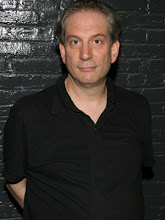
Feature Interview by Brad Balfour
It's been quite a year for Spanish actor Javier Bardem. With his three recent films, "No Country for Old Men," "Love In The Time of Cholera," and "Goya's Ghost," being released almost back to back, the 38-year-old scion of an old acting family is now in the public eye more than ever. Not only has he logged time doing these explosive roles but has also for working with some of the finest directors of the moment from the Coen brothers, Joel and Ethan, to Mike Newell.
In the Coens' "No Country for Old Men" he plays the psychopathic Anton Chigurh cutting a deathly swath while trying to recovering his bag of more than $2 million in drug money near the Rio Grande. His portrait of this insidious killer has garnered him the Best Supporting Actor nom as a result. In Mike Newell's "Love in The Time of Cholera," Bardem plays Florentino Ariza, the almost sweet, love-struck suitor who keeps his flame burning for Fermina over 50 years; these two parts couldn't be more contrasting.
Though the Madrid-based Bardem has done more than 25 films and won various awards, it wasn't until he played the late homosexual Cuban writer Reinaldo Arenas in "Before Night Falls" and as garnered a Best Actor Oscar nom, that he really got international recognition. Then he played Ramón Sampedro—a 55-year-old quadriplegic Spaniard who fought to end his own life—in "The Sea Inside" which drew further accolades to Bardem. Now with these recent English-speaking roles--ones that fully illustrate his range--Bardem is attracting more awards-oriented praise.
Q: Are you surprised at your success in getting all these English-speaking roles? You've made the transition from a foreign-language actor to English speaker quite successfully.
JB: Well, I see all these things as an actor. I live in Spain and my career is there. The exception is when I work out of Spain, but it's good that a year and a half ago it seemed that most of the offers were coming from the outside.
I want to work. I want to work no matter where it is. I don't care where it is. I want to work and to do my job as good as I can but it's not something that I choose. It's something that happens.
For example, Antonio [Banderas] really took that step [first] and really kind of made it. I'm not brave enough to take that step. I think that my performance in English will never be the same as it is in Spanish because of the language difference. So far, though, I try to work hard at what I do. In English, I work on the language so that it makes me feel at least comfortable with what I'm saying.
Q: How do you feel about being the new brand of Spain star--the archetype of the Spanish male sex symbol. You're one of the biggest stars there and now internationally; you took that role in "Nine" away from Antonio Banderas.
JB: What do I think about being a new brand?
Q: In some ways people identify Spain with you.
JB: That's bad.
Q: What do you mean?
JB: How can anyone define anything with me. First of all, that's not true. I'm only an actor from Spain. Beyond that, what they say or what they want to think about it or what they want to create out of it because they need to sell papers is fine. It's totally ridiculous that I would be a brand of anything.
And about Antonio Banderas, I'm not taking away any role [by playing the lead in "Nine"]. The "Nine" situation is something that we're taking a look at, but I have—how do you say—the pleasure of seeing him onstage doing "Nine" and he was great. I also had the pleasure of going to see him and saying "Hello" after the play. I mean, I was blown away because of his energy. He was a master on that stage and that's pretty difficult.
I don't know what's going to happen with "Nine," but I don't think that anyone can take the position or the place that Antonio Banderas has in this, and in any other market, because he has been a pioneer. And for all of the actors that are going behind him it's a great favor, what he did. He was the first person who took the bags, the luggage, and went to a foreign country without speaking any words and making a career. That's something that we should be really, really thankful for.
Q: Did you find that your character in "Goya's Ghost" complements your character in "Love in The Time of Cholera;" sexuality is a big issue in both films.
JB: The thing with "Goya" is that I don't see anything in common. He was a tough guy. [That's not the case with Florentino.]
Q: One was sort of repressed and this one was far more free in a sense.
JB: There's something that's really like a priest in this character, the way of hiding himself reminded me a little bit of "Goya's Ghost," but I try to avoid [doing] the same stuff.
Q: On the other hand, were you able to find any humanity in your character in "No Country for Old Men" since he is a cold-blooded killer?
JB: Yeah. I think that I tried to do a symbolic figure rather than a human being in there. The good thing is that I did it one month afterwards and this was like a clean shower for me.
Q: Did you stay in character throughout?
JB: Oh yes, I was a character even when I didn't want to. When I would wake up and take a shower, and I had the same haircut, there was so much grease on it, that it was still the same. And when I go out to buy milk, people get frightened. I guess the thought of working with them is something, that as a Spanish actor, is impossible to even imagine.
Keep in mind that the first time I arrived in the States was in 2000, at the Georgia Film Festival, my agent asked, "Who would you like to work with?" I said the Coens. And he said "No, that's impossible, next." I said "Why?" And he said that's never going to happen.
So when that possibility took place, I was really honored. But I had some problems with the character because in Europe we don't have problems with having sex on camera, but we give second thought to guns. So I flew in, talked to the brothers and they convinced me. It took like one second for me to say yes. So from there, I thought it was fun just to be there and kill people and go back to the motel and sleep.
Q: Is it fun to kill people?
JB: It's not something that I had fun with. I remember one day in the motel when I killed three guys, we shot that and waited for the next day, and the blood was all along the walls, I almost vomited. And I'm there to play the bad guy so its weird.
Q: Does it have an effect on you?
No. It's only a movie, but its not something that I would like to do. For once I had fun.
Q: You've recently introduced Woody Allen to Spain as a location for his new film "Vicky Cristina Barcelona." What was that experience like?
JB: Yeah. It's funny because Milos Foreman and Woody Allen are both masters, and they went to Spain and I worked in Spain with them, which is even better. They went there. I think that Woody Allen had a good time and he realized, I think, and as Milos realized, the great quality of people in everyone – in the crew, and the technical staff. The crews really work hard, but at the same time are very nice and warm. Both of them were really surprised by that because I guess that they were expecting something different.
Q: How do you feel about making Gabriel Garcia Marquez classic "Love In The Time of Cholera" in English and not in Spanish since it is based on such a Spanish-language classic?
JB: Once again, it's very well-conceived and you have to get onboard or not, though I would have preferred that it was in Spanish. There were many moments where I said, "Fuck. If it were in Spanish I could really make it another thing." That's because there's an understanding, a knowledge of the language that you can play with that's in the novel.
There are certain words that mean something deep because they belong to your own memories and experiences, and you bring them with you and the character will go to another level. But when you're working in a foreign language you have to try and put that as surgery. You have to try and put those experiences into those words that don't mean anything to you, which is extra work.
It's also a great experience too, though, because you have to really focus and you have to really be able to let yourself go as an actor and using the currency of a language that's not your own. It's a weird, kind of schizophrenic moment, but it's good.
Q: Did the book have the same effect on you when you read it in Spanish and then read the script in English? Screenwriter Ron Harwood did a fine job with the adaptation.
JB: No, that's impossible. I mean, I was always working with the book in Spanish. When I was shooting the movie I always had the book in my bag and I was always coming back to it and reading it and pulling notes from it. You're in this universe of what you're reading, the language of Gabriel Garcia Marquez in Spanish, and to go to set and say it in English was a weird situation. Sometimes I would get lost in the translation. It was obvious sometimes that I wasn't bringing what I could.
Q: You read this book when you were 14 and it made a big impression on you. How did that affect your feelings for it as an adult, especially in getting to portray Florentino?
JB: Well, the first time I read it, it was so big. It's such a big
novel. I mean, I followed the storyline, but I remember being thoroughly stuck in the reading of it. I was trying to get lost in the descriptions, for example, when she goes to the market and the way that Gabriel Garcia Marquez can explain the flavors and the smells of the fruits and all of that—I remember reading that like, six times in a row, going through the page. It just opened a whole world for you and there were many things that I missed. After that, I read it twice.
When I knew the movie was going to happen, I felt like I had to talk to the director and tell him I had a big passion for this character. Also, as an actor, it's a challenge to try to do somebody that goes from 20 years old to 75 because when you do that you have to avoid act aged; you have to act like the character aging, which is different.
That's a challenge, especially when you're shooting scenes when you're 20, then scenes when you're 40 and then when you're 75 all in the same day. You have to change years that fast. That's a challenge, and I wanted to go after that challenge.
Q: Did you enjoy aging 50 years to play this part?
JB: Not really. It takes a lot of time to be in the makeup further and [?] is not the best place to be aged with prosthetics because it's like 95% humidity. So we have to really make a big applause for the guy who did it, because it was awful to put the pieces on. Then you're in the makeup trailer and step out onto the street and the whole thing disappears. It was crazy.
Q: Is this a story about undying love or obsession?
JB: I don't know. I think it's a story of... It's the ultimate love story of a person who really falls in love when he's 14 years old and still, at 75, feels the same way as if he's seen her the day before. I mean, it's fiction. It's a novel. It's not like it exists in the real world, but we all want to think it exists. That's why we're always fighting for it.
Q: You play a character that's had 622 lovers. What kind of advice would you give to rock stars or movies stars even? What do you think was the secret to his charm?
JB: [Laughs] I don't know. I have a problem with that because in the novel he says—well, I mean, when they first told me that I was going to play the character I said, "Okay, how do I play this?" There's a moment where Florentino says he's anxious which is fine. I'll do it. He's always worried. I said, "Fine. I have little thoughts of my own." I'll always be worried.
Also, that he's thin. Then I had a problem. I said, "Fuck. I have to lose weight." But when they're saying, all these women, why they're so attracted to him, the guy says that in the movie and in the book, he says, "Well, I think that they see him as someone who's not going to harm them." You want to play a character that goes with that gravitas. With the gravitas of someone who has that weight, but a person who's left kind of a shadow with no weight, like a ghost almost.
Q: How are you with women?
JB: Next question [Laughs].
Q: Are you romantic with women?
JB: How am I with women? I am the same way that I am with men. It's about how you are and how you relate to people and how you consider yourself. I think that the most difficult love begins with one's self. How you treat yourself is something that you bring to your relationships.
Q: How has your view of romance changed with age? As a teenager you
might have thought romance is about hot passion, and as an older person that changes.
JB: Yeah, but the funny thing, and the extraordinary thing in the book that will hopefully be translated on the screen, is that he hasn't changed. He's the same. I always saw him in such a way that when he sees her, he's thunderstruck. He stays in the same place he was when he saw her for the first time, even if the body says the opposite. He's like that. That was the challenge in playing the role, trying to always protect that—how do you say it, innocence—in a man that's 75 or 60 or 40 years old, as if he's a little kid.
Q: How is it possible that no one ever became obsessed with your character since women are traditionally much more romantic creatures than men.
JB: In the book?
Q: No, in the film.
JB: There's no one. There's one, I guess, that gives her life.
Q: Not really.
JB: Well, she's killed.
Q: The girl at the end had a little bit of an obsession.
JB: Exactly. Exactly. The younger one.
Q: Can you comment on that?
JB: It's amazing. It's one of the things that Gabriel Garcia Marquez always goes back to, the relationship between the old man and young women. That story in the book is amazing. In the movie it's brief, in my opinion, as everything is because we can't really spend very much time with everything. Otherwise it'd be a 10-hour-long movie.
But it's beautiful to see how he relates to the young lady with the same innocence, as we were saying before, when he was 14 years old. That's why she sees him as someone who is trustful. He's someone that she can trust because he's like a little child.
Q: The fact that this character feels true love for one woman, even
after being with so many others, is clear in the book. Do you think that translates to the screen?
JB: I don't know. I think it's difficult because people see that, yeah, he says that, but he does the opposite. Once again, the book is clearer, but there's a line in the book that was in the movie and actually isn't in the movie anymore, I think. He says, "I could have been unfaithful to her, but never disloyal."
That's not something that you want to say in front of your wife because they will kill you, but in the language of Florentino you would understand what he means, which is... I mean, the book explains it very well. I think in the movie though, he tries to find something, some meaning out of every woman he's with. He tries to be close to her by these encounters.
Q: Would you ever come back and do this character again if there was more written, if Marquez did the character another book of his?
JB: Oh, of course.
 The Film Society of Lincoln Center takes New Yorkers to the Iberian Peninsula this December as 20 new features, a look back on the career of actor Javier Cámara,and a rare look at Spain’s early experimental cinema are presented.
 “
“