Showing posts with label Dick Cheney. Show all posts

Friday, August 7, 2009

Q&A: Taking Cheney/Rumsfeld to Task, Actor David Rasche Steps In the Loop

Interview by Brad Balfour

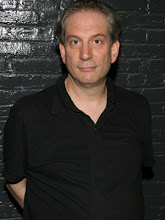
When actor David Rasche came into the room, I knew this was going to be a different kind of interview session just as In The Loop is a different kind of political comedy. The 65-year-old Rasche was supposed to be joined by director Armando Ianucci and fellow thesp Zach Woods to conduct an intimate roundtable with four of us--but because Rasche was early--or on time--for us, our conversation was transformed, much like the shambolic supposedly "secret" committee meeting organized by Rasche's character, the gung-ho American warmonger Linton Barwick (a cross between Dick Cheney and Don Rumsfeld) got transformed and provided a sort of pivotal moment to the film. In a similarly chaotic fashion, Rasche alone spoke with a couple of us before settling down with his fellow Loop-ers and provided some pivotal moments of his own.

Now distributed in the States, the British-produced film debuted at the 2009 Sundance Film Festival and, in New York City, at this year's Tribeca Film Festival. Based on--or rather, taking its cue from Ianucci's smart and snarky look at the inner workings of British politics The Thick of It (kind of like The Office for politicos)--In The Loop follows Cabinet minister Simon Foster (Tom Hollander) through a series slip-ups that gets him involved in the ever-twisting gyre of intrigue that's leads to getting a war started in the Middle East. Sounds familiar...

The film starred some of the series' regulars such as Peter Capaldi (reprising his foul-mouthed communication chief Malcolm Tucker) and American additions such as former Soprano James Gandolfini as a war-reticent General Miller. Within this context, bumbling assistants and loose-tongued associates screw up and screw each other to a dry, droll, parodic effect. The film certainly doesn't view previous British and American administrations as the pinnacle of political achievement.

In light of this summer's health care debate with the right stirring the pot, the film serves as a reminder that the politics of diversion, derision and destruction as expressed by the opposition party goes on. So when a film like In The Loop offers this refreshing and engaging alternative take on the inner workings of the political universe, it becomes a must-see to add perspective.

Though Ianucci (also the primary writer and producer) with Woods (who plays Chad, a very funny American adjunct) finally arrived, what was supposed to be more of a roundtable, turned into a unusual back-and-forth of banter.

Q: Was that just the roll of the dice that you ended up playing the bad guy, Linton Barwick?

DR:Well you know, they made it a little bit harder in this movie [from the television show]. But that's for Armando [to explain].

Q: How did you see it?

DR:I had a few rejoinders that were excised.

Q: You did it so well. You have this way of doing it so that you don’t come off as just mean.

DR:That sinister thing is there [though].

Q: Is that you or in the script? I can’t believe all the things that Armando threw in there.

DR:It’s terrific eh? Funny as hell. The timing was great; it's global politics. As a matter of fact, I had a friend, Mike Reiss, who was one of the producers of The Simpsons, who said that he thought there are arguably more funny lines in this movie than in any movie he can remember.

Q: But is it too complicated for Americans to get?

DR:I’ve been in tons of audiences like in Seattle [at the film festival]; there were 3,000 people, all Americans, and they just were howling with laughter.

Q: I saw it with critics and they didn’t laugh as much as I imagine an audience would. I was angry at them in a way but I thought it was astounding.

DR:Really? I’m surprised because I have not seen that audience. The only audiences I’ve seen, big or small, have [been with the public].

Q: You don’t even realize some of the lines are really funny until it hits you later; it's so deadpan, and you’re so perfectly deadpan.

DR:It’s really funny, I have to tell you, I’ve been involved in two international projects in the last little bit and it’s absolutely remarkable what we bring to it. Like I did this Brazilian film and people are all saying “Oh, we don’t like you because you did so and so and so and so,” and I said, “What are you talking about?” And the same thing with this; with the British press, the Americans were almost completely ignored and all they could see is the Brits, and now here you’re asking me [about my character]; we see the Americans. It’s funny, what we bring.

Q: Who were you a blend of?

DR:I was going for was a combination of John Bolton and Donald Rumsfeld and Karl Rove and Condoleezza Rice. All those imperious, belittling, condescending, right? Remember all those press conferences? It was like, "Do you really have to act like that? Do you really have to be so belittling and condescending?"

Q: You added the imperiousness brilliantly.

DR:I mean all of them, like David Addington [Cheney's legal counsel and chief of staff]--do you remember him?--they were all so unpleasant.

Q: Evil, evil people.

DR:No, but as unpleasant as a person [can be]. In the hearings, talking over you, not listening, belittling your point of view, remember Condoleezza Rice? “Uh Senator.” Relax, Condi. Anyway.

Q: I was at a Times Square New Year’s Eve with a press pass and John Bolton came to there. No one else had a problem talking to me, Regis, Chris Rock… But Bolton had a phalanx of security; you couldn’t even get 20 feet near him, and it was like, “What the fuck?” And he did not crack a smile the whole time.

DR:They’re so self-important. Same thing with Cheney; he’s doing something that no American politician in the history of the union has ever done, that is breaking the silence [after a new administration has taken over] and starts screaming about you know… And the reason is, “Oh well what’s happening is so important, and I’m so important, I just have to.” Well you know, Dick, I don’t know if you’re that important.

Q: It’s interesting seeing us filtered through a British cultural lens so that you see Americans in a whole different light.

DR:Oh yes you do. It’s a British film, from a British point of view. Don’t tell Armando I said that. But I think clearly it swung that way… I don’t think he knows it, maybe he does or not.

Q: The most disappointing thing for you about it was that you didn’t get to be in every scene with everybody else, because there are so many good people there.

DR:They had to cut a lot. I used to be but... You’ll have to ask Armando, and I don’t mean to misquote him, but I think he said that he got to the end of editing and knew stuff had to go so he cut his four favorite scenes and then all of a sudden the movie worked. I’m afraid I was in a couple of those scenes. His first cut was four hours.

Q: Did this film feel like it had almost theatrical quality?

DR:I never thought of that.

Q: Without all the locations, it would have been interesting to see it with everything else taken away, and on a stage. Because there’s such smart, snappy dialogue, it reminds me of a lot of those British playwrights, you know [like Alan Ayckbourn] or somebody like that--it does kind of have this beautifully fluid language…

DR:Well the story goes, as Armando will tell you, there was a special guy. No not Tony [Roche, one of the screenwriters]. I’m pretty sure is the guy was Ian Martin who provided, oh, additional dialogue. He specialized in swearing; you know all the crazy [British] swearing? I’m serious, they call this guy up; that was his specialty. When he would say “I’m going to rake your bone and I’m going to stab you in the heart” and all that stuff. “I will hound you to an assisted suicide,” I mean I don’t know which ones. “What are you in a Jane Austen novel?” and all that, a lot of that stuff--specifically that was what he was good at.

Q: Do you see a difference between British and American humor? Is there something that doesn’t translate well?

DR:Except for people like [play/film writer-director-producer] David Mamet, who I think is the exception that covers both bases--Armando is funny as hell but a lot of his humor is really verbal--it’s in the words, really it’s not that it’s a joke but it’s the combination of words. They’re a little more verbal than us, don’t you think? We’re more situations, sight gags, stuff like that. Well the nice thing about this too is there really aren’t any jokes. There are no like, jokes.

It’s behavior and situation. Although I don’t want to misquote Armando, but I think he said that when he went through the film while was editing and any line, no matter how good it was, if it sounded written, he cut it, because he wanted it to sound like you really were overhearing [them talking].

Q: You can’t lay it on the director, it’s all your fault. There are so many places where you are silent, so it’s all in your look, gesture, the walk forward, or walk over here, or look at this.

DR:Tell him about how wonderful that is.

Q: You got it down with just enough of the restraint--as everybody did in this film.

DR:I’ve been watching those [Bush administration] guys on television for eight years. I mean, just it's appalling, appalling, appalling behavior. And it’s obvious that now that we’ve had six months where we’ve learned you don’t have to do that. We have Joe Biden, we have Barack Obama, and I don’t see it. We have all the cabinet officers, you know, like Leon Panetta [current CIA Director], they’re not insulting.

Q: The Republicans seem like whiny children now...

DR:Absolutely. I think it was the fact that we ended up with the opposite of what they claimed. It seems to me that what we’re learning is that rather than strong men, they were very weak, and when 9/11 happened they all went [weird noise] and they started doing all this kind of extreme stuff because, unlike Roosevelt and those guys who said… "Hi."

They were really weak little boys and they did all kinds of bad things. It didn’t help anything, right? We’re finding out about all this eavesdropping, the effect of this was like, not much.

Q: To what degree do you think we’re living in a democracy?

DR:It’s pretty hard to say that we are anymore. It’s not that, it’s when we find out the influence of the banks and corporate America; we see now that when the banks can throw $25 billion in propaganda you can’t fight it. I was reading there’s a new organization that’s trying to counteract it, but it’s really hard. When they have everybody on TV, the only news stations, it’s like how can you fight it?

It's the same thing with the government; how can government regulators, when Goldman Sachs and all these people hire hundreds and hundreds and hundreds of the finest MBAs from Harvard, Princeton, and Yale to find out how to get around the laws, we don’t have the money to hire people who are smarter than them to keep them from screwing us.

Q: Did you need to read a lot of stuff?

DR:I told you already; I’ve been watching these bastards for eight years on television, shaking my head, thinking, “Oh my god. Despicable.”

Q: Whenever you see politicians they always seem so dry and boring.

DR:Well they all aren’t. Rumsfeld wasn’t; he was a performer, the ultimate performer, who really enjoyed getting up there in front of people. Which was part of his problem that he got carried away and was under the mistaken impression that everything that came out of his mouth was a gold nugget and in fact, I think that was not the case.

Q: I’ve heard of the analogy of politics to wrestling. When you watch wrestling on TV there’s so much tension and conflict but outside of that…

DR:That’s why President Obama, when he frames the argument of abortion as to let us respect each other’s opinions and then go from there, then the whole thing starts from a new spot. It doesn’t start from I hate you and you hate me.

Q: You grew up in Chicago right?

DR:Well I never really grew up; I "enlarged" in Chicago.

Q: Where are you from originally?

DR:It was a joke; you didn’t get it. I said I never really grew up but I enlarged. I was in Belleville, Illinois which is down-state but I spent a lot of time in Chicago.

Q: You’ve got roots on the Obama side, but there’s also classic Chicago politics.

DR:Not only that but Rumsfeld is from Chicago. Oh yeah. I know this personality type. My father was a little like that. Seriously. There’s this kind of stubborn, like that last line where he says “Well there were some pretty scary moments at some point right?” and I said “No there weren’t.” remember that? That could be my father, “No. No. No.”

Q: How would you describe or define patriotism at its core?

DR:The last refuge of scoundrels. Who said that?Jefferson or... I can’t remember. Benjamin Franklin? [Samuel Johnson: “Patriotism is the last refuge of a scoundrel”]

Saturday, February 23, 2008

OSCAR WATCH: Documentarian Alex Gibney Rides The "Taxi to The Dark Side"

Feature Interview By Brad Balfour

Having previously made "The Trials of Henry Kissinger" and "Enron: The Smartest Guys in the Room," documentary director Alex Gibney has become an expert on people with power corrupted by power and abusing their power.

But few films resonate like “Taxi to the Dark Side”—a prize-winner at last spring's Tribeca Film Festival—a further exploration of the abuse of power. Certainly it has inspired enough reaction that it has garnered an Oscar nom for Best Feature Doc. But this isn't Gibney's first stab at the Golden Statue; a couple of years ago, he was nominated for his Enron feature as well. Through his own company Jigsaw, Gibney has produced several other award-winning productions, including Martin Scorsese’s Emmy and Grammy-award winning multi-part TV series “The Blues." And Gibney's upcoming release "Gonzo: The Life and Work of Dr. Hunter S. Thompson," features Johnny Depp, another Oscar nominee this year (for Best Actor in "Sweeney Todd").

"Taxi's" kick-off point—the story of late Afghani taxi driver Dilawar (who was arrested for driving around some Taliban members, and then tortured to death) and of the guards who beat him—sets in motion a contorted ride that leads through Abu Ghraib, Guantanamo Bay, the White House and Congress. Ultimately, we see who was responsible for a run-amuck policy that sanctions the torturing of prisoners in the War on Terror. Along the way, American ideals and virtues get dumped alongside the road.

Q: In “Taxi to the Dark Side,” the prisoners that are interrogated, including Dilawar—the Afghan cab driver who was beaten to death while in custody in Bagram prison—were generally innocent of any crimes.

AG: That becomes the big problem. When you have a system where there are coercive interrogation techniques, it's most effective at getting false confessions. Some people think it's a joke. But I went for my vacation over New Year's to Bangkok and Cambodia. In Phnom Penh, I went to the Khmer Rouge Genocide Museum.

As I was passing through the museum, it struck me that after I'd seen all the faces of the people who had been ruthlessly interrogated and confessed to horrible crimes before they were murdered, I noticed that there in the corner was a waterboard. Waterboarding was the key method used by the Khmer Rouge to obtain false confessions. Everybody is guilty when a waterboard is employed.

A lot of people who have been picked up in the War on Terror are innocent. I'll tell you what I find astounding. If you do a deep history of some of these interrogation techniques—temperature extremes, sensory deprivation, forced standing, sleep deprivation—you'll learn that some of the techniques were used by the Chinese against our soldiers in the Korean War to achieve some kind of brainwashing, so our soldiers would suddenly say, "I believe in the rectitude of the Communist cause."

So it was those techniques that made their way into the CIA's KUBARK Interrogation Manual and the SERE schools—the Survival-Evasion-Resistance-Escape schools where we teach our soldiers to resist horrible people when they get captured overseas. But all those techniques we use were designed not to get good intelligence, but to get people to falsely confess for propaganda purposes.

Q: How did you feel sitting there and interviewing the guards who had killed Dilawar?

AG: Initially I had trepidation, because I was kind of angry. I'd read Tim Golden in the New York Times, and one of the things about the Dilawar case that made me want to do the movie was that it was a five-day interrogation— although after day three the interrogators were pretty much convinced that he was innocent. But they tortured him for another two days until he died.

So I looked at these guy and thought, "What kind of people are you?" But after spending a good bit of time with them and being somewhat nervous myself about talking to them, I found myself having tremendous sympathy for them in a way that I didn’t initially suspect. So much so that in one of the cuts of the film, we went almost too far in portraying them sympathetically. So we put back some detail of the cruel things that they did, so that it was clear that I wasn't saying they were victims, too.

Q: Do you believe that if you put any bunch of soldiers to guard prisoners-—and give them no instructions—they will act exactly as these guards did? Does this administration believe this?

AG: I'm not sure what the higher-ups' intention was, but we know they exerted tremendous pressure on the guards even while removing restrictions. That should have told them something. I think they knew to some extent what they were going to get from these men. Philip Zimbardo did the Stanford prison experiment, and the volunteers who became guards did act rudely and the volunteers who were prisoners became very defensive. But I think people have the will to resist that stuff.

Q: But these were untrained guys.

AG: Totally untrained kids, who were put into a situation and told that the gloves were off and they could do what they needed to do to get results. They don't speak the language, they don't have any cultural training, they don't have any understanding about the difference between a Pashto and Farsi speaker. And they're told to produce and are criticized if they seem too lenient.

Q: Did any of the soldiers you spoke to explain what they were fighting for in Iraq—or Afghanistan, for that matter?

AG: Many were gung-ho after 9/11 and wanted to kick some ass. Today a lot of them are deeply-scarred people because they were asked to do things they don't feel so good about. I talked to people who were disillusioned. I'm sure there are some who aren't, but most I talked to were. Almost all of them felt let down by the civilian administration. There were a lot of Marines and other soldiers who felt they always were being misdirected by the civilian administration.

Q: What was the challenge in bringing together the many elements of your film?

AG: It was a real challenge. It was very hard. After making "Enron," I thought, "Not again!" I didn't know I'd come across another story that is so complex and intricate that it's going to give me nightmares every night trying to find a structure. To some extent, that was one of the reasons I chose the Dilawar story. I chose that story for a number of reasons, but one of them was that I could follow the ripples of his murder out of Bagram, as his interrogators move on to Abu Ghraib and the passengers in his cab are sent to Guantanamo.

The way they were sent to Guantanamo is the perfect example for how many people were sent there, we've now learned. They weren't the worst of the worst. They were people sent there for bounty or, in the case of Dilawar's passengers, to cover up the fact that we murdered an innocent man. We sent them over and people are supposed to think they were all part of a cabal. These peanut farmers spent 18 months in Guantanamo.

As we were weaving this structure and trying to keep the Dilawar story going, there were key aspects of the larger issues that had to be reckoned with, like the whole "ticking time bomb" scenario and the differences between Torture Lite and the brutal torture that was inflicted on Dilawar. Even liberal-minded people I know get seduced by that ticking-time-bomb scenario in a way that I find appalling. All of these issues come up in the movie, so it took a long, long time to get the structure right.

Finally, on a dramatic level, we didn't really get it right until the end. We'd somehow done an update on the guards' stories far too early in the film, and when viewers saw that they felt they were done with the movie. So we took their stories and put them close to the end, to just before Bush effectively pardons himself. That seemed to be kind of a resolution, where we could tie up all the threads and the emotional Dilawar story, where we return to his family, comes full circle. It was very hard to get that narrative right, but I think we got it.

From the beginning I wanted to tell the Dilawar story and the story of the guards. My editor, Sloane Klevin, and I had some conflict on this. Early on, I went to Guantanamo. That was an interesting trip. We filmed it in a different way than most crews who have been allowed to film down there. I took it to be a dog and pony show so that's how we filmed it. That was a lot of colorful and lively footage. Meanwhile we had the testimony of only one or two of the Bagram guards. So our tension early on was about whether we'd keep the structure.

There was a huge Guantanamo section that we later broke up into two Guantamo sections, and made that work with the Dilawar narrative. One decision proved valuable. The film was mostly shot by two people: Greg Andracke and Maryse Alberti, who also shot "Enron." We tried to figure out a visual scheme for this film, knowing that we'd shoot hither and yon and she wouldn't always be there.

I made the decision that all the Bagram people would be shot in the same way. So we painted a backdrop that I carried with me everywhere, whether it was to Birmingham, England, Columbus, Ohio, Washington, D.C. And every time we filmed someone who had been to Bagram we filmed him against that background and lit him in the same way. It gets complicated knowing who all the people are, but if you see them in front of that background, you know instantly they were in that prison. Also it was a visual scheme that kind of represented the prison and gave it a visual coherence and structure that helps the film's narrative.

Q: You're a film noir fan, so did you borrow from that for those darkly lit prison scenes?

AG: Well, yeah, there's the light and dark, good and evil, but I didn't want to overplay it. There's something about it being a dark prison and being lit straight down the middle that I thought was effective.

Q: Once you had the footage, how long did the editing take?

AG: The fact is, the shooting and editing happened simultaneously. We didn't go out and collect and say, we had enough now. There was some sense of urgency with the story because it seemed so timely. Nevertheless, the investors and my father, who died while I was making the film, kept saying "hurry up."

As we were going, we were finding new material and getting new and interesting people to come forward to talk. Then that footage would have to be integrated into the narrative. It was the same thing that happened with "Enron." The woman who was very close to Ken Lay and Jeff Skilling didn't agree to be interviewed until very late, and we had to completely change the structure to accommodate her. It always happens. In this film, the trip to Afghanistan didn't happen till very late, partially for safety reasons.

The first time we were set to go, my cameraman chickened out because there were riots in Kabal and people were being killed. Some of the photos of Bagram, which had never been seen publicly by anyone, came in very late in the game. That suddenly gave us a visual representation of Bagram, which was so important. I can't tell you where I got them, but we kept following different people and asking, and finally somebody came forward and said, "Here they are."

We knew something was there because some of those photographs had surfaced. But we hadn't gotten the autopsy photos of Dilawar or photos of the isolation cells or holding pens, the so-called air-locks. Getting them was big. And from the same source, we got the videotape of the JAG officer confirming that these things were de facto policies.

Q: When did you know the film was done?

AG: Oh, I don't know. What do they say, "Films don't get finished, they get abandoned." We were racing to finish it to get it released and it was too long, too long, always too long. I think once we moved the soldiers to the end, we thought that it felt right. We did some final trimming and we were done.

Q: Your father's experiences as a Naval interrogator during WWII influenced you to make this movie.

AG: That was big. He was the person who really pushed me to do it. There were other people who came forward and said, "Look, we're angry about the subject. If we raise the money, will you do it?" I was thinking about it and it was a tough call. But I was talking to him and he was very upset about the issue of the harsh torture being used in the war on terrorism and really encouraged me to make the movie. It had been a very formative experience for him.

Back then, his eyesight was too bad, so he couldn't go into the Marines. He was sent to the Navy's language school and learned Japanese, and then he was sent out to the Pacific theater to interrogate Japanese prisoners, first at Pearl Harbor and then in Okinawa. So he was interrogating them much like the people at Abu Ghraib, right in the heat of one of the bloodiest battles of the war. Looking back, it never occurred to him to even think about using some of the techniques that Bush, Cheney, and Rumsfeld were all blithely thinking about using this time.

There already had been reports of Japanese atrocities toward American and British prisoners, but he felt that as an American he represented a higher ideal. I'm not suggesting that being an interrogator is all about being nice. But once you take them out of the war-time paradigm, the prisoners are gone, so now instead of the interrogator and prisoner relating to each other as enemies they can relate to each other as human beings.

Out of that human relationship comes a certain trust, and then the disclosure of information. Most skilled interrogators like my father and Jack Cloonan, the former FBI agent in the movie, feel they get that even when dealing with tough, ruthless prisoners. He was really pissed off when he discovered some of this stuff happening today. So the film became very important to me.

Q: How much of the movie did your father see before he died?

AG: I don't think he saw any cuts of the film. He only heard me talk to him about how the movie was going.

Q: Why did you decide to put the footage of him expressing his opinion on the use of torture today in the final credits rather than in the film itself?

AG: It was a decision made when the structure was already in place. Even so, I was a bit nervous about using the footage. I loved it, but I didn't want anybody to feel I was forcing this footage of someone who had recently died into the film. I said I couldn't be objective about it, so I had my colleagues in the editing room look at it and tell me if it made sense and worked. If I'd do it over again, perhaps I'd have structured it differently, but at that time it seemed right to give him the last word in the dedication, where he appears and actually speaks.

Q: You did a good job as narrator. Was there any trepidation about doing it?

AG: I couldn't afford anybody else. I only did it because my dad is in the film. At that point it became personal, so I thought it would be okay. It just made sense. I wrote the narration slightly differently as a result. My narration is pretty objective, but when I changed it for my voice it allowed me to be a little bit angled. There was a certain amount of nervousness, not only on my part but also on the part of my editor. But she was happy enough with it.

Q: Is there anything you regretted leaving out of the film?

AG: I wish I'd put more of the SERE school in, but at some point the film become unwieldy and I had to trim it. At one point the film had a certain amount of black humor in it. We learned that a hunger-strike at Guantanamo was being broken through the use of these mysterious restraint chairs that immobilized prisoners so they could force-feed them. We learned that these chairs had been discovered by an enterprising person at Guantanamo who found a website called restraintchair.com, and there was a sheriff in Denison, Iowa, who was manufacturing them, to momentarily restrain people on crack until they could be calmed down.

So I went out to visit this sheriff and his lovely wife, Pam, who was dressed in a way that was color-coordinated with the chair and she sat in it and they demonstrated the chair. It was in the film, but parts had to be cut for the better good of the whole. Losing the SERE school was harder, because that's where the administration is getting some of its harsh interrogation techniques. They were taking techniques used for defense by trainees and turning them into offense.

Q: Were there people you tried to interview but couldn't?

AG: John McCain was one. I tried very hard. I wrote him several times. To some extent, when you're dealing with the political establishment, being an independent documentarian is not very advantageous. If you're from CBS, NBC, ABC, CNN, or Fox, they'll give you the interview, no problem. But if you're an independent, that's trouble. So for whatever reason, McCain ran away from us. I hope some day he'll see the film.

Q: The most frightening images in the film are of Congress giving Bush standing ovations when he says he'll treat prisoners harshly—would you agree?

AG: I agree with you. It happens twice, and I think those are two most frightening images in the movie and I put them in for that purpose. Because both times, both sides of the aisle rise as one. The second time, when Bush says that one by one by one terrorists will learn the meaning of American justice, you even see John Kerry applauding a little. Congress utterly abdicated its responsibility. If you go back to Cheney's minority report on Iran-Contra, he says he always believed strongly in executive power. He made no secret about it. We have all the power, therefore we now have the opportunity to exert our values on the world.

Q: What do you think about our new attorney general, Michael MuKasey, and his new independent investigation about the destruction of CIA video tapes that recorded the torture of prisoners.

AG: I don't know what to think. He could have appointed a special prosecutor, but he didn't do it. So it's too early to tell. The jury is really out on MuKasey. Speaking about Congress, I’m so disappointed in two Democratic senators, Dianne Feinstein and Charlie Schumer, for just rolling over and allowing for his confirmation. When a guy won't say that waterboarding is illegal, it's shocking.

Q: What do you think will happen in the future in regard to America and the use of torture in the war on terror?

AG: My view is that we can't go forward unless we reckon with the past. In other words, we need to hold some people to account or we can't really go forward and hold our heads high. Bush, Cheney, Rumsfeld, John Yoo, David Addington, and others. I'm not saying they're guilty, but let's have a prosecutor look at it and decide. In some shape and store, we have to roll back some of the crazy laws we have enacted, but we need to deal with the past before moving on.

That's the one thing that scares me a little about Barack Obama. While I really applaud his ideas on inclusion and that he's willing to be critical but at the same time unify everybody, you also don't want to sweep crimes under the rug—because they have a peculiar way of coming back to haunt you.

Q: You said that you don't say they're guilty, but doesn't your film say they are?

AG: I mean guilty in a legal sense [but], I'm not a judge and jury. I can try them in the court of public opinion, and as far as I'm concerned they're guilty.

Q: Back in the Nixon days your phone would be tapped and you'd be in some secret government file.

AG: I’m sure my phone is tapped. I'm not kidding. George McGovern called for the impeachment of Bush and Chaney and said, "Next to these guys, Nixon was nothing."